
That Time My Chocolate Orange Cake Was a Total Flop
I still remember the disappointment. My mom’s birthday, a few years back, and I wanted to make her something special. A Chocolate Orange Cake. I’d seen them in bakeries, those gorgeous layered cakes with the dark crumb and the bright citrus kick. Seemed simple enough, right?
Well, it came out dry. And the orange flavor? Barely there. It was like a sad, chocolate-colored sponge that had no idea what it wanted to be. My mom, being the saint she is, smiled and said, “It’s the thought that counts.” Ouch. That’s code for “this is terrible.”
I spent the next few weeks obsessed. I tested batch after batch. I read every article I could find about the chocolate and orange pairing. I learned about the science of citrus in cake batter, the best way to get that intense orange flavor without making the cake soggy, and the secret to a crumb so tender it practically melts. And you know what? I figured it out. This recipe is the result of all that trial and error. It’s the cake I should have made for my mom that day. It’s moist, intensely chocolatey, and has that bright, fresh orange flavor that cuts right through the richness. Honestly, it’s the best Chocolate Orange Cake I’ve ever had.
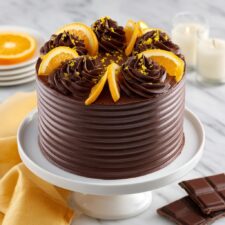
Rich Orange Cocoa Layer Cake Recipe
Ingredients
Method
- Preheat your oven to 350ºF (177ºC). Spray three 6-inch or two 8-inch cake pans with baking spray and place parchment paper circles at the bottom of each.
- In a small jar or measuring cup, whisk together fresh squeezed orange juice and whole milk. Allow to sit to curdle slightly, which will enhance the cake’s texture.
- Using a stand mixer with paddle attachment or hand mixer, beat granulated sugar and 1 tbsp orange zest until fragrant, about 1 minute. Add flour, cocoa powder, baking soda, baking powder, and salt; mix on low speed just to combine.
- Add vegetable oil, eggs, vanilla extract, and the orange-milk mixture to the bowl; mix on low until just combined. Slowly stream in hot coffee or water while mixing at low speed, then increase speed to medium and beat until smooth, about 2 minutes. The batter will be thin.
- Pour the batter evenly into prepared pans. Bake for 32-36 minutes until a toothpick inserted comes out clean. Let cool in pans for 5 minutes, then transfer to wire racks to cool completely before frosting.
- Using a hand mixer or stand mixer, cream butter with 1 tbsp orange zest on medium-high speed for about 5 minutes until light and fluffy. Add cocoa powder, half the powdered sugar, and half the milk; cover bowl with a towel and mix on low. Remove towel after 30 seconds and continue mixing until combined.
- Add remaining powdered sugar, milk, orange juice, and a pinch of salt. Mix on low until smooth, scraping the bowl as needed.
- Level cooled cake layers as desired. Place a small amount of buttercream on a cardboard cake circle, then add the first cake layer. Spread a generous layer of buttercream between layers and stack. Apply a crumb coat of buttercream and refrigerate for at least 30 minutes to set.
- Reserve 1/2 cup buttercream for piping. Frost the cake evenly with remaining buttercream using a cake comb to create scalloped texture. Chill cake for 15+ minutes until firm.
- Use a piping bag fitted with Wilton 1M tip to pipe swirls on top of the cake. Place quartered orange slices between swirls and sprinkle with fresh orange zest for garnish.
Notes
Tried this recipe?
Let us know how it was!Why This Chocolate Orange Cake Works
So what makes this one different? It’s not just one thing, it’s a few key choices that add up to something special. I mean, you could just throw some orange juice into a standard chocolate cake recipe, and you’d get… well, a mess. A wet, dense mess that probably tastes more like baking soda than orange.
The secret here is balance. We use fresh orange zest for that pure, aromatic citrus oil. It’s the most concentrated form of orange flavor you can get. Then, we use just enough fresh juice to add tang and moisture without upsetting the delicate chemistry of the batter. The acidity in the juice actually helps tenderize the gluten, making for a softer crumb. And here’s the real trick: we add a little hot coffee. It doesn’t make the cake taste like coffee. It just deepens the chocolate flavor, making it taste richer and more complex. It’s like turning the volume up on the cocoa without adding more cocoa.
And the frosting? It’s a simple buttercream, but it’s flavored with both zest and a splash of juice. It’s creamy, not too sweet, and it ties the whole thing together. The result is a cake that’s perfectly moist, with a tender crumb and a flavor that hits you in waves. First the deep chocolate, then the bright, sunny orange. It’s a match made in heaven, honestly.
Ingredients You’ll Need for Your Chocolate Orange Layer Cake
Let’s talk about what goes into this cake. Most of these are pantry staples, which I love. You don’t need to hunt down weird ingredients at a specialty store. You probably have everything but the oranges in your kitchen right now.
For the cake itself, you’ll need all-purpose flour, unsweetened cocoa powder (I prefer Dutch-process for a darker, more mellow chocolate flavor), baking soda, baking powder, and salt. Then, the wet ingredients: vegetable oil (it keeps the cake incredibly moist), granulated sugar, large eggs, pure vanilla extract, and whole milk. And of course, the stars of the show: fresh oranges. You’ll need the zest from a couple of oranges and the fresh squeezed juice from about one. I also use hot coffee (or hot water if you prefer) to bloom the cocoa powder. It’s a game changer.
For the chocolate orange buttercream, you’ll need unsalted butter (softened to room temperature), more unsweetened cocoa powder, powdered sugar, whole milk, a little more fresh orange juice and zest, and a pinch of salt. It’s a classic, reliable buttercream that comes together in minutes.
And for the garnish, we’ll make some quick candied orange slices. They look so fancy, but they’re just orange slices simmered in a sugar syrup until they’re tender and shiny. They add a beautiful pop of color and an extra hit of citrus. I think they’re worth the extra 15 minutes.
Step-by-Step Instructions (The Why Behind the How)
Okay, let’s get into the process. But instead of just listing steps, I want to explain the “why” behind each one. That’s how you become a better baker, you know? You start to understand the logic, and then you can troubleshoot anything.
First, prep your pans. This is not being fussy, it’s the difference between a cake that releases perfectly and one that leaves half its crumb stuck to the pan. Grease your cake pans well with butter or non-stick spray. Then, line the bottoms with parchment paper circles and grease those too. I cannot stress this enough. Parchment paper is your best friend. It guarantees clean release every single time.
Then, bloom the cocoa. In a small bowl, whisk your cocoa powder with the hot coffee (or hot water) until it’s smooth. This is a crucial step. The heat releases the cocoa’s natural oils and deepens its flavor. It’s like waking the cocoa up. Let it cool for a few minutes while you mix the rest of the batter.
Now, the dry ingredients. Whisk together the flour, baking soda, baking powder, and salt in a medium bowl. This ensures the leaveners are evenly distributed. Nobody wants a pocket of baking soda in their slice.
In a large bowl, beat the oil and sugar together. You’re not creaming butter here, so you just need to combine them until they look like wet sand. Then, add the eggs one at a time, beating well after each. Add the vanilla. The batter might look a little grainy or even slightly curdled at this point. Don’t panic. I promise it will come together when you add the flour.
Alternate adding the dry ingredients and the milk. Start with half the flour mixture, mix it in, then add all the milk, then the rest of the flour. Mix until just combined. Overmixing develops the gluten and makes your cake tough. We want a tender crumb, so stop as soon as the last streaks of flour disappear. Finally, fold in the cooled cocoa mixture and the fresh orange zest. The batter will be thin. That’s okay. It’s supposed to be.
Pour the batter into your prepared pans and bake at 350°F for about 25-30 minutes, or until a toothpick inserted in the center comes out with a few moist crumbs. The tops should spring back when you gently press them. Let the cakes cool in the pans for 10 minutes, then turn them out onto a wire rack to cool completely. And I mean completely. Frosting a warm cake is a recipe for a melty disaster.
Chocolate Orange Buttercream Frosting
While the cakes are cooling, let’s make the frosting. It’s a simple American buttercream, but the orange makes it feel so much more sophisticated.
In a large bowl, beat the softened butter until it’s smooth and creamy. Then, add the cocoa powder and beat until it’s fully incorporated. It will look thick and a bit clumpy. That’s fine. Gradually add the powdered sugar, about a cup at a time, beating on low speed to keep it from flying everywhere. Then, add the milk, fresh orange juice, orange zest, and a pinch of salt. Beat on medium-high for about 2-3 minutes until the frosting is light, fluffy, and spreadable. If it’s too thick, add a little more milk. If it’s too thin, add a little more powdered sugar. This is a very forgiving frosting.
I love this frosting because it’s not too sweet. The tang from the orange juice and the bitterness from the cocoa balance all that powdered sugar. It’s the perfect partner for the moist chocolate cake.
Tips for the Best Chocolate Orange Cake
I’ve made this cake more times than I can count, and I’ve learned a few things along the way. These tips will help you get perfect results on your first try.
Use a microplane for the zest. It creates the finest zest, which releases the most orange oil. And whatever you do, avoid the white pith. It’s bitter and will ruin the flavor of your cake. Just the bright orange part.
Fresh squeezed orange juice is non-negotiable. The bottled stuff is often from concentrate and has a cooked, flat flavor. You need that bright, acidic zing. One large orange should give you enough juice and zest for the whole recipe.
Don’t skip the coffee. I know it sounds weird. But it doesn’t make the cake taste like coffee. It just makes the chocolate taste more chocolatey. It’s a flavor enhancer, like salt in cookies. If you really don’t want to use it, substitute with hot water. But trust me on this one.
Level your cake layers. Once the cakes are completely cool, use a serrated knife to slice off the domed tops. This gives you a flat, even surface for stacking. A level cake is a professional-looking cake. Plus, you get to eat the scraps. Win-win.
Chill the cake before frosting. This is a game changer. After you level the layers, wrap them in plastic wrap and pop them in the fridge for at least 30 minutes, or even the freezer for 15. A cold cake is much less likely to crumble when you’re frosting it. It makes the whole process so much easier.
Use a cake turntable and a scraper. If you want that smooth, bakery-style finish, a turntable is worth its weight in gold. And a bench scraper or a large offset spatula will help you get those clean, straight sides.
How to Make Candied Orange Slices (The Perfect Garnish)
This is optional, but it really makes the cake look stunning. And it’s surprisingly easy. You just need an orange, some sugar, and water.
Slice a fresh orange into thin, even rounds, about 1/4 inch thick. In a shallow pan, combine 1 cup of sugar and 1 cup of water. Bring it to a simmer, stirring until the sugar dissolves. Add the orange slices in a single layer. Simmer them for about 10-15 minutes, flipping once, until the rinds become translucent and the slices are tender. Use a slotted spoon to transfer them to a wire rack to cool. They’ll get a little tacky and shiny as they dry. You can arrange them on top of the frosted cake in a pretty pattern. They’re so beautiful.
Frequently Asked Questions
Storage and Leftovers
This cake is almost better the next day. The flavors have time to meld together, and the cake gets even more moist. Here’s how to store it properly.
At Room Temperature: If you’re serving it within a day, you can keep it covered at room temperature. A cake dome or an overturned bowl works great. It will be fine for about 24 hours.
In the Refrigerator: For longer storage, wrap the cake (or individual slices) tightly in plastic wrap and store in an airtight container in the fridge. It will stay fresh for up to 5 days. The frosting will firm up, which makes for cleaner slices.
In the Freezer: You can freeze the unfrosted cake layers for up to 2 months. Just wrap them well in plastic wrap and then foil. When you’re ready to use them, thaw them overnight in the fridge. The frosted cake can also be frozen for up to a month. Just let it thaw in the fridge before serving.
To Reheat: I actually love this cake cold or at room temperature. But if you want a warm slice, you can microwave an individual piece for about 10-15 seconds. It’s like a molten chocolate cake. So good.
You’ve Got This
When you pull this cake from the oven, the whole kitchen smells like a candy shop. That mix of deep cocoa and bright, fresh orange is just intoxicating. And when you slice into it, revealing those perfectly even layers with the creamy frosting in between… well, that’s a moment of pure baking pride.
I hope this recipe helps you create a cake that’s more than just dessert. I hope it helps you create a memory. Maybe for a birthday, a Mother’s Day brunch, or just a random Tuesday when you need something beautiful and delicious. Drop a comment and let me know how it turns out. I love seeing your chocolate orange creations! And for more inspiration, check out my Pinterest boards for related recipes.
Happy baking, friend. You’ve got this.
Source: Nutritional Information