
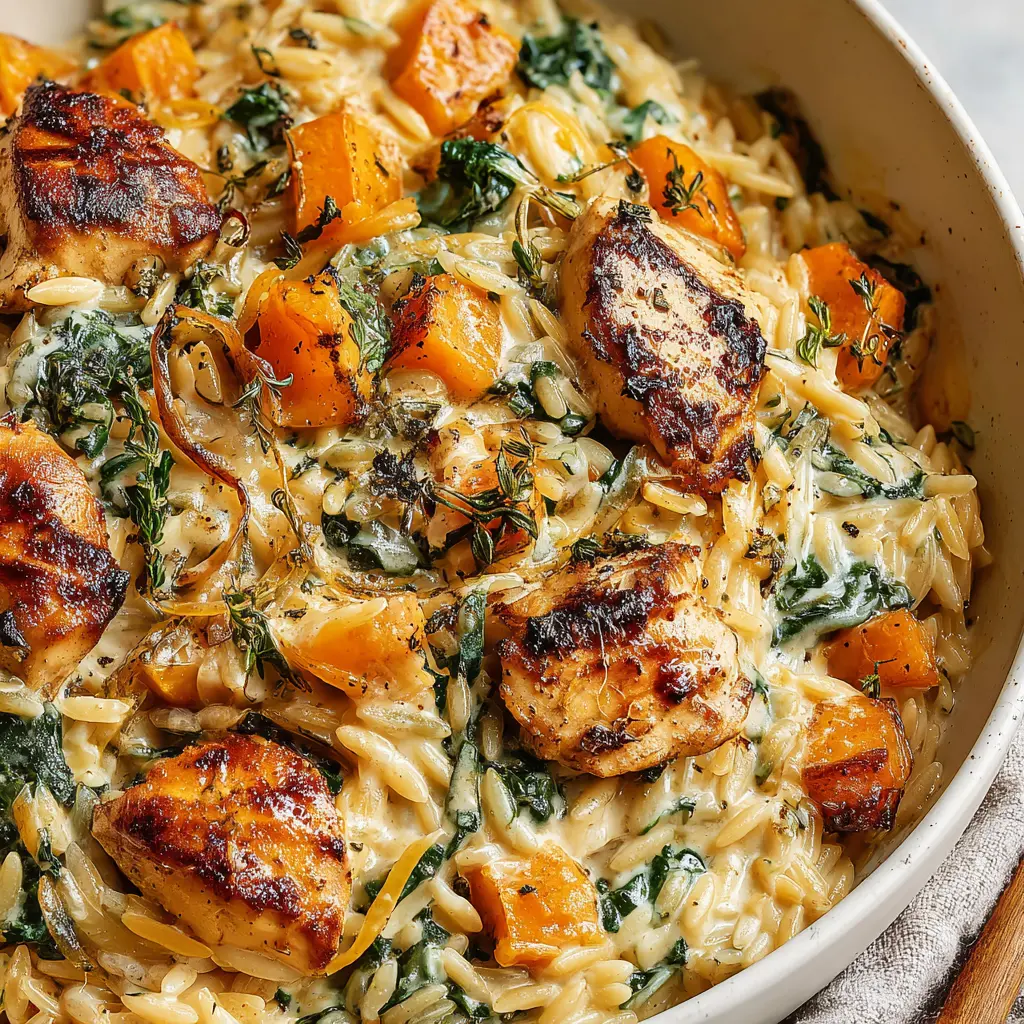
Why You’ll Love This Chicken Butternut Squash Orzo
You know those nights when you stare into the fridge and pray for a miracle? Yeah, me too. That’s exactly how this chicken butternut squash orzo came into my life. I had half a squash leftover from a weekend roasting spree, some chicken leg cuts in the freezer, and a box of orzo that was just sitting there. And honestly? It turned into one of those dinners where everyone goes quiet because they’re too busy eating.
This isn’t just another easy weeknight dinner. It’s the kind of meal that feels like a warm hug in a bowl. The chicken gets golden and juicy, the orzo turns all creamy and rich, and the squash? It gets these little caramelized edges that are basically candy. Plus there’s kale hiding in there, which makes me feel like a responsible adult.
And the best part? One pan. One pot. Minimal dishes. That’s the dream, right?
Ingredients You’ll Need
Let’s talk about what goes into this creamy orzo pasta situation. The ingredient list looks long, but I promise it’s mostly pantry stuff you probably already have.
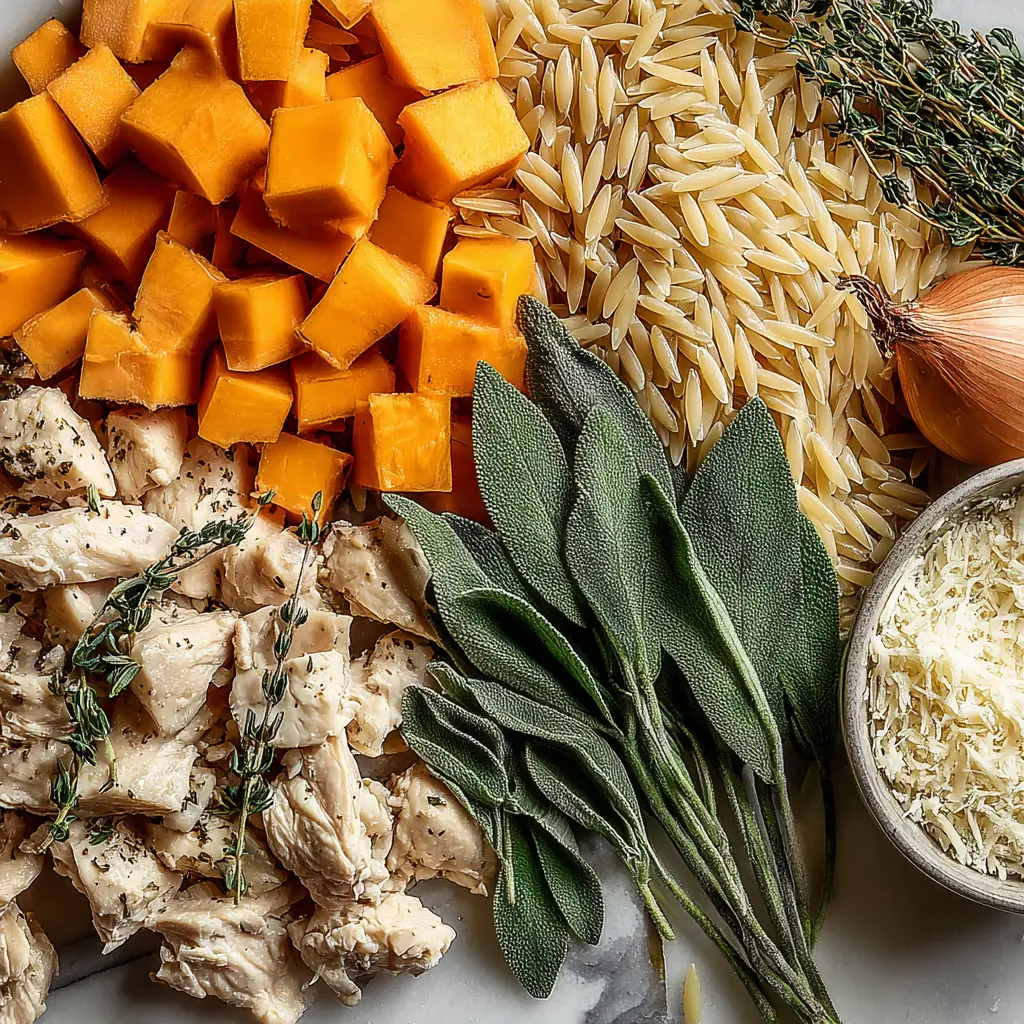
For the roasted squash:
- Diced butternut squash – about a pound, which is roughly 3 cups. You can buy it pre-cut at Trader Joe’s or Ralphs if you’re in a hurry. No judgment here.
- Olive oil – I use California-grown because it’s what I grab, but any good quality one works.
- Salt and pepper – the basics, you know the drill.
For the orzo and chicken:
- Boneless, skinless chicken leg cuts – thighs are my go-to here. They stay juicy and don’t dry out like chicken breasts can. More on that swap later.
- Unsalted butter – for that rich, nutty flavor when you sear the chicken.
- Shallot and garlic – the aromatic backbone of this whole dish.
- Fresh thyme and sage – these two herbs are a match made in heaven. The sage and butternut squash combo is something I can’t get enough of.
- All-purpose flour – just a little to thicken things up.
- Chicken stock – low-sodium is key here so you can control the salt. I usually grab the Pacific brand from Whole Foods.
- Dijon mustard – trust me on this one. It adds a subtle tang that makes everything pop.
- Orzo pasta – those little rice-shaped noodles that soak up all the flavor.
- Kale – stems removed and chopped. It wilts down to almost nothing, so don’t worry if you’re not a kale person.
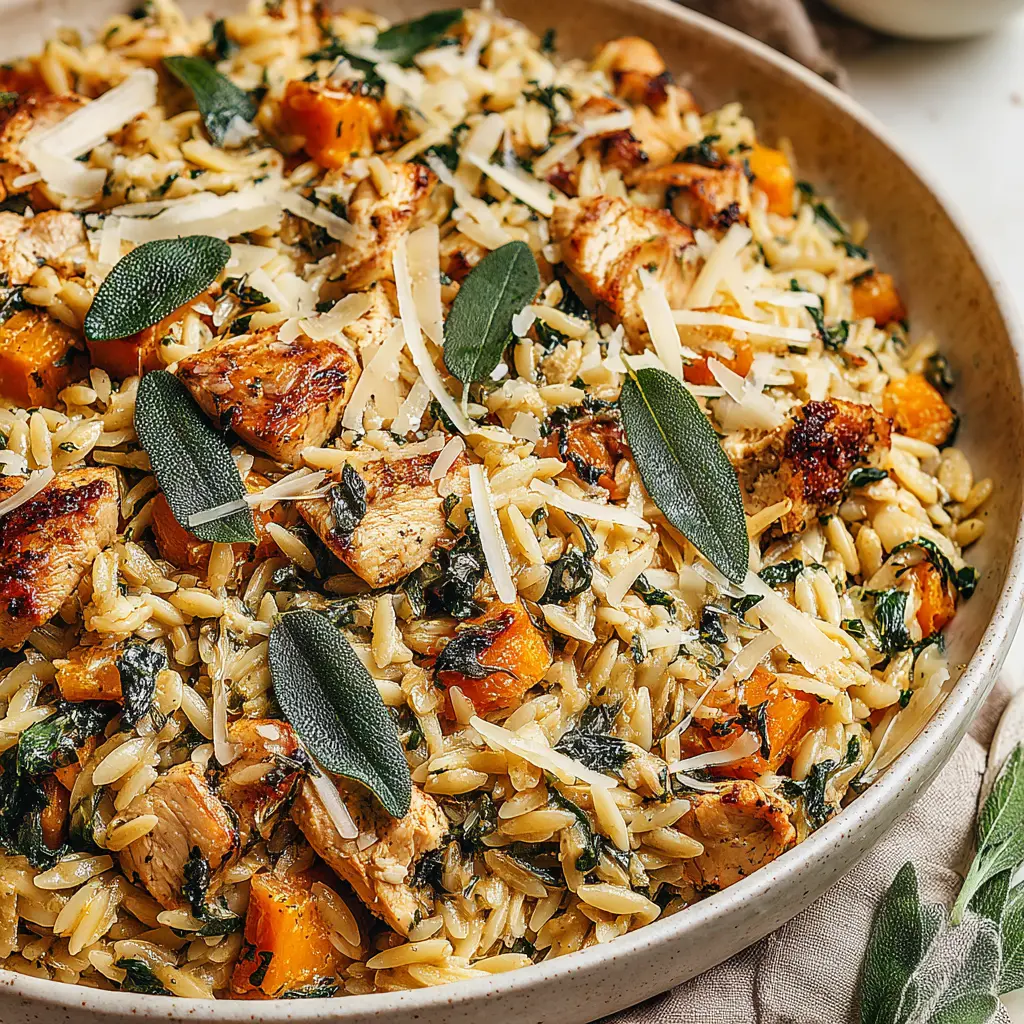
- Parmesan cheese – freshly grated, please. The pre-shredded stuff doesn’t melt the same way.
- Heavy cream – just a quarter cup to make it extra luscious.
How to Make Chicken Butternut Squash Orzo
Alright, let’s get cooking. I’ll walk you through the four main stages so you can see how this all comes together. And hey, if your squash cubes aren’t perfectly uniform? It’s totally fine. We’re not competing for a cooking show trophy here.
Stage 1: Roast the Squash
First things first, get that oven preheating to 425°F. While it’s warming up, spread your diced butternut squash on a rimmed baking sheet. Drizzle with olive oil, season with salt and pepper, and toss it all together with your hands. I know, it’s messy, but it’s the best way to make sure every piece is coated.
Roast for 25 to 30 minutes, stirring halfway through. You’re looking for that tender and lightly caramelized situation. The edges should be golden and a little crispy. This is where the magic happens. Set them aside while you work on the rest.
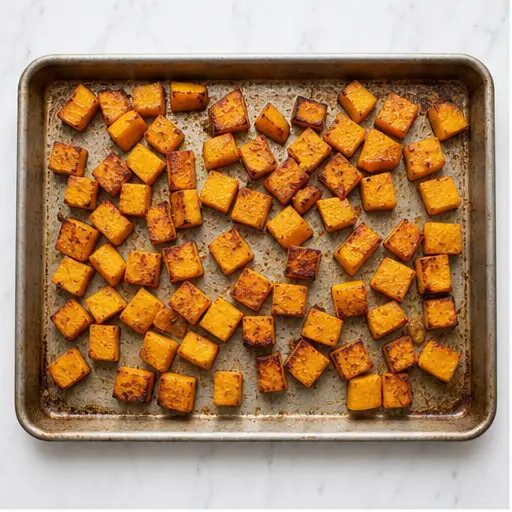
Pro tip: If you’re meal prepping, you can roast the squash up to 2 days ahead. Just store it in the fridge and pull it out when you’re ready.
Stage 2: Sear the Chicken
Season your chicken leg cuts on both sides with salt and pepper. Don’t be shy with it. In a large Dutch oven or heavy pot, melt that butter over medium heat. Once it’s bubbling, add the chicken in a single layer. You might need to do this in batches depending on the size of your pot.
Let it cook until it’s golden brown on the first side, about 4 to 5 minutes. Then flip and do the same on the other side. The internal temperature should hit 165°F. When it’s done, transfer the chicken to a plate and set it aside. Don’t worry if it’s not cooked all the way through yet – it’ll finish in the orzo later.
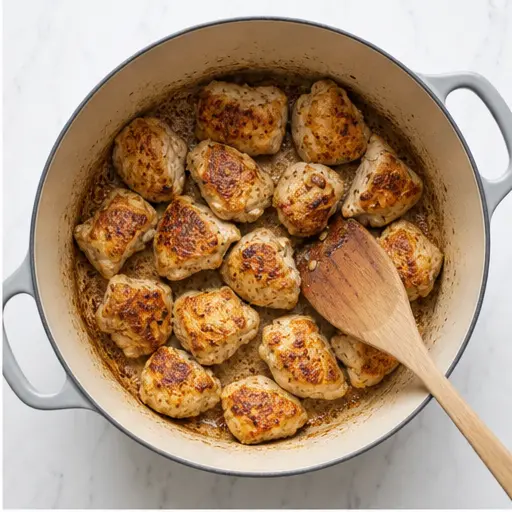
I remember the first time I made this, I got distracted and let the chicken go a minute too long. It was still fine, just a tad drier than usual. So set a timer if you’re like me and easily sidetracked.
Stage 3: Build the Orzo
Now for the fun part. Add your diced shallot to the pot and cook for about 2 to 3 minutes until it softens. Then stir in the garlic, thyme, and sage. Oh, the smell at this point is incredible. It fills your whole kitchen with this warm, earthy aroma that just screams comfort.
Whisk in the flour and cook for about a minute, stirring constantly. This helps thicken everything up later. Then pour in the chicken stock and Dijon mustard, scraping up any browned bits from the bottom of the pot. Those bits are pure flavor, so don’t leave them behind.
Stir in the orzo and season with a little more salt and pepper. Bring it to a boil, then reduce the heat to a simmer. Let it cook for about 6 minutes, stirring occasionally. The orzo will absorb all that delicious broth and get all creamy.
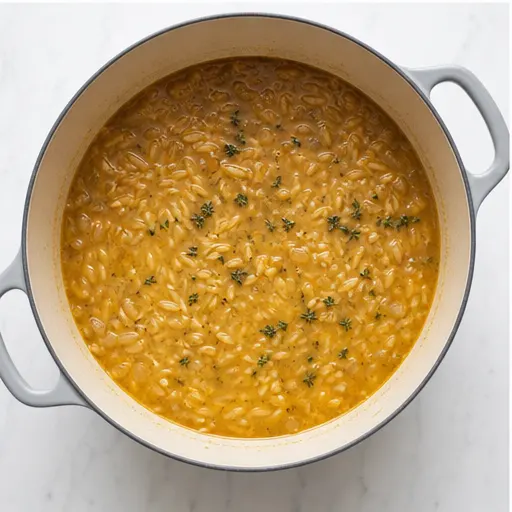
Stage 4: Finish and Serve
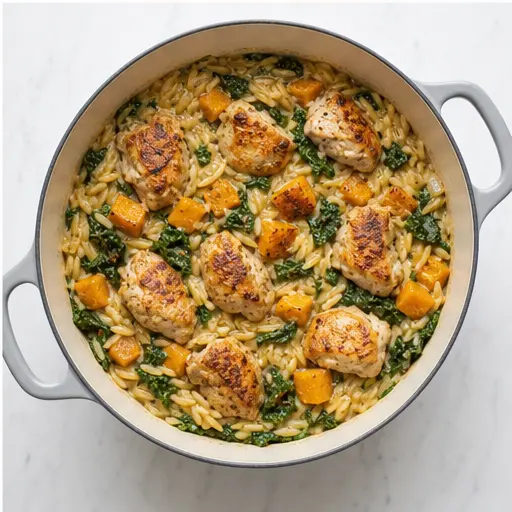
Stir in the chopped kale, Parmesan, and heavy cream. The kale will wilt down in about 3 minutes. It’s kind of amazing how much it shrinks. Then gently fold in your roasted butternut squash. Return the cooked chicken to the pot and let everything warm through together.
Give it a taste and adjust the seasoning if needed. Maybe a little more salt, maybe a crack of pepper. Serve it immediately while it’s hot and creamy.
Tips for the Best Results
After making this chicken and butternut squash orzo about a dozen times (not exaggerating), I’ve picked up a few tricks. Here are the ones that actually matter:
- Use a heavy-bottomed pot. A Dutch oven or heavy stainless steel pan distributes heat evenly and gives you a better sear on the chicken. My Le Creuset is my ride-or-die for this recipe.
- Don’t overcook the orzo. It’ll continue to soften as it sits, even after you take it off the heat. Aim for al dente when you’re simmering.
- Use low-sodium chicken stock. This lets you control the salt level. Some brands are saltier than others, and you can always add more later.
- Cut your squash in uniform pieces. I know I said it’s okay if they’re not perfect, but try to keep them around the same size so they cook evenly.
- Grate your own Parmesan. The pre-shredded stuff has anti-caking agents that mess with the texture. Freshly grated melts like a dream.
Common Mistakes to Avoid
❌ Overcooking the orzo: It turns mushy and loses that nice bite. Set a timer for 6 minutes and check it early.
❌ Not using a heavy pot: Thin pans can cause hot spots and burn the orzo before it’s cooked through. Stick with something sturdy.
Variations and Substitutions
One of the things I love about this one pot chicken orzo is how flexible it is. Here are some swaps I’ve tried and loved:
- Swap the kale: Not a kale fan? Use spinach, Swiss chard, or even chopped cabbage. Spinach wilts even faster, so add it at the very end.
- Use chicken breasts: If that’s what you have, go for it. Just keep an eye on the cooking time because breasts cook faster and can dry out. I’d recommend pounding them to an even thickness first.
- Make it gluten-free: Swap the orzo for gluten-free orzo or use long-grain rice. The cooking time might change, so keep an eye on it.
- Add more veggies: Mushrooms or shredded Brussels sprouts would be great additions. Sauté them with the shallot.
- Use dried herbs: If you don’t have fresh thyme and sage, use dried. The ratio is 1 tablespoon fresh = 1 teaspoon dried.
- Lighten it up: Substitute the heavy cream with half-and-half or whole milk. It won’t be as rich, but it’ll still be delicious.
Storage and Reheating
This chicken butternut squash orzo makes amazing leftovers. Here’s how to keep it tasting fresh:
- Store in an airtight container in the fridge for up to 3 days.
- Reheat on the stovetop with a splash of chicken broth to loosen it up. Low and slow is the way to go.
- Microwave in 30-second increments, stirring in between. Add a little broth if it looks dry.
- Freeze in an airtight container for up to 2 months. Thaw in the fridge overnight before reheating.
One thing I’ve learned the hard way: the orzo will absorb more liquid as it sits. So when you reheat, don’t be shy with that extra broth. It brings it right back to life.
Frequently Asked Questions
When you make this (and you will!), let me know how it goes! Tag me in your photos or drop a comment below. I love hearing about your kitchen wins.
And if you’re looking for more inspiration, check out this pin on Pinterest for a quick visual reminder of the recipe.
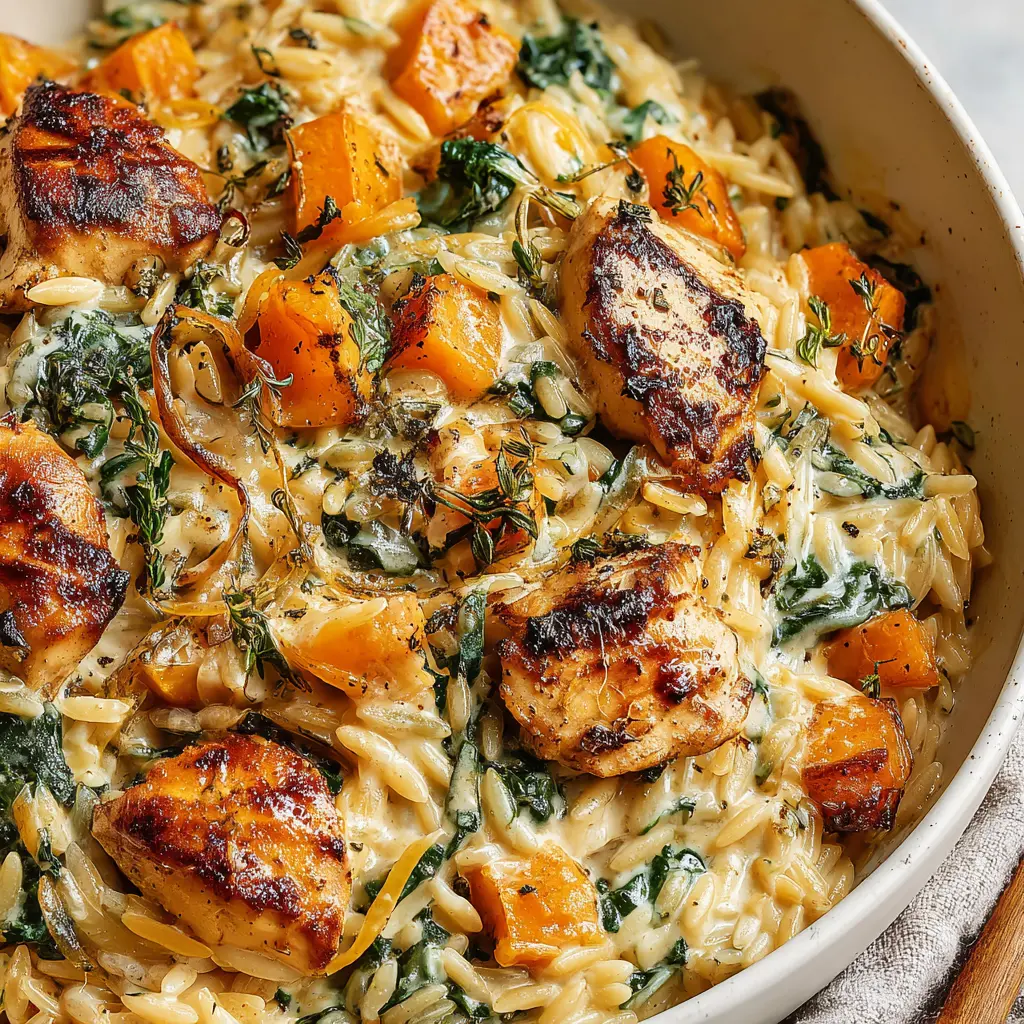
One-Pan Chicken Butternut Squash Orzo with Kale
Ingredients
Method
- Preheat your oven to 425°F. Lightly oil a rimmed baking sheet or coat with nonstick spray.
- Spread the diced butternut squash in a single layer on the prepared sheet. Drizzle with olive oil, season with salt and pepper, and toss gently to coat.
- Roast for 25 to 30 minutes, stirring halfway through, until the squash is tender and lightly caramelized. Set aside.
- Season the chicken thighs on both sides with 3/4 teaspoon salt and 1/2 teaspoon pepper.
- In a large Dutch oven or heavy pot, melt the butter over medium heat. Working in batches if needed, add the chicken in a single layer and cook until golden brown and cooked through (internal temperature of 165°F), about 4 to 5 minutes per side. Transfer to a plate and set aside.
- Add the diced shallot to the pot and cook, stirring occasionally, until softened, about 2 to 3 minutes. Stir in the garlic, thyme, and sage and cook until fragrant, about 1 minute.
- Whisk in the flour and cook, stirring constantly, until lightly browned, about 1 minute.
- Pour in the chicken stock and Dijon mustard, scraping up any browned bits from the bottom. Stir in the orzo and season with salt and pepper to taste.
- Bring the mixture to a boil, then reduce the heat to a simmer. Cook, stirring occasionally, until the orzo is tender, about 6 minutes.
- Stir in the chopped kale, Parmesan, and heavy cream. Continue cooking until the kale wilts, about 3 minutes.
- Gently fold in the roasted butternut squash. Return the cooked chicken to the pot and warm through. Adjust seasoning with salt and pepper if needed. Serve immediately.
Nutrition
Notes
Tried this recipe?
Let us know how it was!Source: Nutritional Information
4 Responses
The flavor combination is lovely, but I thought the recipe needed a bit more seasoning. I added some red pepper flakes for a kick and a squeeze of lemon at the end, which really brightened it up. Still, a solid weeknight meal.
Great recipe, but I found the orzo absorbed a bit too much liquid and got a little mushy. Should I add more stock next time, or cook the orzo separately and add it at the end?
Hi James! I’m glad you enjoyed it. For a less mushy texture, you can definitely add an extra 1/4 cup of stock during cooking, or cook the orzo separately until al dente and stir it in at the end with the cream and Parmesan. Both work great!
This was absolutely delicious! I made it last night and my whole family loved it. The roasted butternut squash added such a nice sweetness. I substituted spinach for the kale since that’s what I had on hand, and it worked perfectly.