
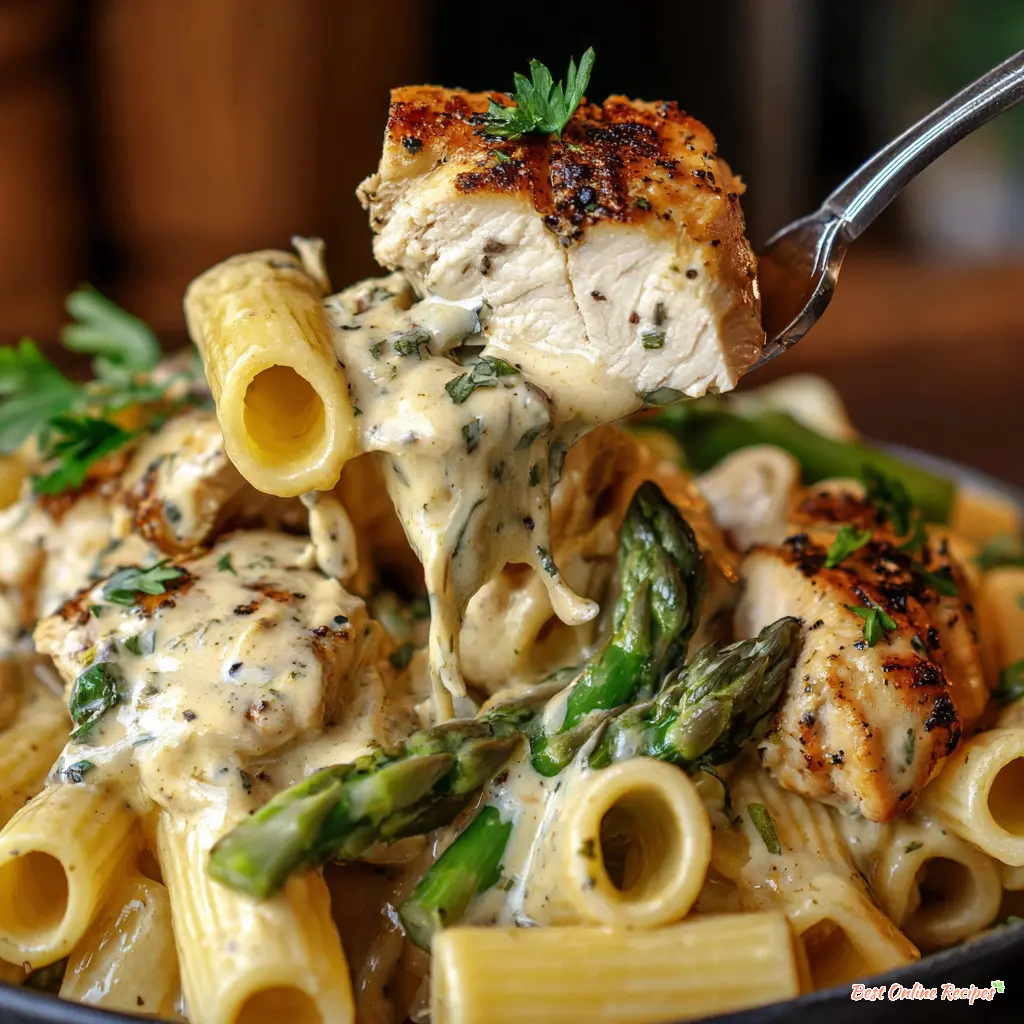
Creamy Garlic Chicken and Spring Onion Pasta Recipe
Ingredients
Instructions
- Cook the penne in a large pot of salted boiling water according to package instructions until al dente. Drain and set aside, reserving ½ cup of the pasta water.
- Heat 1 tablespoon of olive oil or butter in a large skillet over medium-high heat. Add the chicken, season with salt and pepper, and sauté for 5–7 minutes until golden and cooked through. Remove the chicken from the pan and set aside.
- Add another tablespoon of oil to the same skillet if needed. Sauté the mushrooms for 5–6 minutes until browned and the moisture evaporates. Add the asparagus and cook for 3–4 minutes until tender-crisp. Stir in the minced garlic and cook for 1 minute until fragrant.
- Reduce the heat to medium and pour in the cream. Stir gently, add the parmesan cheese, and allow it to melt. Return the chicken and pasta to the skillet and toss to coat evenly. Stir in reserved pasta water if the sauce is too thick. Taste and adjust seasoning as needed.
- Garnish with red pepper flakes, lemon zest, or fresh parsley. Serve immediately while warm and creamy.
Nutrition
Notes
Tried this recipe?
Let us know how it was!The Weeknight Dinner Savior: Spring Chicken Pasta Recipes
It’s Wednesday evening, you’ve got exactly 35 minutes before dinner, and you’re staring at the fridge. Chicken breasts again. I know that feeling so well. Honestly, eating the same chicken every day gets old fast, especially if you’re trying to keep things high protein for the gym but still actually enjoy your food. I used to just grill it until it was dry and sad. I think probably everyone has been there at some point.
But then I discovered that mastering a few reliable spring chicken pasta recipes completely fixes the dinner rut. Well, it fixes my dinner rut, anyway. During these mild LA spring months, I constantly crave something that feels light but still gives me that satisfying, full feeling. You know the exact feeling I mean. You want comfort food, but you don’t want a heavy winter stew. The smell of the spring onions hitting the hot pan is just amazing. It smells like butter and garlic and pure anticipation.
I know a lot of people think making a creamy pasta from scratch takes forever. The trick is, and I learned this from testing dozens of variations, you just need the right sequence. It’s actually quite forgiving once you understand the basics. Your family will be impressed, and you won’t be stuck doing dishes for an hour.
Why This Recipe Works (And The Primavera Connection)
If you’ve ever wondered where the term “Primavera” comes from, it literally translates to spring in Italian. Traditionally, a pasta primavera highlights the absolute best, brightest vegetables of the season. But we’re taking that classic concept and making it a complete meal. That’s why I love developing spring chicken pasta recipes. They check every single box for a balanced dinner.
Here’s what I wish someone had told me years ago. You don’t need a million ingredients to make food taste good. You just need to build flavors in the right order. We start by searing the chicken to get that gorgeous golden brown crust. Then we use the exact same pan to cook our vegetables. This is called the two-stage pan method. It’s not being fussy, it’s the difference between bland food and restaurant quality.
Look, I’ll be honest. Sometimes I don’t even use whole chicken breasts. A fantastic variation is making a spring meatballs pasta peas recipe using ground chicken. You just roll the ground chicken with some fresh parsley, dill, and a little garlic powder. It’s a fun twist if you want to switch up the textures.
The Science of Cream Sauce Emulsions
Let’s talk about the sauce. I know making a cream sauce sounds intimidating, but it’s easier than you think. Have you ever made a sauce and it just looked oily and separated? Yeah, I learned this the hard way too. It happens when the fats and the liquids refuse to mix.
When you sear your chicken, you’ll notice brown bits stuck to the bottom of the pan. That is called the “fond”, and it is pure flavor gold. Please don’t wash it out. We are going to deglaze the pan. Usually, people use wine for this, but I absolutely love using a splash of rich chicken broth instead. It lifts all those brown bits up and creates a deeply savory base.
To get that perfect emulsion, you need starch. This is why you must save a little bit of your pasta water. The starchy water binds with the olive oil and the heavy cream, creating a glossy sauce that coats every single piece of penne pasta perfectly. It’s science, but it tastes like magic.
Visual Troubleshooting Guide for Your Sauce
Mistake: The sauce looks grainy or clumpy.
Solution: You probably used canned parmesan cheese. Always use freshly grated Parmesan rather than canned for better melting and flavor. The pre-shredded stuff has anti-caking agents that ruin the texture.
Mistake: The sauce is pooling at the bottom of the bowl, looking watery.
Solution: You didn’t let it emulsify. Add a splash of starchy pasta water and toss vigorously over low heat until it clings to the pasta.
Mistake: The vegetables are total mush.
Solution: Overcooking vegetables is so common. They should be tender-crisp. Add delicate veggies like asparagus or peas at the very end of your cooking time.
Nailing the Perfect Sear (Internal Temperature Guide)
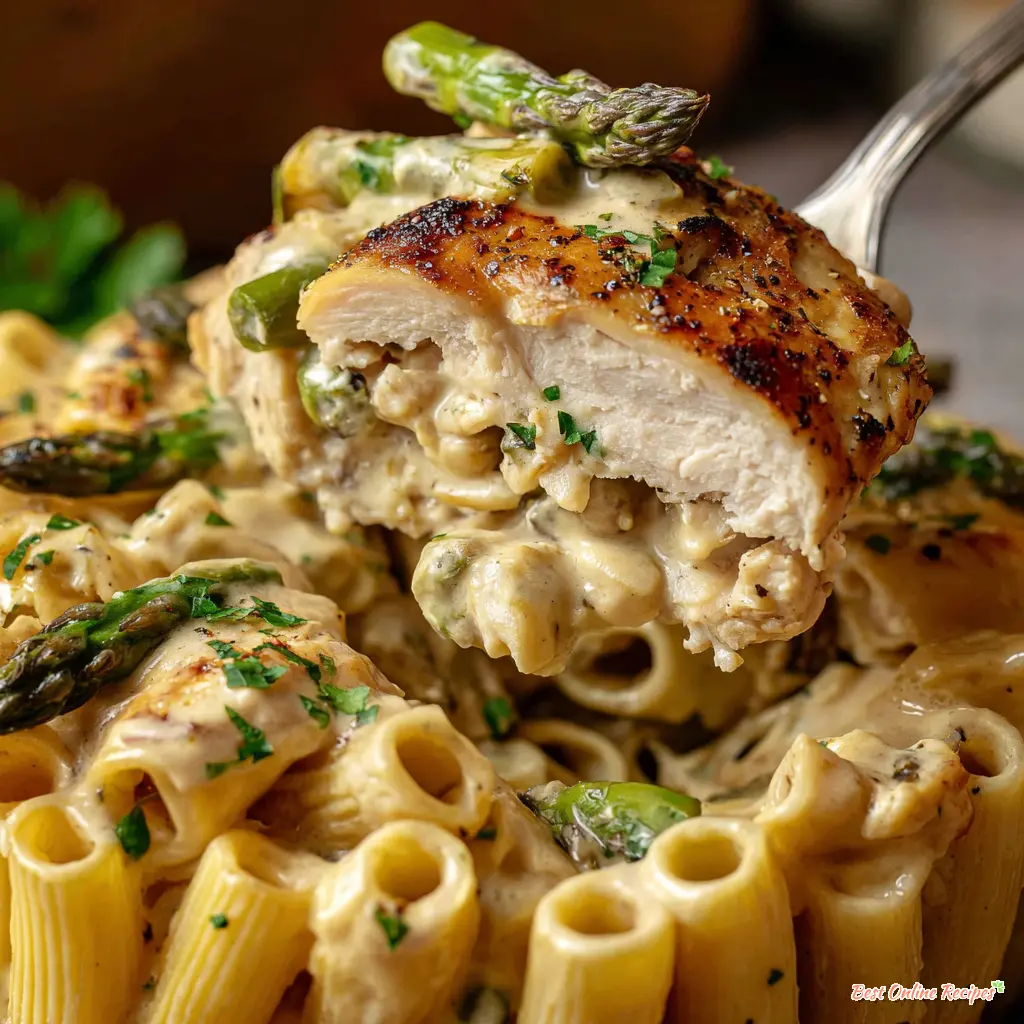
If you want your chicken spring onion pasta recipe to really shine, you have to treat the chicken with respect. Slicing the chicken into even strips before cooking is crucial. If you have some pieces that are thick and some that are thin, they won’t cook at the same rate. You can also pound chicken breasts to an even thickness or just use chicken thighs for easier prep.
Get your pan hot. You want to hear that sizzle the second the meat hits the olive oil. Let it sit there. Don’t touch it. I mean, you’ll want to peek, but let it develop that color of peanut butter first. That golden brown crust equals flavor.
How do you know when it’s done? The safest way is using a meat thermometer. You’re looking for an internal temperature of 165°F. But visually, the juices should run completely clear, and the meat should feel firm but still have a little give when you press it. Overcooked chicken in pasta is a tragedy. We want it perfectly tender and juicy.
Comprehensive Vegetable Substitution List
One of my favorite things about spring chicken pasta recipes is how customizable they are. You can absolutely clear your fridge by mixing and matching any seasonal vegetables. It’s the best way to reduce food waste.
If you don’t have asparagus, grab some zucchini. Out of fresh veggies entirely? No problem. Use frozen veggies like peas to save time and money without losing nutrition. I actually keep a bag of frozen peas specifically for these quick weeknight meals. If using frozen veggies, just sauté them slightly longer to remove excess moisture.
People often ask about the difference between a spring onion vs green onion in pasta. Spring onions have a slightly larger, sweeter bulb at the bottom. Green onions (or scallions) are straight and have a sharper bite. For this dish, I love using the white parts of the spring onions early in the cooking process to sweeten the base, and then I toss the green parts in at the very end for a fresh, oniony crunch.
Tips for Uniform Cooking
This might sound basic, but it changes everything. Chop all vegetables to a similar size to ensure even cooking. If you have giant chunks of broccoli mixed with tiny slivers of bell pepper, it’s going to be a mess. The broccoli will be raw while the pepper turns to mush.
Also, salt the recipe well to enhance the fresh vegetable flavors. Vegetables need salt to wake them up. I like to add a pinch of salt at every stage. A pinch when the onions go in, a pinch on the chicken, and definitely a generous handful of salt in the pasta water. It should taste like the ocean.
For a really bright finish, a squeeze of fresh Meyer lemon juice and some lemon zest right at the end cuts through the richness of the heavy cream beautifully. It balances the whole plate.
Step-by-Step Meal Prep Storage Strategy
If you’re making spring chicken pasta recipes for your Sunday meal prep, you need a good storage strategy. Pasta soaks up liquid like a sponge in the fridge. If you just throw everything into a container together, you’ll end up with a dry, sticky block by Tuesday.
Here is the secret. Store the chicken and sauce separately from the pasta if you can. If you’ve already mixed it, that’s okay. When you reheat it, you absolutely must add extra chicken broth or water to loosen the sauce. Just a splash.
Microwave it in individual portions, stirring halfway through. Or better yet, gently warm it on the stovetop over low heat. It brings the creamy texture right back to life.
Frequently Asked Questions About Spring Chicken Pasta Recipes
Let’s Get Cooking
I hope you feel totally ready to tackle this dinner tonight. Once you get the hang of the pan-searing technique and the simple emulsion sauce, these spring chicken pasta recipes will become a permanent part of your weekly rotation. They are just so good and incredibly adaptable. Next time you make it, try tossing in some shrimp instead of chicken, or play around with different seasonal herbs like fresh basil or tarragon.
Don’t worry if your first attempt isn’t completely flawless. Cooking is all about adjusting and finding what tastes right to you. Grab some fresh produce on your next grocery run and treat yourself to a dinner that actually fuels your body and tastes amazing.
I share tons of variations and meal prep ideas on my Pinterest boards, so definitely come hang out with me over there if you want more inspiration for your weeknight dinners. You’ve got this.
Reference: Original Source
<!– wp:rank-math/faq-block {"questions":[{"id":"faq-question-1774049203056","title":"Can I make these spring chicken pasta recipes ahead of time?“,”content”:”Yes, you definitely can. However, for the best texture, I highly recommend storing the cooked pasta and the creamy sauce separately in airtight containers. This prevents the pasta from soaking up all the moisture and becoming mushy. Mix them together right before reheating.”,”visible”:true},{“id”:”faq-question-1774049203057″,”title”:”How do I make a vegetarian Pasta Primavera?“,”content”:”It’s super simple. Just omit the chicken entirely. You can substitute it with roasted chickpeas or sautéed tempeh for protein. Swap the chicken broth for a high-quality vegetable broth, and you’ve got a fantastic vegetarian meal that’s just as filling.”,”visible”:true},{“id”:”faq-question-1774049203058″,”title”:”Can I use frozen vegetables in a chicken and spring onion pasta recipe?“,”content”:”Absolutely. Frozen vegetables like peas or broccoli florets are picked at peak ripeness, so they are incredibly nutritious. Just remember to sauté them a minute or two longer in the pan to evaporate any excess water so your sauce doesn’t become thin.”,”visible”:true},{“id”:”faq-question-1774049203059″,”title”:”Can I freeze this recipe for later?“,”content”:”I honestly don’t recommend freezing cream-based sauces. You technically can freeze it for up to 3 months, but the heavy cream tends to separate and become grainy when thawed. If you must freeze it, reheat it slowly on the stove with a splash of fresh milk to help re-emulsify it.”,”visible”:true}]} –>