
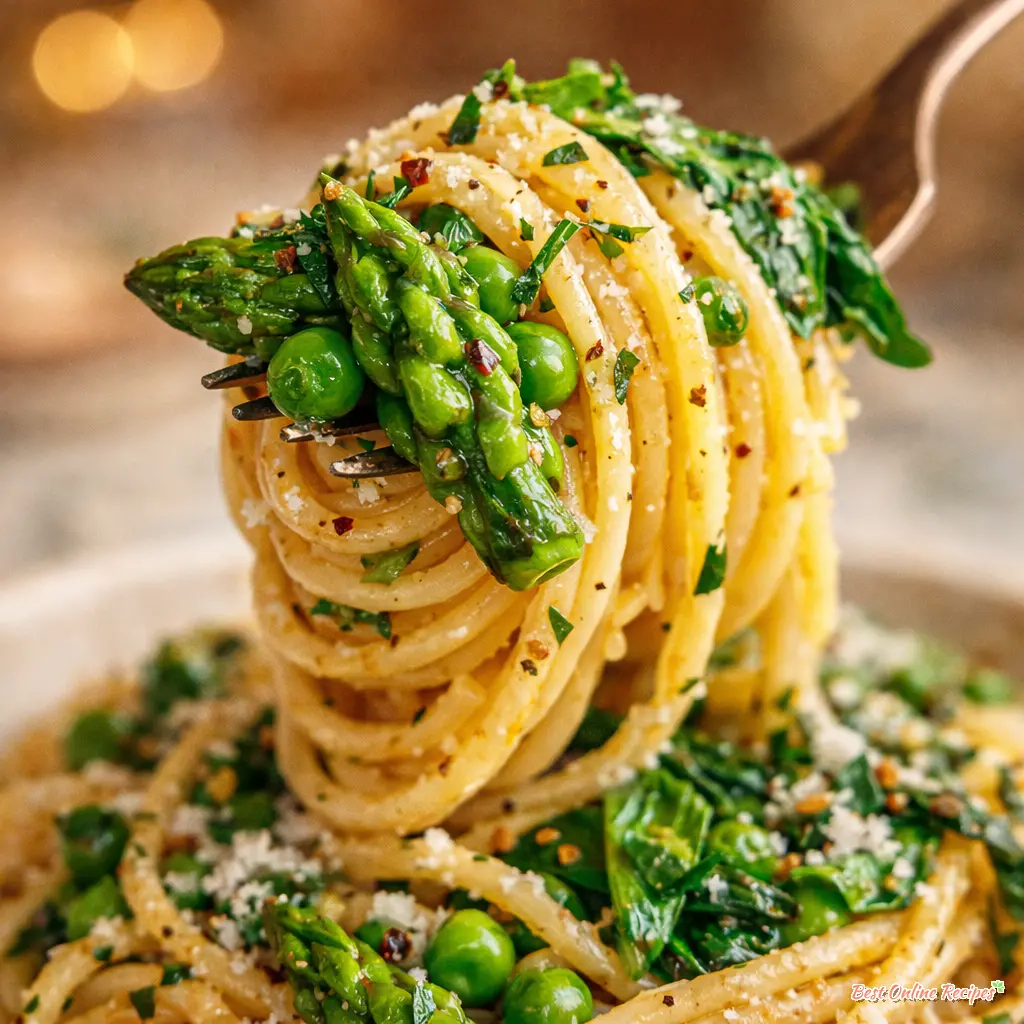
One Pot Spring Vegetable Pasta with Lemon Butter Sauce
Ingredients
Instructions
- Trim and chop the asparagus, mince the garlic, zest and juice the lemon, and measure out the peas and spinach.
- Melt butter in a large skillet over medium heat and add the minced garlic. Stir constantly for 1 to 2 minutes until fragrant, ensuring the garlic does not brown.
- Add the dry pasta and approximately 3 cups of vegetable broth. Stir to separate the pasta pieces and bring the mixture to a boil.
- Reduce the heat to medium-low and simmer uncovered, stirring every 2 to 3 minutes. After 7 minutes, add the peas and asparagus and cook until tender.
- Stir in the baby spinach and cream (if using) once the pasta is al dente and most liquid has been absorbed. Season with salt, pepper, and red pepper flakes as desired.
- Remove the skillet from the heat. Stir in the lemon zest, lemon juice, and grated Parmesan cheese until the cheese is fully melted into the sauce.
- Stir the dish one last time and adjust the seasoning. If the sauce is too thick, add a splash of broth or water to loosen the consistency.
Nutrition
Notes
Tried this recipe?
Let us know how it was!The Ultimate Spring Pasta Recipe Asparagus for Busy Weeknights
Wednesday evening, 35 minutes before dinner. You just got back from a Trader Joe’s run or maybe the Santa Monica Farmers Market. The weather is finally hitting that perfect 70 degrees here in LA, and honestly, I am so ready to leave winter root vegetables behind. I mean, I love a good roasted squash, but I need something vibrant. Something green. Something that does not take two hours to roast.
If you are craving a light dinner that celebrates seasonal produce, this spring pasta recipe asparagus is exactly what you need. It is the only Easter side dish you’ll need this year, but it works just as beautifully for a chaotic Tuesday night. We are talking about a 20-minute win that feels like a 5-star meal.
I know a lot of fresh vegetable pasta dishes end up tasting a bit watery or bland. I learned this the hard way after serving a very sad, limp asparagus dish to friends a few years ago. The trick is treating the vegetables right and building a sauce out of almost nothing. You’ll get that incredible snap of the first asparagus spear, the bright pop of spring peas, and the smell of fresh mint being chopped right on your cutting board. Perfect. Worth it. Let’s get into it.
Why This Fresh Spring Pasta Recipe Actually Works
Look, I’ll be honest. Most quick pasta recipes fail because they treat the vegetables as an afterthought. You boil the noodles, throw some raw greens in at the end, and hope for the best. That usually results in a disconnected dish where the pasta is dry and the veggies are mushy.
The beauty of this best spring pasta recipe is the problem-first approach. We build the flavor foundation directly in the pan. By quickly sautéing garlic cloves and shallots in good extra virgin olive oil, we create an aromatic base. Then, we use the magic of starchy pasta water to bind everything together into a glossy, rejuvenating sauce.
It is easier than you think. You do not need heavy creams or hours of simmering. You just need a little technique. Once you understand the basics of emulsification, you’ll feel like a restaurant chef in your own kitchen.
The Secret to the Sauce (And Why We Skip the Wine)
A lot of classic recipes tell you to deglaze the pan with white wine. We are skipping that completely here. I think you get a much purer, cleaner vegetable flavor when you let the asparagus and peas shine on their own. Instead of wine, we use a combination of vegetable broth, fresh lemon juice, and heavily salted pasta water.
Here is what I wish someone had told me early on. You absolutely must salt your pasta water until it tastes like the sea. This is your only chance to season the pasta itself. As the fettuccine or short pasta cooks, it releases starches into that water. Before you drain the noodles, scoop out a big mug of that cloudy water.
When you add that starchy water to your butter, olive oil, and parmesan cheese in the skillet, you need to toss it vigorously. The agitation forces the fat and water to mix into a creamy emulsion. That is how you get a sauce that actually clings to the noodles instead of pooling sadly at the bottom of your bowl. Add a heavy dose of lemon zest right at the end. The oils in the zest provide way more aroma than just the juice alone. If you are looking for a richer alternative, a creamy spring pasta recipe with ricotta can offer a completely different flavor profile.
How to Cook Asparagus for Pasta So It Stays Crunchy
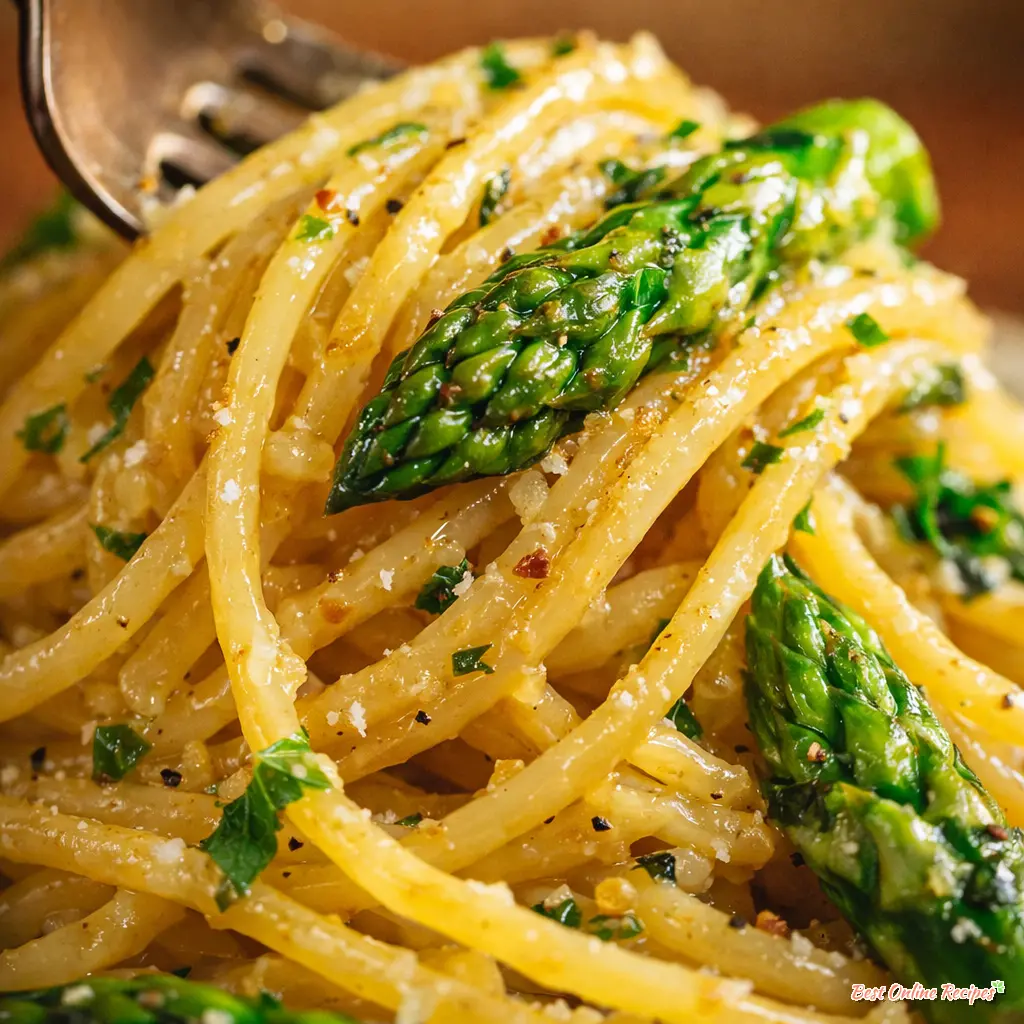
This is the make-or-break moment for your spring vegetable pasta. Overcooked asparagus turns into a stringy, grayish-green mess. We want vibrant, crisp-tender spears that snap when you bite into them.
First, choose the right thickness. If you find pencil-thin asparagus at the market, grab it. It cooks in literal minutes. If you can only find thicker spears, that is totally fine, but you’ll need to slice them into thinner, one-inch segments on a sharp bias so they cook evenly.
The best method for this spring pasta recipe asparagus is a quick blanch. Drop the asparagus pieces directly into the boiling pasta water during the last two minutes of the pasta’s cooking time. Once you drain everything, the residual heat will finish cooking the vegetables perfectly. If you are prepping ahead of time, you can blanch the asparagus separately and immediately plunge it into an ice bath to lock in that bright green color.
As for the peas, I get asked about fresh versus frozen all the time. Frozen peas are a perfectly acceptable substitute for fresh. Honestly, unless you are buying fresh peas still in the pod from a farmer that morning, frozen peas are usually sweeter because they are flash-frozen at peak ripeness. Just place the frozen peas in a sieve and run cool water over them to defrost, then toss them into the hot pasta right at the very end. They just need to warm through.
Common Mistakes & Fixes
Mistake: The asparagus is mushy and dull green.
Solution: You boiled it too long. Add thin asparagus only in the final 90 seconds of cooking. It should be bright green and still have a slight crunch.
Mistake: The pasta feels dry and sticky.
Solution: You forgot to save the pasta water, or you didn’t use enough. Always save at least a full cup of the starchy water before draining. Add it splash by splash while tossing the pasta off the heat.
Mistake: The pine nuts burned.
Solution: Pine nuts go from golden brown to charcoal in about ten seconds. Toast them in a dry skillet over medium-low heat and never walk away. Keep them moving constantly.
Choosing the Best Pasta Shape for Spring Vegetables
You might be wondering what the best pasta shape for spring vegetables really is. I mean, you can use whatever is in your pantry, but shape matters for texture. I personally love a short, ridged pasta like penne, fusilli, or gemelli for this.
The little nooks and crannies grab onto the peas and hold the lemon butter sauce beautifully. If you prefer long noodles, a wide fettuccine or pappardelle works wonderfully because the broad surface area carries the extra virgin olive oil and parmesan cheese perfectly. Just be careful not to overcook egg pasta if you go the fresh route. You want to maintain a chewy al dente bite.
Customizing Your Spring Pasta Recipe with Fresh Peas and Mint
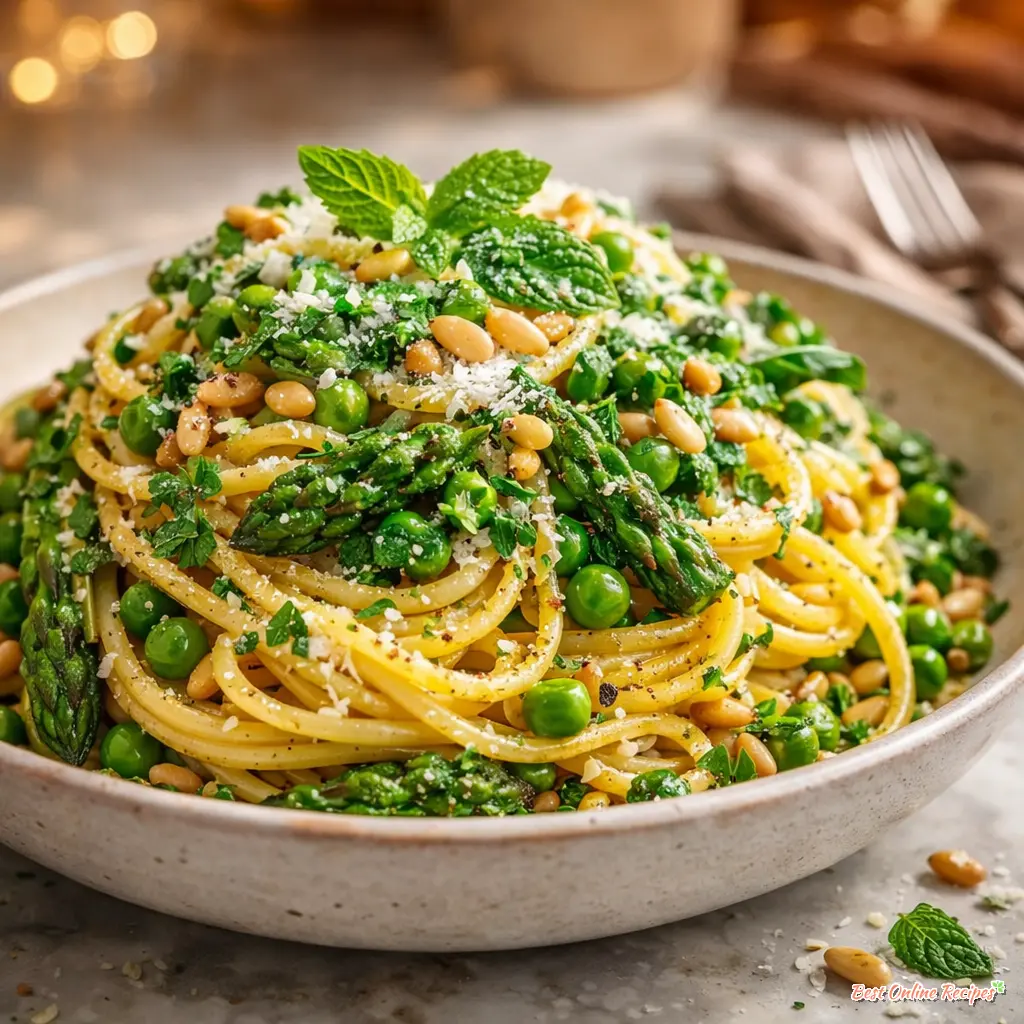
This recipe is incredibly forgiving. Once you understand the base technique, you can mix and match based on what you have in the fridge. The herb profile is crucial here. I highly recommend a spring pasta recipe with fresh peas and mint. The mint adds a cooling, sweet contrast to the salty parmesan and garlic.
If mint isn’t your thing, fresh basil, flat-leaf parsley, or even a little tarragon works beautifully. A mix of fresh herbs is usually the best approach.
Need a protein boost? This dish is a fantastic canvas. You can easily toss in some sautéed shrimp, diced grilled chicken breast, or a can of drained white beans for a hearty, plant-based option. A pinch of red pepper flakes gives it just the right amount of background heat without overpowering the delicate seasonal produce.
Storage and Reheating Your Spring Pasta Recipe Asparagus
If you actually have leftovers, which is rare in my house, you need to store them properly so the vegetables don’t turn to mush the next day. Let the pasta greens recipe cool completely before transferring it to an airtight container. It will keep in the refrigerator for up to three days.
When it is time to reheat, skip the microwave if you can. The microwave tends to steam the asparagus, ruining that crisp texture we worked so hard for. Instead, warm a splash of olive oil or a tablespoon of water in a skillet over medium-low heat. Add the leftover pasta and toss gently until just heated through. The extra moisture helps reawaken the emulsified sauce so it doesn’t taste dry.
Frequently Asked Questions
Bringing It All Together
There you have it. A gorgeous, vibrant spring pasta recipe asparagus that takes less time to make than ordering takeout. Once you master the pasta water emulsion and the quick-blanching technique, you’ll be making variations of this all season long. It really is the perfect way to welcome warmer weather.
I hope you try this one tonight. Don’t stress if it isn’t perfectly plated. Even when it’s a little messy, it still tastes amazing. Serve it with a simple side salad, maybe some crusty sourdough bread to soak up the extra lemon garlic sauce, and enjoy the evening.
I share tons of seasonal variations and quick weeknight dinners on my Pinterest boards, so come say hi over there if you want more ideas. Happy Spring cooking, you’ve got this.
Reference: Original Source
<!– wp:rank-math/faq-block {"questions":[{"id":"faq-question-1774056431904","title":"Why does asparagus make urine smell?“,”content”:”It is completely normal. Asparagus contains asparagusic acid. When your body digests it, it breaks down into sulfurous amino acids that have a distinct odor. Interestingly, genetics determine both whether your body produces the smell and whether your nose can actually detect it.”,”visible”:true},{“id”:”faq-question-1774056431905″,”title”:”Can I use frozen peas in this spring pasta recipe asparagus?“,”content”:”Absolutely. I actually prefer frozen peas unless I can get fresh ones straight from the farm. Run the frozen peas under cool water in a sieve to defrost them, then stir them into the hot pasta right at the end so they don’t overcook.”,”visible”:true},{“id”:”faq-question-1774056431906″,”title”:”What kind of herbs are best for a fresh spring pasta recipe?“,”content”:”Fresh mint is a classic pairing with peas and asparagus. If you don’t love mint, fresh basil, flat-leaf parsley, chives, or a little tarragon are amazing alternatives. I highly recommend using a combination of two herbs for a more complex flavor profile.”,”visible”:true},{“id”:”faq-question-1774056431907″,”title”:”How do I handle thick asparagus spears for this dish?“,”content”:”If you can only find thick asparagus, simply slice the spears on a sharp bias into one-inch pieces. This exposes more surface area so they cook quickly and evenly alongside the pasta, ensuring they stay crisp-tender instead of becoming woody.”,”visible”:true},{“id”:”faq-question-1774056431908″,”title”:”Is this spring pasta recipe asparagus considered healthy?“,”content”:”Yes, it is a fantastic, balanced meal. You are getting a heavy dose of fiber and vitamins from the asparagus, spinach, and peas. By using pasta water and just a little olive oil and parmesan cheese to create the sauce, it stays much lighter than heavy cream-based dishes.”,”visible”:true}]} –>