
Why You’ll Love These Greek Stuffed Onions
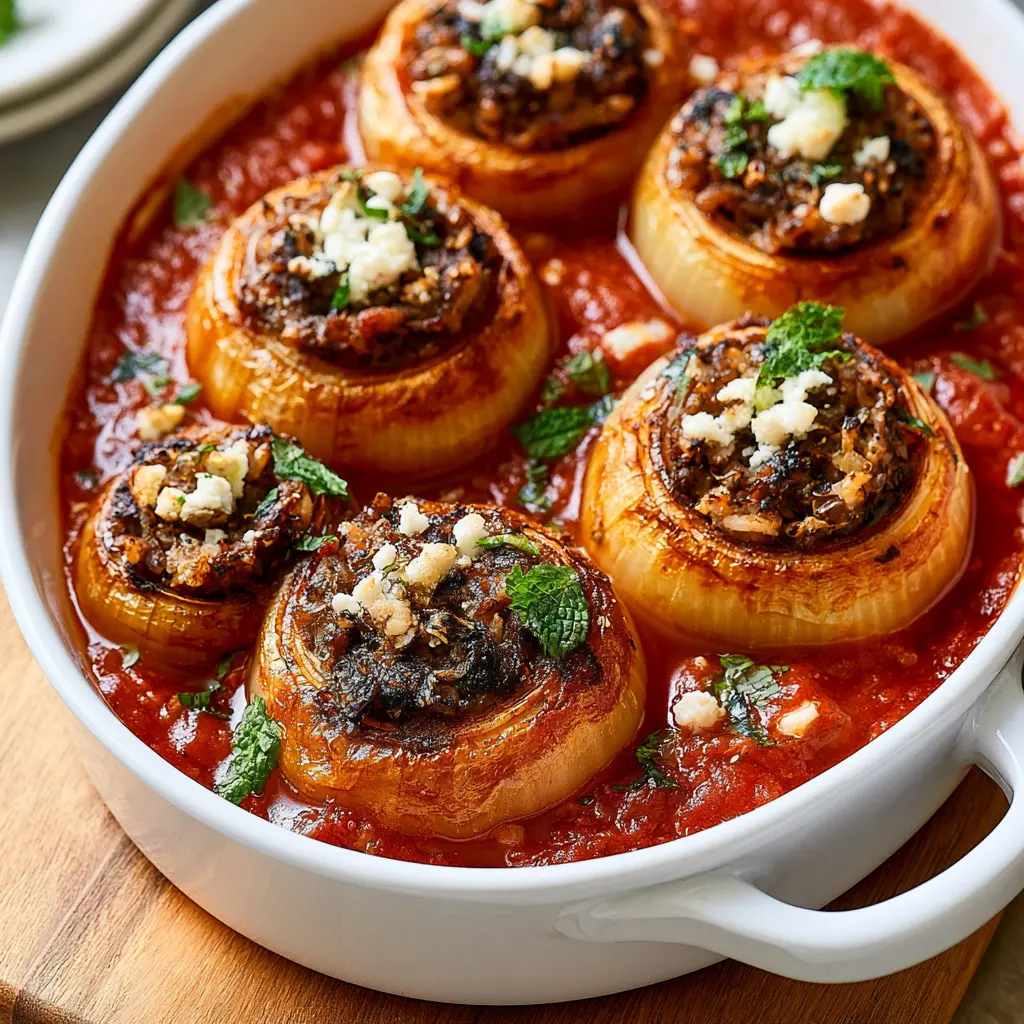
In Greece, late summer means one thing: kitchens filled with the sweet, heady smell of onions caramelizing in tomato sauce. This is gemista season, the glorious Mediterranean stuffed vegetables tradition that fills peppers, tomatoes, and yes, onions with savory rice mixtures. These Greek stuffed onions, known as salantourmasi, might just be my favorite of the whole family.
Salantourmasi is the Greek word for stuffed onions, a close cousin to dolmades and a proud member of the gemista lineup. In Greece, these tender bundles often show up at room temperature on hot summer evenings, served with a squeeze of lemon and good bread for soaking up the sauce.
I still remember watching a yiayia handle a boiled onion like it was spun glass. She slit it, peeled back the soft layers, spooned in a bit of filling, and rolled it as gently as if it were a gift. It looked so delicate. The secret? This is one of the most forgiving Greek recipes you’ll ever make.
So what makes these baked stuffed onions so special?
- Sweet, caramelized onions that turn almost jammy in the oven
- A savory ground beef and rice filling brightened with mint, oregano, and feta
- A rich tomato broth built from the onion cooking liquid, so nothing goes to waste
And here’s the part I love most: they’re a make-ahead Greek dish. Assemble everything in the morning, chill it, and bake when you’re ready. Perfect for a late summer Greek dinner with friends, or a low-stress weekend project that feels way more impressive than it is.
Greek Stuffed Onions Ingredients
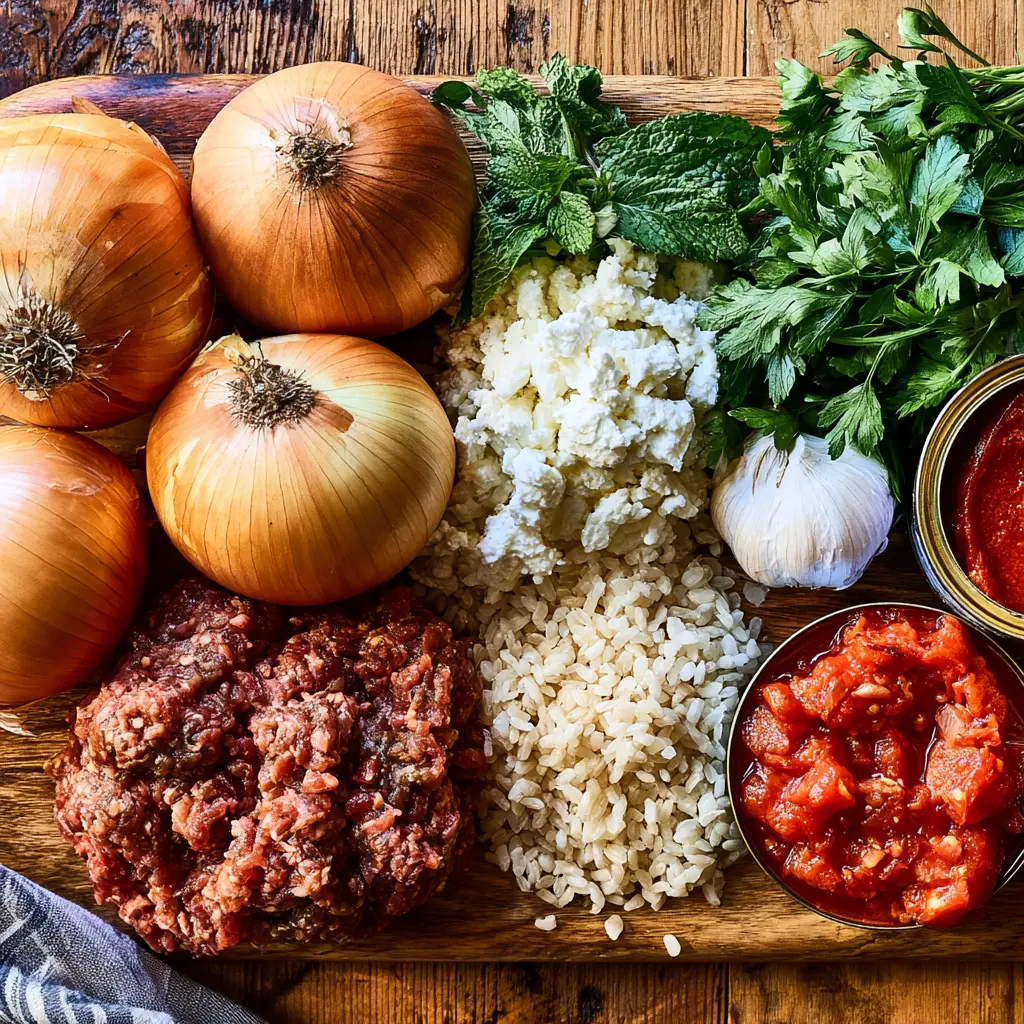
The beauty of this Greek stuffed onions recipe is that the shopping list is humble, but the flavors are anything but. Here’s what you need and why each ingredient pulls its weight.
The onions. Six large yellow onions, and yes, size matters here. You’ll peel off the 3 or 4 largest outer layers from each one, so bigger onions give you bigger, more forgiving wrappers. Yellow onions also have that perfect balance of sweetness and bite, and they caramelize into something deeply golden in the oven.
The tomato sauce. One cup of crushed tomatoes or passata, plus a good ladle of the onion cooking water, becomes a rich, glossy broth in the oven. Don’t skip the onion water it’s sweet and full of flavor, and it’s the ingredient that makes this taste like it simmered all day.
The aromatics. Fresh oregano or dried, a handful of chopped fresh mint, olive oil, salt, pepper, and here’s my slightly rebellious addition a short cinnamon stick tucked into the sauce. The Greeks have been pairing cinnamon with tomato and meat for ages, and it rounds out the sweetness of the onions in a way that makes everyone ask what’s in it.
For serving. A lemon cut into wedges, a little extra feta for crumbling, and good crusty bread. You’ll want the bread; the sauce is the kind you chase around the plate.
How to Make Greek Stuffed Onions (Step by Step)
This recipe has a reputation for being fiddly, but I promise, it’s one of those tasks that looks far harder than it is. Once you peel your first onion layer, you’ll feel like a pro. Here’s the full walkthrough.
1. Boil the Onions
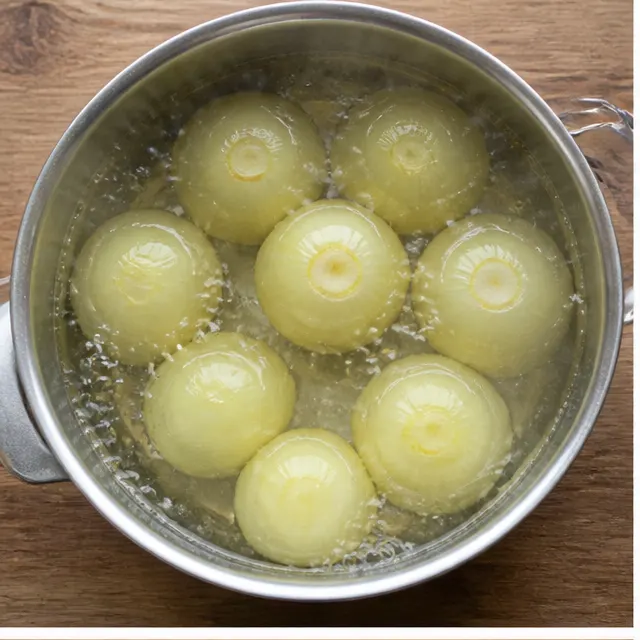
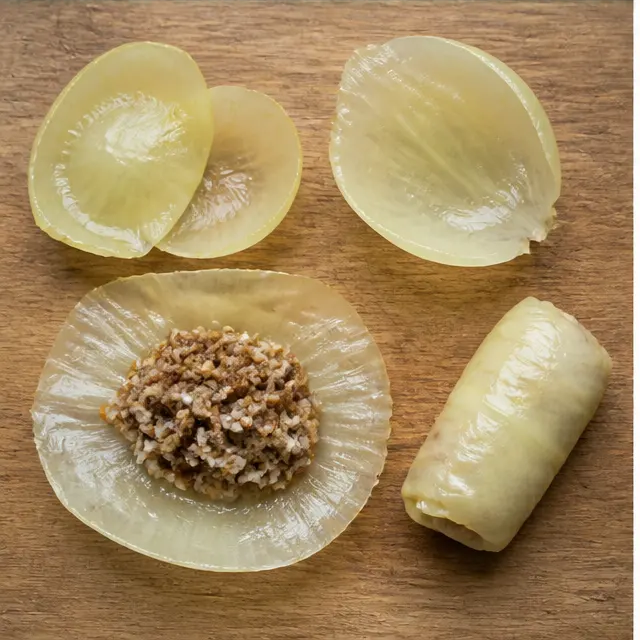
Fill a large pot with water, add a generous spoonful of salt, and bring it to a rolling boil. While you wait, peel each onion and cut a single slit down one side just one cut, not all the way through. This slit is the whole secret: it lets the layers open up like a jacket so you can slide them off flat instead of tearing them.
Drop the onions into the boiling water and cook for about 10 to 12 minutes, until the outer layers look translucent and give easily when you press them. Fish them out with a slotted spoon and let them cool until you can handle them.
Carefully peel off the 3 or 4 largest outer layers from each onion and lay them flat on a plate. Reserve the smaller inner layers don’t toss them! You’ll chop those for the filling. And save the pot of onion water; that’s your sauce base.
2. Make the Filling
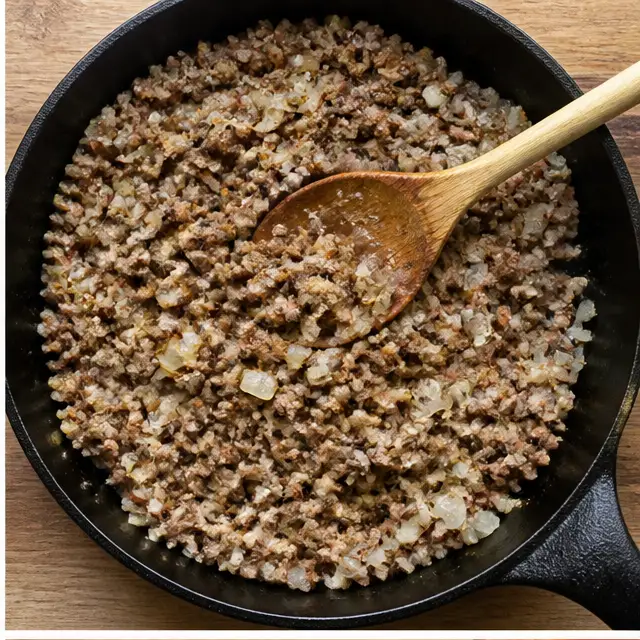
Finely chop the reserved onion centers. In a skillet over medium heat, warm a glug of olive oil and cook the chopped onions until soft and lightly golden, about 5 minutes. Add the ground chuck, breaking it up with a spoon, and let it brown. Season generously with salt, pepper, and dried oregano.
Take the pan off the heat. Stir in the uncooked arborio rice, the chopped fresh mint, and the crumbled feta. This is the moment the filling comes to life the feta melts into the warm meat, and the mint smells like a Greek summer kitchen.
3. Roll the Bundles
Lay an onion layer on your cutting board with the inside facing up. Place a small mound of filling at one end about a heaping teaspoon, or enough to make a neat little roll. Fold the sides in over the filling and roll it up like a mini cabbage roll. The onion should be soft enough to wrap snugly without cracking. If it fights you, it needs a quick dip back in the hot water.
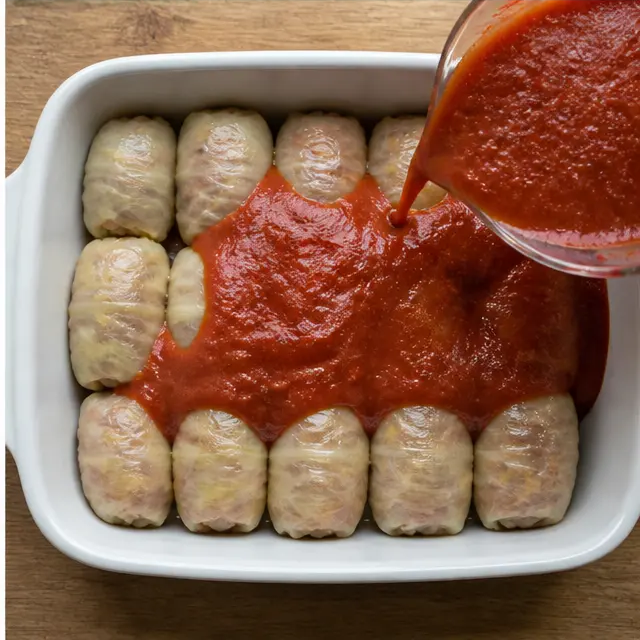
Pack each stuffed onion seam-side down into your baking dish, close together. Packing them tight keeps them from unrolling while they bake.
4. Make the Sauce and Bake
In a large measuring cup, whisk together 2 cups of the reserved onion water, the crushed tomatoes, a drizzle of olive oil, and a pinch of salt and pepper. Pour the sauce over the stuffed onions. Tuck the cinnamon stick into the dish.
Cover with foil and bake at 350°F for 35 minutes. Remove the foil and bake for another 15 to 20 minutes, until the onions are glossy, the sauce is thickened, and the tops have caught a little color. For extra caramelization, finish under the broiler for a minute or two but stay close. They burn fast.
Let the dish rest for about 10 minutes before serving. The sauce settles, the flavors mingle, and you avoid scalding anyone’s mouth.
Top Tips for Perfect Stuffed Onions Every Time
- Cut the slit before boiling, not after. One straight cut down the side is all you need. It gives the layers room to open without tearing.
- Don’t throw away the onion water or the centers. Both are crucial. The centers go into the filling, and the water becomes the sauce. This is the no-waste heart of the dish.
- Boil until the onions are genuinely pliable. If the layers resist when you try to roll them, they’re not ready. A softer onion rolls like a dream; a firm one splits and leaks.
- Use only the largest layers for wrapping. Small, torn, or thin layers belong in the pan chop them into the filling or tuck them into the sauce.
- Don’t precook the rice. I know it’s tempting, but raw arborio rice absorbs the tomato sauce and meat juices as it bakes, which is exactly what you want. Precooking leads to mushy rolls.
- Pack them in tight. Snug rolls hold their shape and stay sealed. Loose rolls unravel.
- Broiler watching is non-negotiable. You can go from beautiful caramelization to burnt onions in under a minute.
Substitutions and Variations
This is one of those recipes that welcomes tweaking. Here’s a rundown of what swaps work and what to keep as is.
Ground meat. Ground chuck gives the richest results, but lean ground round or sirloin work if you want less fat. Ground turkey or lamb are excellent alternatives lamb especially, since it plays beautifully with mint and oregano.
Rice. Arborio is my first choice because it’s starchy and neutral, which helps the filling hold together. Long-grain white rice works too, though I’d skip strongly aromatic options like jasmine or basmati their fragrance competes with the herbs.
Herbs. Fresh mint is traditional and bright, but if all you have is dried mint, use about a third of the amount. Dill is a lovely substitute; use 1/4 cup fresh dill in place of the mint for a different but still very Greek character.
Tomatoes. Crushed tomatoes or passata both work. If you have fresh ripe tomatoes, by all means, peel and puree them late summer tomatoes make a glorious sauce.
Onions. Large yellow onions are my pick for their sweetness and size. Red or white onions also work; white onions are a touch milder and sharper, so taste your filling and adjust salt accordingly.
Vegan version. This is the adaptation I get asked about most. Skip the meat entirely and make a rice and pine nut filling: sauté the chopped onion centers with olive oil, add the arborio rice, a handful of toasted pine nuts, warming spices like cumin and a pinch of cinnamon, and a little tomato paste. Mix in fresh herbs and bake exactly the same way. It’s a gorgeous, naturally vegan and gluten-free version that stands proudly next to the classic.
A couple more ideas: add 1/4 cup of black currants to the filling for a sweet surprise, or stir a tablespoon of tomato paste into the meat mixture for extra depth.
Storage and Reheating
If you’re anything like me, you’ll make the full batch and be thrilled about the leftovers. These stuffed onions keep beautifully some might say they taste even better the next day, once the flavors have had time to settle in.
Refrigerator: Store in an airtight container with the sauce for up to 3 days. Reheat in a 350°F oven covered with foil until hot, or gently in the microwave with a splash of water or extra sauce to keep things moist.
Freezer: These freeze like a dream. Place the cooled stuffed onions in a freezer-safe container with the sauce, and freeze for up to 3 months. Thaw overnight in the refrigerator before reheating. Reheat covered in a 350°F oven until piping hot, about 20 to 25 minutes.
Make ahead: You can also assemble the whole dish rolls packed, sauce poured and refrigerate it covered for up to 24 hours before baking. Just add 5 to 10 minutes to the baking time since you’re starting from cold.
Serving Suggestions
In Greece, stuffed vegetables are often served warm rather than piping hot, sometimes even at room temperature with a generous squeeze of lemon. That’s how I love them.
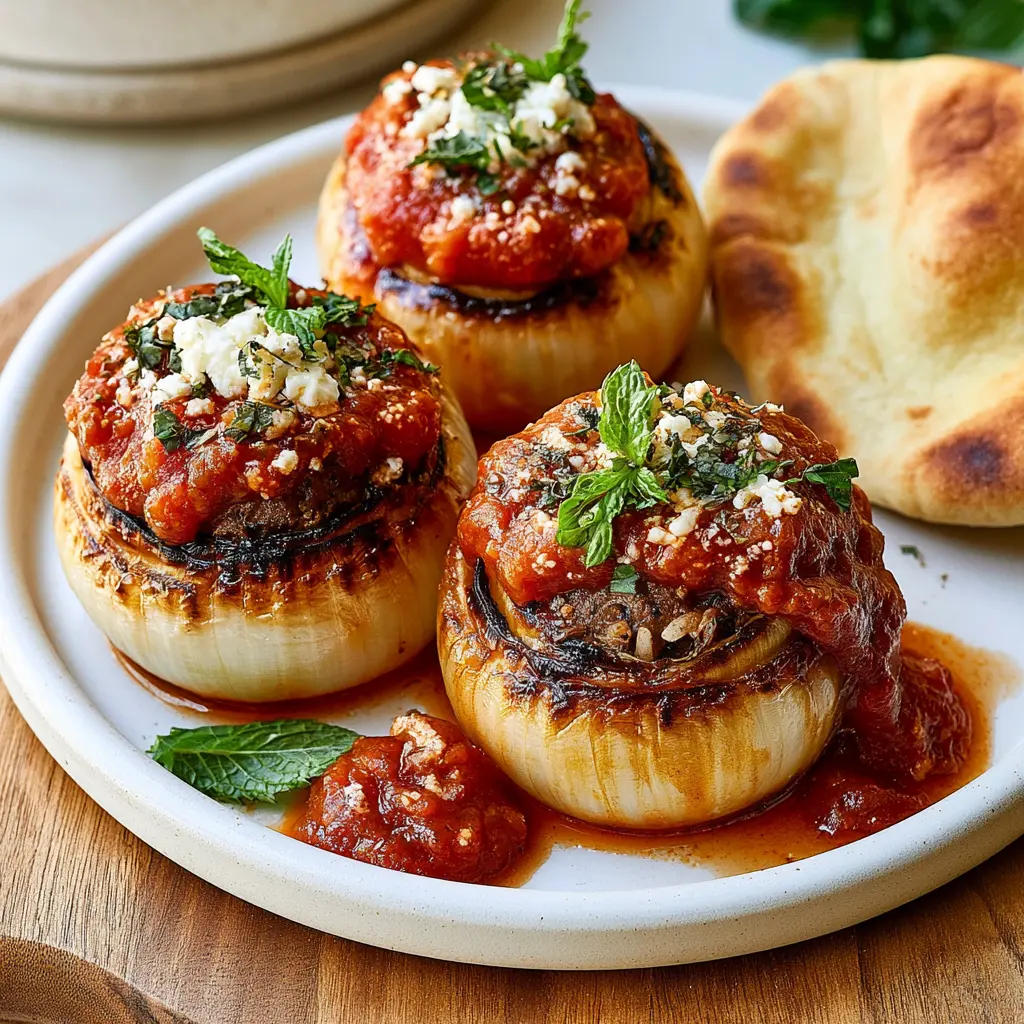
Set out the platter with crusty bread for mopping up the sauce, a dollop of Greek yogurt or tzatziki, crumbled feta, and a fresh green salad with herbs. They work beautifully as a main course with orzo or pilaf alongside, or as a hearty side dish next to roast chicken or lamb. If you’re serving the vegan version, a crunchy salad is all you need to complete the meal.
Garnish with extra parsley and lemon wedges, and don’t be shy about the lemon it cuts the sweetness of the onions and ties everything together.
Frequently Asked Questions
Can I make Greek stuffed onions ahead of time?
Absolutely it’s one of the best make-ahead recipes I know. You can boil and peel the onions a day in advance and keep the layers in the fridge, or assemble the entire dish and bake it when you’re ready. Both work beautifully.
How do I keep the onion layers from unrolling?
Three things: make sure the onions are soft and pliable before rolling, don’t overstuff them, and pack them seam-side down in a snug baking dish. The tight packing is the real trick the rolls literally hold each other closed while baking.
Do I need to cook the rice before baking?
No. The whole point of using arborio or long-grain white rice is that it cooks in the sauce while the onions bake. The rice absorbs the tomato and meat juices, which is exactly what gives the filling its rich flavor.
Can I freeze stuffed onions?
Yes. Freeze them in a freezer-safe container with their sauce for up to 3 months. Thaw overnight in the fridge and reheat covered in a 350°F oven until hot all the way through.
How do I know when they’re done?
The onions should be tender enough to cut with the edge of a fork, the sauce should be thickened and glossy, and the tops should have nice caramelized spots. The filling will be fully cooked the rice tender, the meat cooked through.
Can I use turkey or lamb instead of beef?
Absolutely. Lamb especially shines in this recipe, since it loves mint and oregano. Ground turkey is lighter but still delicious just make sure to season it generously, since it can be a bit bland on its own.
The Little Science Behind the Magic
There are two things about this recipe that seem like magic, but they’re really just clever cooking. Let me explain the why so you can trust the process.
Why boil the onions first? Boiling softens the pectin in the onion cell walls, which is what makes the layers flexible enough to roll without cracking. It also tames the raw onion bite and releases natural sugars into the water which is exactly why that reserved onion water makes such a sweet, flavorful sauce. Throwing it away would be a tragedy.
Why arborio rice? Arborio is high in starch, so as it cooks, it releases that starch into the filling, helping everything bind together like a savory rice pudding. It absorbs the surrounding liquid beautifully, which means you get plump, juicy rice instead of dry grains. If you swap in another white rice, just know the texture will be slightly different still delicious, just a little looser.
Why does the sauce thicken in the oven? Between the starch from the rice, the natural pectin from the onions, and the gentle reduction of the liquid, the sauce transforms from watery to velvety in about an hour. Covering the dish first keeps everything moist; uncovering at the end lets it concentrate.
Expert Notes & Data Insights
After making this dish more times than I can count and adjusting it until the measurements were bulletproof here are the facts and figures worth knowing:
- Yield: 6 large onions give you roughly 18 to 20 rolls. Count on 4 to 5 per person for a main course, or 2 to 3 as a side.
- Baking math: 350°F for 35 minutes covered, then 15 to 20 minutes uncovered, plus a broiler minute if you want extra color. That’s about an hour total, most of it hands-off.
- Liquid ratio: 2 cups of reserved onion water to 1 cup of crushed tomatoes makes a sauce that’s rich but not watery the perfect consistency for soaking into bread.
- Rice ratio: 1 cup of uncooked arborio rice is the right amount for 1 pound of ground meat. It doubles as the batch grows, but don’t reduce the liquid when you scale down.
- Flavor timeline: The dish improves overnight. The onion layers continue absorbing the sauce, so leftovers are often the best part.
Here’s my final note: this recipe is one of the most forgiving things I’ve ever made. Even if your first roll is a little lumpy, or one layer tears mid-way, the sauce will forgive you. Serve it with lemon, good bread, and people you love, and it will absolutely disappear. That’s the Greek way.