
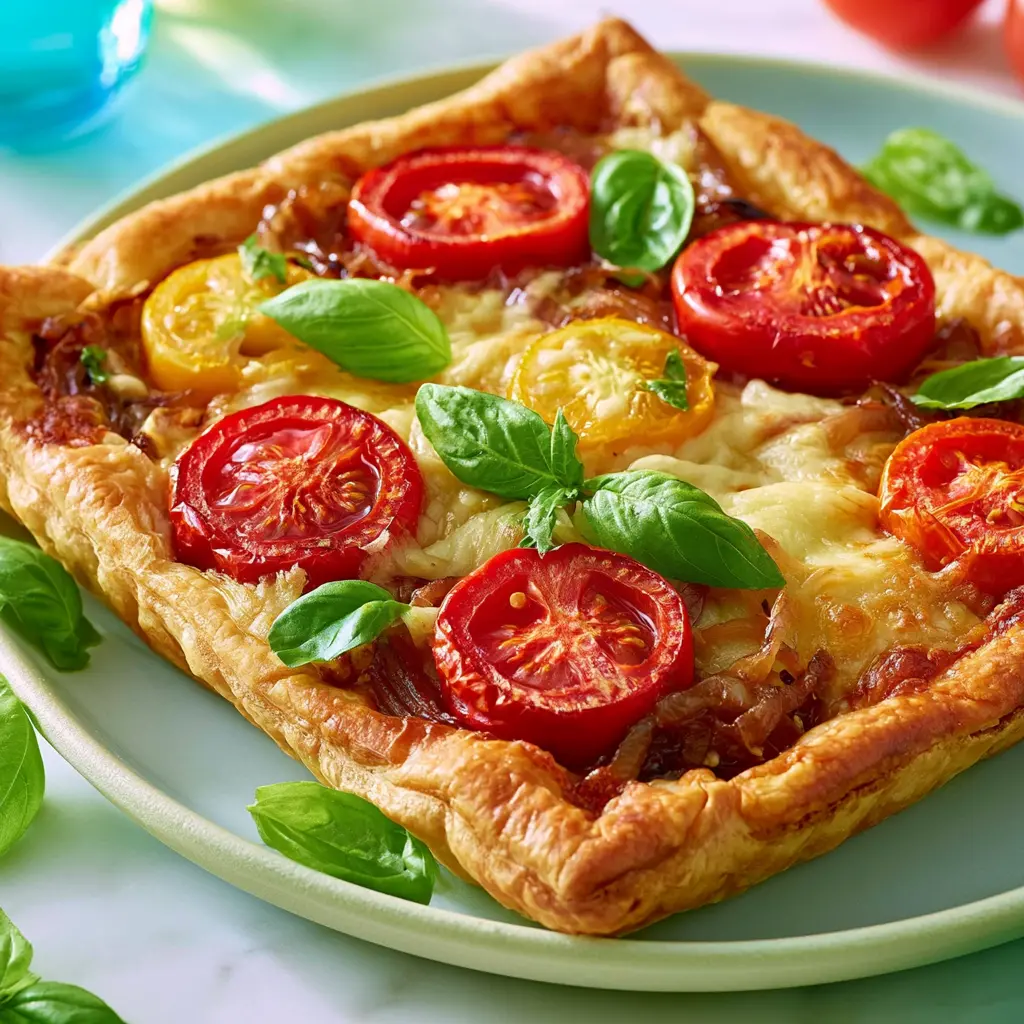
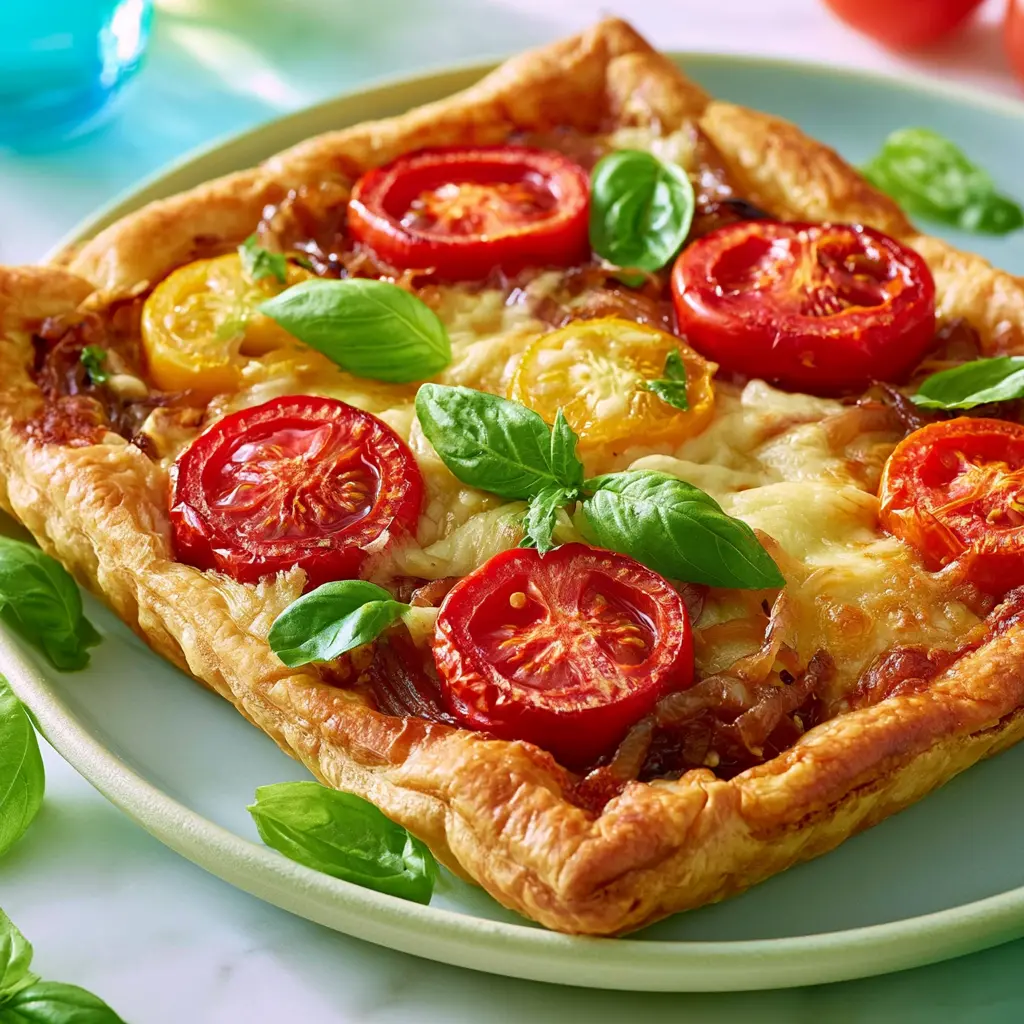
Burst Cherry Tomato Tart with Caramelized Onions and Three Cheeses
Ingredients
Method
- Set a large skillet over medium-low heat. Melt the butter in the skillet, then stir in the onions with a generous pinch of salt and pepper. Cook for 20 to 25 minutes, stirring occasionally, until the onions are tender and turn a deep golden brown. Remove from the heat and set aside.
- Preheat the oven to 450°F.
- Press the two pie crusts together into one ball and knead gently just until they combine. Roll the dough into one large, thin round and fit it onto a shallow quarter sheet pan, or cut the dough in half and line two standard pie pans instead. Scatter the grated Fontina, Parmesan, and Gruyère evenly over the crust. Spread the caramelized onions over the cheese, then scatter the cherry tomatoes on top.
- Whisk the egg and milk together in a small bowl. Brush the egg wash generously over the exposed edge of the crust. Bake for 20 to 22 minutes, watching closely, until the tomatoes begin to burst and develop dark roasted spots on their skins and the crust is deep golden brown. If the crust browns too quickly, lower the oven temperature to 425°F.
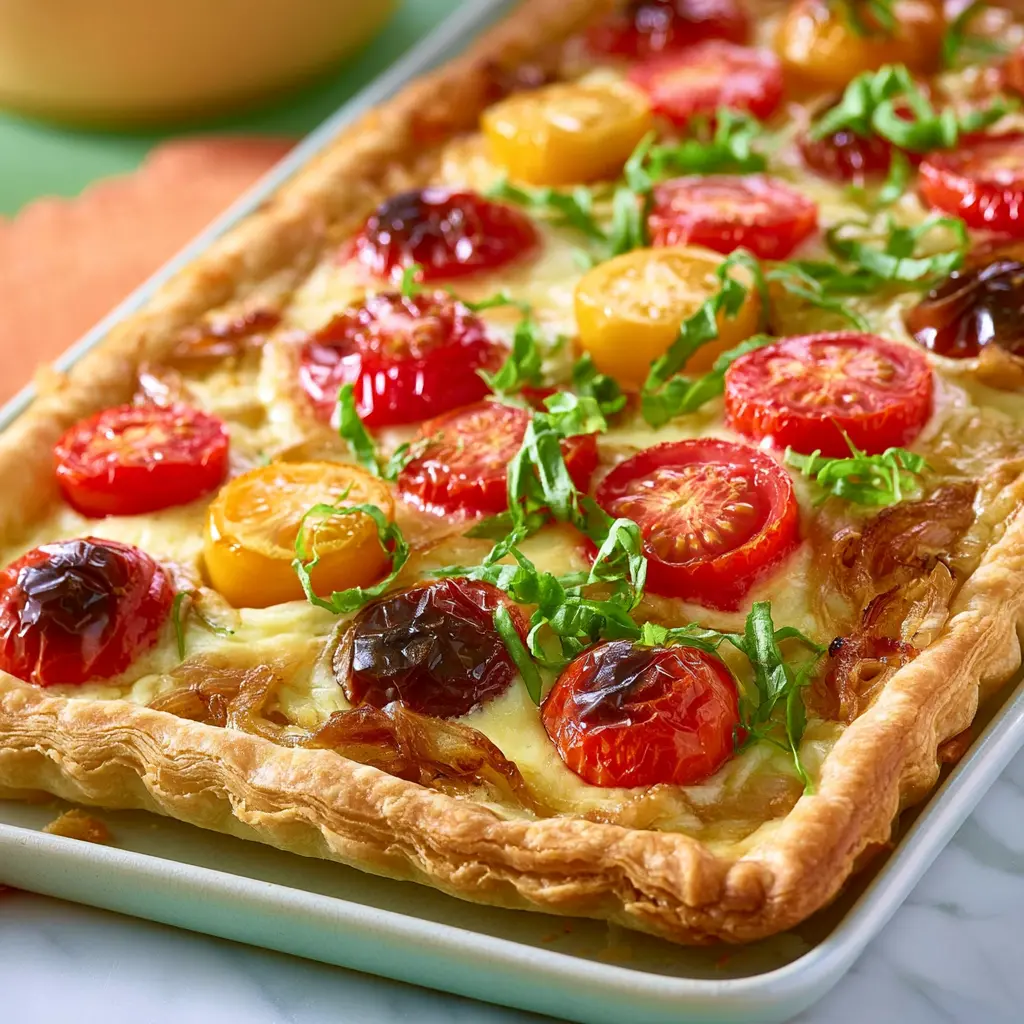
- Remove the tart from the oven and let it rest for 5 minutes so the filling settles. Sprinkle the sliced basil all over the top, cut into squares, and serve warm.
Nutrition
Notes
Tried this recipe?
Let us know how it was!Why This Tomato Tart Recipe Works
I saw them at the market and couldn’t resist. Three pounds of blushing cherry tomatoes, half of them sunshine gold, half of them deep scarlet, demanding to be more than a salad. That’s how this tomato tart happened in my kitchen. And honestly? It’s become the dish I wait all summer to make. The combination sounds simple, but it hits every single note. Sweet caramelized onions cooked low and slow until they’re practically jam. A blanket of three melted cheeses that turns golden and bubbly. Burst cherry tomatoes that develop dark, roasted spots and jammy edges. All of it sitting on a buttery, shattering crust that somehow stays crisp even after the tart cools. Here’s what makes this savory tomato tart different from the sad, soggy versions you’ve probably had before. The onions aren’t just a flavor layer, they’re a moisture barrier. The cheese is a second shield. And the tomatoes get patted completely dry before they ever touch the crust. Every layer has a job. When they work together, you get a golden, flaky crust instead of a steamy, soggy one. I’ll admit something. I learned the hard way that a soggy crust will ruin your night. But here’s the good news about this tomato tart recipe. You don’t need to blind bake. You don’t need to roll your own pastry from scratch. Two store-bought pie crusts get pressed together into one generous, sturdy base that holds up beautifully. No culinary degree required. The ingredient list is short and honest: cherry tomatoes, yellow onions, butter, three good melting cheeses, and a couple of store-bought pie crusts. Plus an egg and a splash of milk for the golden finish, and fresh basil to shower over the top. Everything comes together in about 45 minutes from start to finish.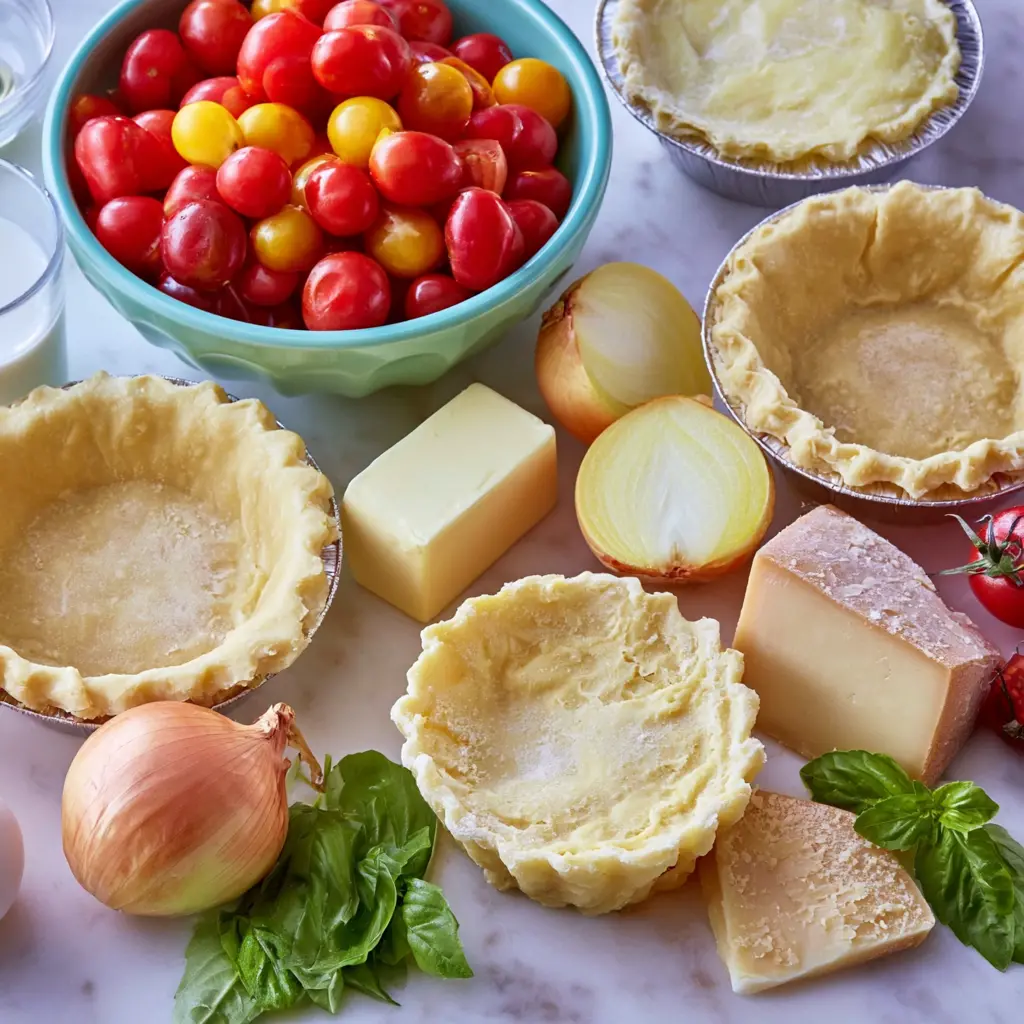 Let me tell you what this tomato tart tastes like, because that’s really why you’re here. The onions bring a deep, sweet, almost buttery note that makes your kitchen smell incredible. The Fontina melts into creamy pockets, the Gruyère adds a nutty, salty edge, and the Parmesan crisps up in the most addictive way. Then the tomatoes burst in your mouth, releasing that sweet, sun-warmed juice that tastes like summer itself.
You’ll pull this out of the oven and just stare at it for a second. The crust will be deep golden brown. The tomatoes will look like little jewels with charred, blistered spots. The cheese will be bubbling at the edges. That’s the moment you’ll know you’ve made something special. This is the tomato tart you make when you want to impress without breaking a sweat, and it’s the ultimate summer tomato tart for good reason.
Let me tell you what this tomato tart tastes like, because that’s really why you’re here. The onions bring a deep, sweet, almost buttery note that makes your kitchen smell incredible. The Fontina melts into creamy pockets, the Gruyère adds a nutty, salty edge, and the Parmesan crisps up in the most addictive way. Then the tomatoes burst in your mouth, releasing that sweet, sun-warmed juice that tastes like summer itself.
You’ll pull this out of the oven and just stare at it for a second. The crust will be deep golden brown. The tomatoes will look like little jewels with charred, blistered spots. The cheese will be bubbling at the edges. That’s the moment you’ll know you’ve made something special. This is the tomato tart you make when you want to impress without breaking a sweat, and it’s the ultimate summer tomato tart for good reason.
How to Make Tomato Tart
Making this tomato tart comes down to four simple stages. The full recipe is waiting in the recipe card above, but let me walk you through each moment so you know exactly what you’re looking for, and more importantly, why each step matters.Stage 1: Caramelize the Onions
Start with the onions, because they need the most time. Set your skillet over medium-low heat, melt the butter, and let those sliced onions cook for 20 to 25 minutes, stirring occasionally. You’re looking for a deep golden brown color, not just translucent. The onions will shrink dramatically and smell almost sweet, like they’re turning into something entirely new. This is where a lot of the tart’s depth comes from, so don’t rush it. High heat gives you burnt edges and raw centers. Low and slow is the whole trick.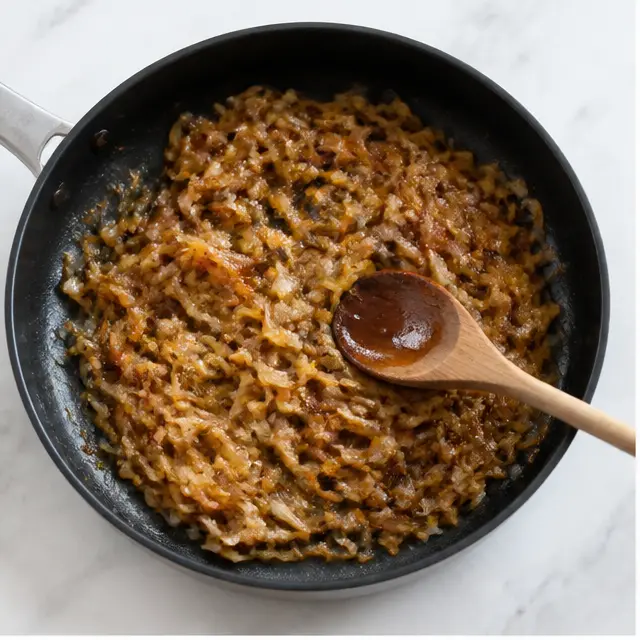
Stage 2: Combine and Roll the Crust
Here’s the genius move. Take both store-bought pie crusts, press them together into one ball, and knead gently just until they combine. It won’t be perfectly smooth, and honestly, that’s the charm. Roll the dough into one large, thin round and fit it onto a shallow quarter sheet pan. No sheet pan handy? Cut the dough in half and line two standard pie pans instead. You’ll end up with two smaller tarts, which might be even better for feeding a crowd. The crust is the foundation of any great tomato tart, so give it a generous base.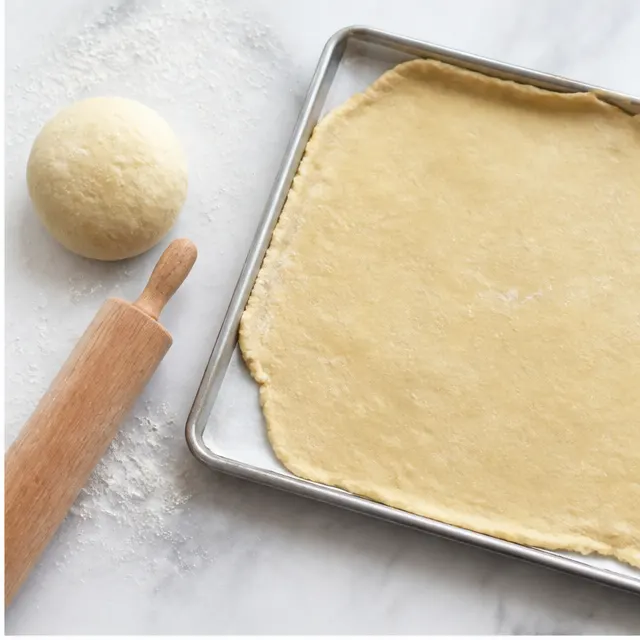
Stage 3: Layer the Filling
Now the layering, and the order matters a lot in a tomato tart. Scatter the grated Fontina, Parmesan, and Gruyère evenly over the crust first. The cheese creates a fatty barrier that keeps moisture from seeping into the dough. Then spread the caramelized onions over the cheese. Finally, scatter the cherry tomatoes on top, whole, not sliced. Whole tomatoes hold their shape better and release their juice more slowly during baking. Make sure they’re thoroughly dried first. Wet tomatoes are the enemy of a crisp crust.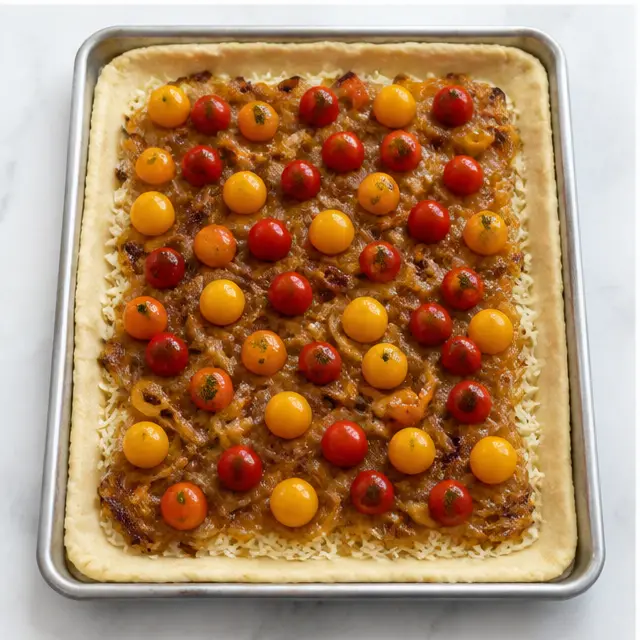
Stage 4: Egg Wash and Bake
Whisk the egg and milk together, then brush the mixture generously over the exposed edge of the crust. This egg wash is what gives the tart that gorgeous, glossy, deep golden finish. Bake at 450°F for 20 to 22 minutes, watching closely. You want the tomatoes to begin bursting and developing dark roasted spots on their skins. The crust should be deep golden brown. If the edges are browning too fast during the last 5 minutes, lower the oven to 425°F. Every oven runs differently, no shame in adjusting. When the tart comes out, let it rest for 5 minutes. I know you’ll want to slice it immediately, but the juices need time to settle. Then shower the top with thinly sliced basil, cut into squares, and serve warm. You’ll get clean pieces and a filling that stays exactly where it should.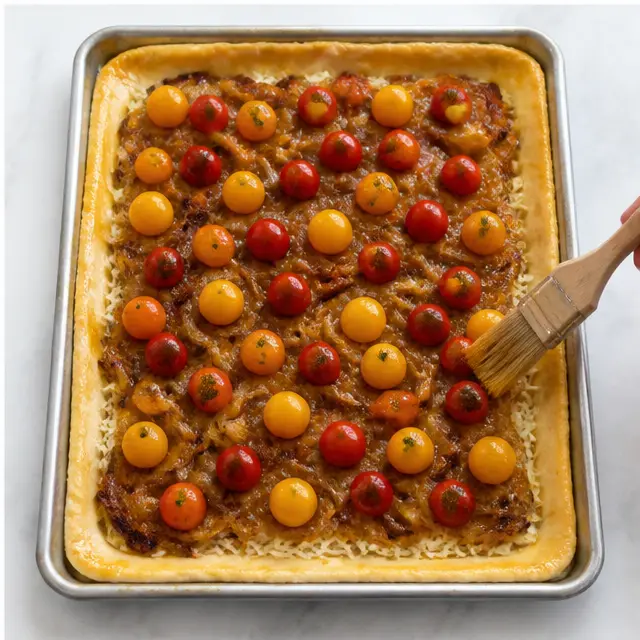
Tips for the Perfect Tomato Tart
Over the years I’ve made this tomato tart more times than I can count. These are the little things that make this tomato tart go from good to unforgettable.- Pat the tomatoes absolutely dry. This is non-negotiable. The recipe calls for washed and thoroughly dried tomatoes, and that second part matters as much as the first. Extra water on the tomatoes steams into the crust while it bakes, and that’s how you get a soggy bottom.
- Use a shallow pan. A quarter sheet pan is perfect because it’s not deep. Deep pans trap steam and prevent the bottom crust from crisping properly. If the dough won’t fit the pan, roll it slightly thinner or use two standard pie pans instead.
- Let the tart rest before slicing. This is the hardest part, honestly. The kitchen smells incredible and everyone is hovering. But slice too soon and the juices run out. Five minutes. That’s all you need.
- Watch the crust, not just the timer. Ovens lie sometimes. If the edges are getting too dark before the tomatoes are blistered, drop the temperature to 425°F and let it finish.
Common Mistakes and How to Avoid Them</h3
tomato tart recipe is how forgiving it is. You can swap cheeses, switch up the herbs, even change the pan, and the tart still turns out gorgeous. Over the years I've tested a lot of variations, and these are the ones I keep coming back to.
Cheese Swaps That Work
The trio of Fontina, Gruyère, and Parmesan is my go-to, but it’s far from the only option. I’ve made this tomato tart with Monterey Jack, mozzarella, Swiss, and even Romano when the Gruyère was nowhere to be found. Each one brings something different. Monterey Jack melts into the creamiest pockets but stays mild. Mozzarella gives you that long, stringy pull. Swiss adds a gentle nuttiness. And Romano brings a sharp, salty bite that holds its own against the sweet onions.
If you want to go the tangy route, swap the Fontina for goat cheese. It turns crusty-brown on top while staying creamy-soft inside, which is a completely different but equally delicious personality. Sharp provolone and white cheddar both bring more edge. And one of my all-time favorite combinations? Soft goat cheese mixed with Boursin. It melts into something almost luxurious, like the filling of a fancy French tart.
The one rule that matters: pick cheeses that melt well. If it melts on a burger, it’ll melt in this tart.
Herb Alternatives
Basil is the classic and my personal favorite, but it’s not the only herb that works. Snipped chives bring a gentle onion note that pairs beautifully with the caramelized onions. Fresh thyme adds an earthy, almost floral character. Parsley keeps things bright and fresh. Finely chopped rosemary gives the whole tart a more rustic, savory personality. Use what you have, or go with a combination. You can’t really get this wrong.
Crust Options
I reach for store-bought pie crusts because they’re reliable and save time. But a homemade crust works beautifully too if that’s your thing. Puff pastry is another fine option, just know it bakes up flakier and a little less sturdy than a pie crust, so handle it gently. And yes, a good gluten-free pie crust handles this recipe well, so your gluten-free friends don’t have to miss out.
Twists Worth Trying
- Dijon layer. Brush a thin layer of Dijon mustard over the crust before adding the cheese. It adds a subtle spicy back-bite that’s genuinely addictive.
- Honey drizzle. A light drizzle of wild blackberry honey over the tomatoes right before baking adds a hint of sweetness that makes everything taste even more like summer.
- Mini tarts. Use leftover dough to press into a muffin tin or form free-form mini tartlets. They bake faster, so start checking around 15 minutes.
- Extra creamy. Fold a half cup of drained cottage cheese into the cheese mixture. It adds creaminess and a little protein, and nobody will ever guess it’s in there.
Pan Variations
I use a shallow quarter sheet pan because it gives you that beautiful rectangular tart that’s easy to cut into squares. But you have options. Two standard pie pans work perfectly and make for a more traditional look. A tart pan with a removable bottom gives you an especially elegant presentation. Even a flat cookie sheet with the edges folded up will do in a pinch. Just keep it shallow. That’s the one rule that never changes.
Frequently Asked Questions
These are the questions I get asked most often, both in the comments and from friends who’ve tried the recipe. Let me save you the trial and error.
Do I need to blind bake the crust first?
No. This tomato tart bakes entirely in one go. The caramelized onions and cheese create a protective barrier that stops the tomato juices from soaking into the dough. That’s the whole design. If you want an extra-crisp bottom, place the tart on the lowest oven rack or bake it on a preheated sheet pan.
Can I use puff pastry instead of pie crust?
Yes, with one caveat. Puff pastry bakes up flakier and lighter, so the tart won’t be quite as sturdy as the pie-crust version. Roll it out to fit your pan and keep a close eye on the bake time, because puff pastry can go from golden to overdone fast.
What temperature should this tart be served at?
Hot, warm, or room temperature, and all of them are great. I love it warm, about 10 minutes out of the oven, when the cheese is still molten and the crust is at its crispiest. Room temperature is perfect for picnics and potlucks. Cold leftovers straight from the fridge are pretty irresistible too, not that I’d know anything about that.
How can I tell if a tomato is ripe?
A ripe tomato smells fragrant, has no bruises or blemishes, and gives slightly when you press it gently. Avoid anything pale, rock-hard, or overly soft. In peak summer, farmers market tomatoes are almost always the answer.
Can I use large tomatoes instead of cherry tomatoes?
You can, but you’ll need to adjust. Slice them into thick rounds, lay them on paper towels, sprinkle lightly with salt, and let them sit for 15 minutes to release excess moisture. Pat them completely dry before layering. You may also need to add a few extra minutes of bake time since larger tomatoes hold more liquid.
How do I keep the crust from getting soggy?
Three things: pat the tomatoes completely dry, use a shallow pan, and let the tart rest before slicing. The cheese and caramelized onion layers are already doing the heavy lifting in the moisture department, so those three habits are all it takes.
Storage and Reheating
If you have leftovers, and that’s a big if, here’s how to make them taste as good as the first night.
Refrigerator
Store leftover tomato tart in an airtight container in the fridge for 2 to 4 days. The flavors actually settle and meld overnight, which means day-two leftovers are often even better than the first night. Bring slices to room temperature before serving, or reheat them gently if you want that fresh-baked warmth.
Reheating
Please don’t microwave it. The microwave turns the crust rubbery and the tomatoes mushy. I know it’s tempting because it’s fast, but trust me on this. Reheat slices in a 350°F oven for 5 to 10 minutes. The crust crisps right back up and the cheese gets melty again. Worth every minute.
Freezer Instructions
This tart freezes better than you’d expect. Bake it fully, cool it completely, then wrap it tightly in a layer of plastic wrap followed by a layer of foil. It’ll keep for up to 2 months. Reheat straight from frozen in a 375°F oven until hot all the way through, usually 20 to 25 minutes. The crust won’t be quite as shatteringly crisp as fresh, but it’ll be close, and that’s a fair trade for having a summer tart in your freezer on a random Tuesday.
Make-Ahead
You can caramelize the onions up to 3 days ahead and keep them in the fridge. You can also assemble the whole tart, unbaked, cover it, and refrigerate overnight. Just add 5 minutes to the bake time if it goes in cold. I’ve done this for brunch and it’s a lifesaver if you want to actually talk to your guests instead of chopping onions.
Serving Suggestions
This tomato tart is the kind of dish that makes everything around it look better. It works for a light summer lunch, a vegetarian dinner, a brunch centerpiece, a picnic, or honestly, a midnight snack. It’s that versatile.
My favorite way to serve it is cut into big, generous squares with a shower of fresh basil chiffonade on top. I set it right in the middle of the table on a large cutting board and let everyone grab a piece. It’s casual, it’s colorful, and it disappears fast.
For a complete meal, pair it with a crisp green salad dressed in a simple lemon vinaigrette. The acidity of the dressing balances the richness of the cheese beautifully. Grilled zucchini, asparagus, or summer corn also make excellent companions. For brunch, serve it alongside scrambled eggs and fresh fruit. And for a crowd, it’s perfect next to a crudité platter and some good crusty bread to mop up any juices.
Expert Notes & Data Insights
After making this tomato tart more times than I can count, I’ve gathered a few insights that don’t fit neatly into step-by-step instructions. Consider these the insider notes, the stuff I wish someone had told me the first time.
The Recipe Science
Why no custard? Most tomato tarts rely on a custard base of eggs and cream. This one doesn’t, and that’s deliberate. A custard dilutes the bright, sun-ripened flavor of the tomatoes. Without it, every bite tastes intensely of tomato, sweet onion, and nutty cheese. The tomato stays front and center, exactly where it belongs.
Why whole tomatoes? Cherry tomatoes that are left whole release their juice more slowly than halved or sliced ones. That slower release gives the crust time to crisp before the moisture arrives. Sliced tomatoes dump their liquid immediately, and that’s how tarts turn into soup.
Why the rest time matters? When the tart comes out of the oven, the juices are still moving. Slicing immediately sends them running across the pan. The 5-minute rest isn’t a suggestion. It’s what allows the filling to set and the juices to stay where they belong.
The Data That Matters
- 450°F bake temperature. High heat blisters the tomatoes and crisps the crust quickly, before moisture has time to penetrate the dough. If the edges brown too fast, drop to 425°F and let the tart finish.
- 20 to 22 minutes of bake time. This is shorter than most tarts, and that’s by design. You want blistered tomatoes, a golden crust, and bubbling cheese, not a dried-out mess.
- 20 to 25 minutes for the onions. Low and slow is the only approach that works. High heat burns the exterior while leaving the interior harsh and raw.
- Three cheeses, three roles. Fontina brings creaminess and melt. Gruyère adds nutty depth and salt. Parmesan crisps into golden patches on top. Every one of them has a job.
- Two pie crusts, one foundation. Pressing two store-bought crusts together gives you a sturdy, generous base that holds up to a full layer of filling. That’s the secret to a tart that doesn’t fall apart when you lift a slice.
Doneness Indicators
- Crust: deep golden brown all over, especially at the edges. Pale edges mean it needs more time.
- Tomatoes: beginning to burst with dark, roasted spots on the skins. They should look jammy, not shriveled.
- Cheese: bubbling and browned in spots, with crispy, caramelized bits where it meets the crust.
- Aroma: the kitchen should smell like caramelized onions, toasted cheese, and roasted tomatoes all at once. That’s when you know it’s close.
A Final Note
This tomato tart is summer on a sheet pan. It’s the recipe I wait all year to make, and it never disappoints. The crust shatters when you bite into it. The onions are jammy and sweet. The tomatoes burst like little sun-warmed gifts. The cheese pulls into long, golden strands. It’s simple enough for a weeknight and impressive enough for a dinner party, and once you understand how the layers work together, you can riff on it for the rest of your life.
So go find the best tomatoes you can. Pat them dry. Caramelize those onions slowly. And make the tomato tart that’ll have everyone asking for the recipe.