
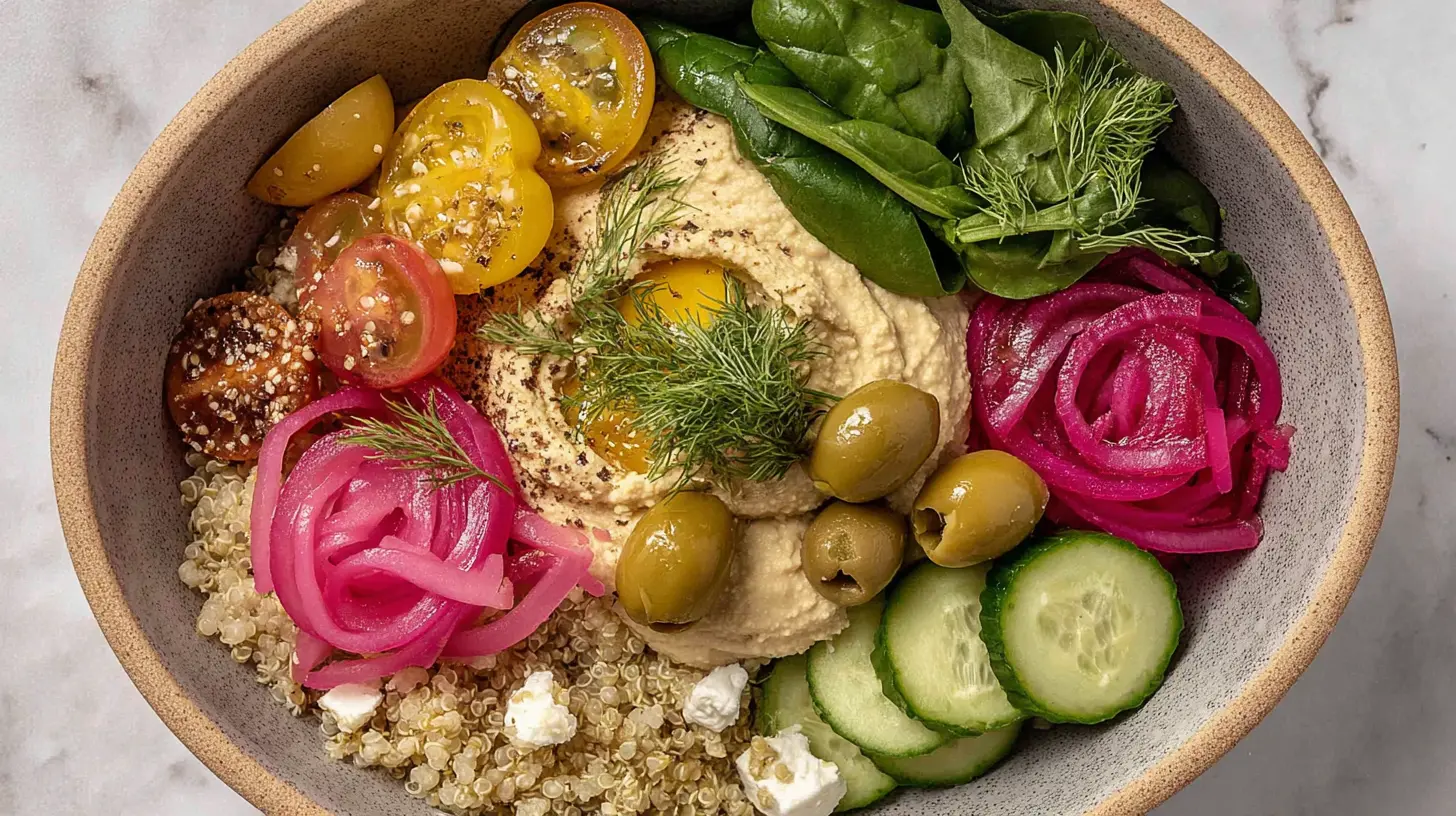
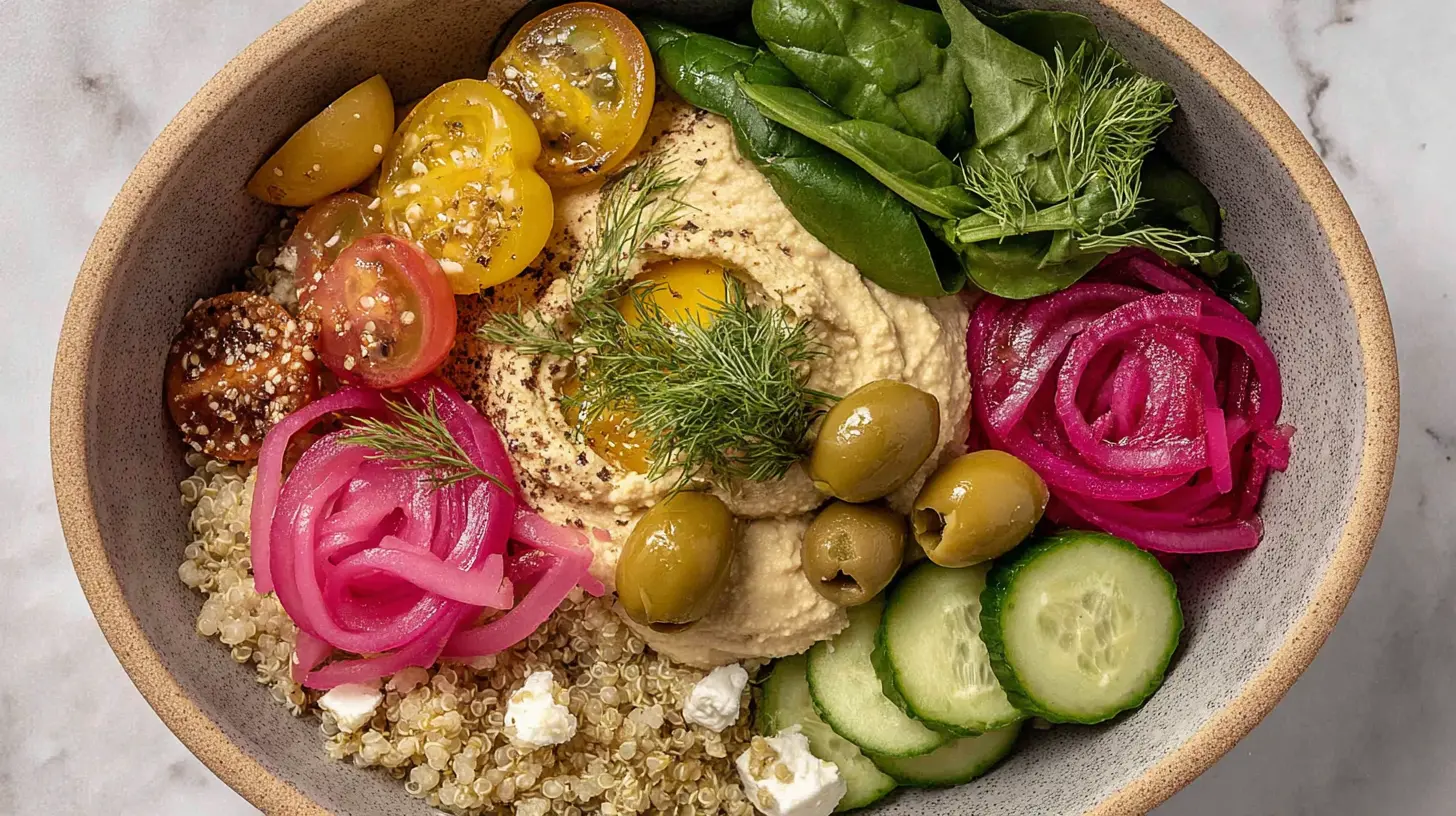
Easy Greek Hummus Veggie Bowl
Ingredients
Method
- Prepare quinoa according to package instructions and set aside.
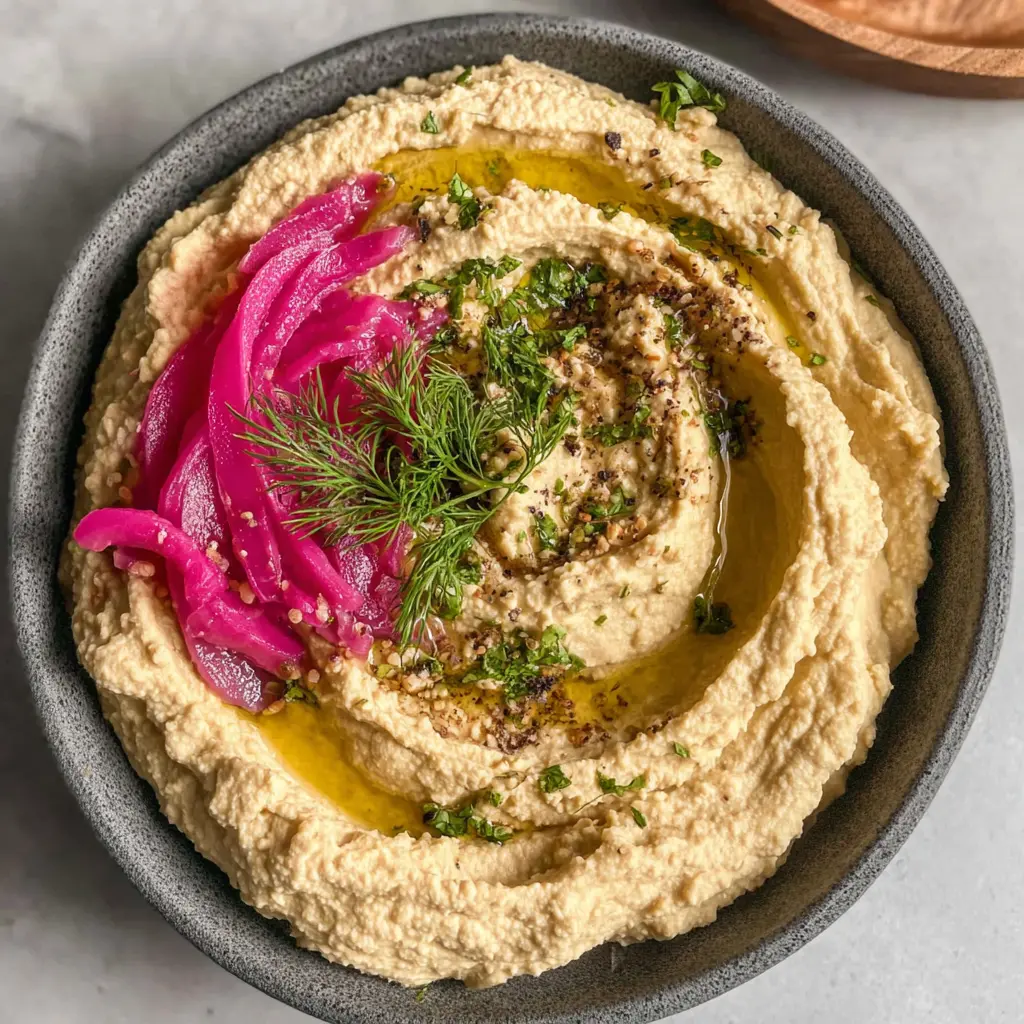
- For the hummus, combine chickpeas, tahini, olive oil, ice-cold water, lemon juice, garlic, and salt in a blender or food processor. Blend until almost smooth. Incorporate 2-3 ice cubes and continue blending until the hummus is smooth and fluffy.
- Prepare the hummus bowl vegetables by slicing cucumbers, green olives, and cherry tomatoes.
- Assemble the bowls. Create a base in each bowl with half of the spinach, cooked quinoa, and hummus. Top with sliced cucumbers, green olives, cherry tomatoes, and pickled red onions.
- Finish each bowl with 1-2 tablespoons of dressing and 1 tablespoon of freshly chopped dill. Serve with fresh pita bread or naan.
Nutrition
Notes
- You will have leftover hummus as not all of it is needed for two hummus bowls. Hummus can be stored in a closed container in the fridge for 3-5 days.
- All bowl ingredients are best stored in individual containers and will keep in the fridge for 3-4 days. The one exception is pickled onions which can be stored in the fridge for up to 2 weeks.
Tried this recipe?
Let us know how it was!Why You’ll Love This Greek Veggie Hummus Bowl
Okay, honestly, who hasn’t stared into the fridge on a Tuesday night, utterly stumped? You’re tired, you’ve probably just battled some serious LA traffic, and the thought of cooking something complicated? No thank you. I mean, we all want healthy, vibrant food, right? But sometimes, the inspiration just isn’t there, or maybe you think it’s going to take forever.
That’s where this amazing Greek Veggie Hummus Bowl comes in. It’s truly a lifesaver for those busy weeknights or when you want a fresh, satisfying lunch that doesn’t weigh you down. This isn’t just a meal; it’s a little escape, a Mediterranean moment right in your kitchen, and it comes together so quickly.
Especially now, with spring in full swing here in California, we’re craving lighter, brighter meals. This healthy hummus bowl meal perfectly celebrates those fresh flavors. Trust me, you’ll feel nourished, energized, and pretty proud of yourself for whipping up something so delicious and good for you.
Key Ingredients & Smart Substitutions
The beauty of this Greek Veggie Hummus Bowl is how simple the ingredients are, but how much flavor they pack. You’re looking for fresh, vibrant produce, you know? Think of it like a trip to the Santa Monica Farmers Market, even if you’re just at Ralphs.
First up, the hummus. We’re talking creamy, dreamy homemade hummus. For the best texture, I always, always remove the outer skins from the cooked chickpeas. It’s a little extra step, I know, but it makes all the difference, giving you that perfectly smooth consistency. And here’s a pro tip: add a few ice cubes at the very end when you’re blending. It makes your hummus extra fluffy, seriously! You’ll use tahini, olive oil, ice-cold water, lemon juice, garlic, and salt to create this magic.
For the veggies, we’ve got cooked quinoa, fresh spinach, crisp English cucumber, and sweet cherry tomatoes. I like Persian cucumbers myself, but English ones work just fine. If you don’t have cherry tomatoes, plum tomatoes are a good stand-in. Sliced green olives add that lovely briny kick. And the pickled red onions? Oh my goodness, they’re just fantastic. I like to make a big batch of these and the quinoa on a Sunday, so they’re ready for various healthy lunch ideas throughout the week. It’s such a time-saver!
Now, about substitutions, because you’ve got to make this your own, right? If quinoa isn’t your thing, you could use another grain like bulgur, farro, brown rice, or even couscous. For the spinach, baby arugula or romaine lettuce are great options. And for that dressing, any light vinaigrette would be lovely, but I often just let the hummus be the star, maybe with an extra drizzle of good quality extra virgin olive oil. Don’t add a heavy dressing, you know, the hummus acts like a thick, delicious dressing itself.
How to Make Greek Veggie Hummus Bowls
Making a Greek Veggie Hummus Bowl isn’t complicated, I promise. It’s all about layering and fresh ingredients. You’ve got this, honestly. It’s one of those no-cook meal ideas that feels like you’re doing something impressive, but it’s really not.
Prepare the Hummus
The first step, and I think it’s the most important for that homemade flavor, is making your hummus. You’ll combine cooked chickpeas, tahini, olive oil, ice-cold water, lemon juice, garlic, and salt in a food processor. Blend it until it’s super smooth. Remember my little secret for extra fluffiness? Toss in a couple of ice cubes and blend again until it’s perfectly tender and creamy. You’ll probably have leftover hummus, which is amazing for snacking or other meals.
Assemble Your Hummus Bowls
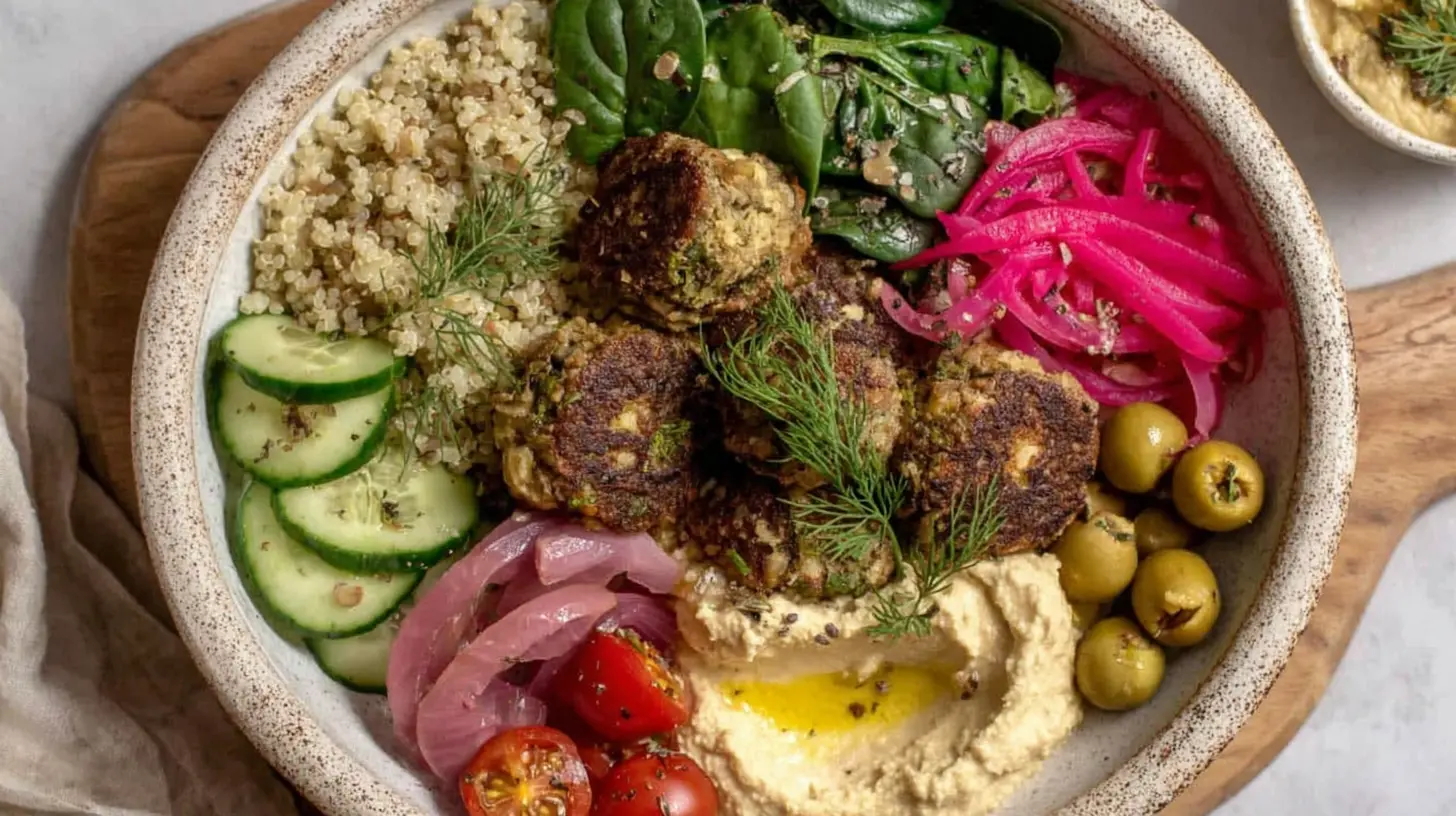
Once your hummus is ready, it’s assembly time! This is the fun part, where you get to see all those vibrant colors come together. Start with a base of cooked quinoa and fresh spinach in a shallow bowl. Then, artfully arrange your sliced English cucumber, juicy cherry tomatoes, sliced green olives, and those tangy pickled red onions around the bowl. A generous dollop of your homemade hummus goes right in the center. Finally, a sprinkle of fresh dill and a drizzle of Greek dressing or extra olive oil, and you’re good to go. It’s a plant based hummus dish that just sings with flavor.
One thing I’ve learned the hard way: always assemble the bowls just before you’re going to eat them. If you let the hummus sit on the fresh ingredients for too long, it can make them a little soggy, and we want everything crisp, you know? Also, cut your salad ingredients into similar sized pieces. It makes it so much easier to eat, and when I meal prep these, I just shake up my container and everything gets evenly coated with that amazing hummus. It’s just right.
Variations & Customization Ideas
The thing is, this Greek Veggie Hummus Bowl recipe is just a starting point. It’s so adaptable, you’ll be able to make it your own every single time. Honestly, that’s what I love about these power bowls. They’re a blank canvas for fresh ingredients and your own cravings.
Want to switch up the grains? Instead of quinoa, try millet. Just a quick note on millet: to prevent it from getting mushy, I recommend removing it from the stove once most of the water is absorbed, cover it with a lid, and let it steam for another 10 minutes. This makes it light and fluffy, not sticky. Other grains like farro, couscous, or brown rice are also fantastic. If you’re looking for more protein in your plant based hummus dish, cooked lentils or even some seasoned tofu would be amazing.
When it comes to veggies, the sky’s the limit! Leftover roasted veggies like eggplant, zucchini, or bell peppers are a game-changer. You could also add fresh red onions if you don’t have pickled, or some leafy greens like baby spinach, arugula, or even some Swiss chard for a bit of a bitter contrast. Shredded carrots, radishes, or sun-dried tomatoes can also add a lovely texture and flavor. I mean, it’s all about what you have on hand and what looks good at Trader Joe’s or Whole Foods that week.
Don’t forget the fun toppings! Pomegranate seeds add a burst of sweetness and color. Pine nuts or sesame seeds give a nice crunch. And for a truly deconstructed gyro vibe, maybe some gluten-free crushed pita chips? You could even vary the flavor of your homemade hummus itself. Spicy hummus or red pepper hummus taste great in this bowl, too, adding another layer of savory veggie dip bowl deliciousness. It’s all about playing around and finding what you love.
Storage & Meal Prep Tips for Your Hummus Bowl
One of the biggest pain points, you know, is food waste and making healthy eating work with a busy schedule. This healthy hummus bowl meal is absolutely perfect for meal prep, but there’s a trick to keeping everything fresh and vibrant, not soggy. The components store really well separately, so you can enjoy these throughout the week without any issues.
Your homemade hummus and cooked quinoa are real workhorses here. You can make both of these up to 5 days ahead of time and store them covered in the fridge. For the hummus, I like to put it in an airtight container, sometimes with a thin layer of olive oil on top to prevent it from drying out. The cooked quinoa also keeps beautifully in an airtight container. Your pickled red onions? Those are even better, lasting up to two weeks in the fridge.
When it comes to the fresh veggies like cucumber, cherry tomatoes, and spinach, they’re best prepped fresh when you’re ready to assemble. However, you can wash and chop them ahead of time and store them in separate containers in the fridge. I recommend storing everything in individual closed containers. That way, when you’re ready for your healthy hummus bowl meal, you just grab your prepped components and assemble. It’ll stay fresh and crisp for 3-4 days this way. Honestly, it makes those quick dinner recipe nights so much easier. You’re just layering, not cooking!
If you’re wondering about reheating, well, this is mostly a no-cook meal, so reheating isn’t usually an issue! If you’ve added any roasted vegetables or grains that you prefer warm, you can gently warm those in a microwave or on the stovetop before adding them to your bowl. But for the fresh components, you want them cool and crisp. It’s all about enjoying that fresh veggie hummus mix as intended.
Common Questions & Pro Tips for Your Greek Veggie Hummus Bowl
Common Mistakes & Fixes for Your Greek Veggie Hummus Bowl
Mistake: The bowl tastes bland or unbalanced.
Solution: You might need more lemon juice or salt in your hummus, or a bit more fresh dill. Sometimes a little extra drizzle of good olive oil really brings out the flavors. Don’t be afraid to taste and adjust! I mean, it’s your bowl, make it just right.
Mistake: Veggies are soggy.
Solution: This usually happens if you assemble the Greek Veggie Hummus Bowl too far in advance, or if the cucumber wasn’t patted dry. Make sure your veggies are dry, and assemble right before serving for maximum crispness. Store components separately, you know?
Mistake: Hummus isn’t creamy enough.
Solution: Did you remove the chickpea skins? And did you add the ice cubes at the end? Those two steps are the real secret to perfectly tender, smooth, and fluffy homemade hummus. Blend longer, too.
Mistake: Overcooked or mushy grains.
Solution: Especially with millet, it’s easy to overcook. Take it off the heat when most water is absorbed, then let it steam covered. For quinoa, stick to the 1:2 ratio of grain to liquid and don’t stir too much while it cooks.
Frequently Asked Questions About This Healthy Hummus Bowl Meal
More Fresh & Healthy Meals You’ll Love
If you’re loving the effortless vibrancy and nourishing satisfaction of this Greek Veggie Hummus Bowl, I’ve got more good news for you. The Mediterranean diet is full of healthy lunch ideas and quick dinner recipes that follow the same principles: fresh ingredients, vibrant flavors, and easy assembly. Think chickpea bowls, hearty vegetarian dinners, and summer salads that make you feel amazing.
I mean, once you get the hang of these power bowls, you’ll probably find yourself experimenting with all sorts of plant-based meal combinations. It’s a wonderful way to consistently provide healthy, appealing meals for yourself and your family without feeling overwhelmed. You know, that farm-to-fork philosophy really shines through when you focus on fresh produce from places like Whole Foods or your local farmers’ market.
So don’t stop here! Keep exploring wholesome food options that make you feel good. This Mediterranean hummus plate is just the beginning of a delicious journey to a healthier, more energetic you. And honestly, it’s so good, you’ll wonder why you didn’t try it sooner!
Equipment Recommendations for Your Kitchen
To make this Greek Veggie Hummus Bowl a breeze, you don’t need a ton of fancy gadgets, but a few key pieces of equipment really do make a difference, you know? For that super creamy homemade hummus, a good food processor is pretty essential. I mean, you could try a blender, but a food processor really gets it perfectly tender and smooth.
Beyond that, a sharp chef’s knife for all your fresh veggie prep is a must. It’s worth investing in a decent one, honestly, it makes chopping those cucumbers and tomatoes so much faster and safer. A sturdy cutting board is also key. And for meal prep, I can’t recommend a good set of airtight glass containers enough. They’re great for storing your hummus, quinoa, and prepped veggies, keeping everything fresh and preventing any weird plastic smells. It’s not being fussy, it’s the difference between a sad, soggy lunch and a truly amazing Greek Veggie Hummus Bowl mid-week.
For cooking your quinoa or millet, a good quality saucepan with a tight-fitting lid is perfect. And for serving, shallow bowls really let you show off all those vibrant colors. It’s all about making the process enjoyable and the outcome beautiful, right?
When you whip up this Greek Veggie Hummus Bowl, you’ll feel amazing and proud of creating something so fresh, healthy, and delicious. You’ve got this, and I can’t wait to see your creations! Tag me in your posts, I’d love to see them. For more inspiration, check out my Pinterest boards. Healthy, delicious living is totally within reach, honestly!
Source: Nutritional Information