
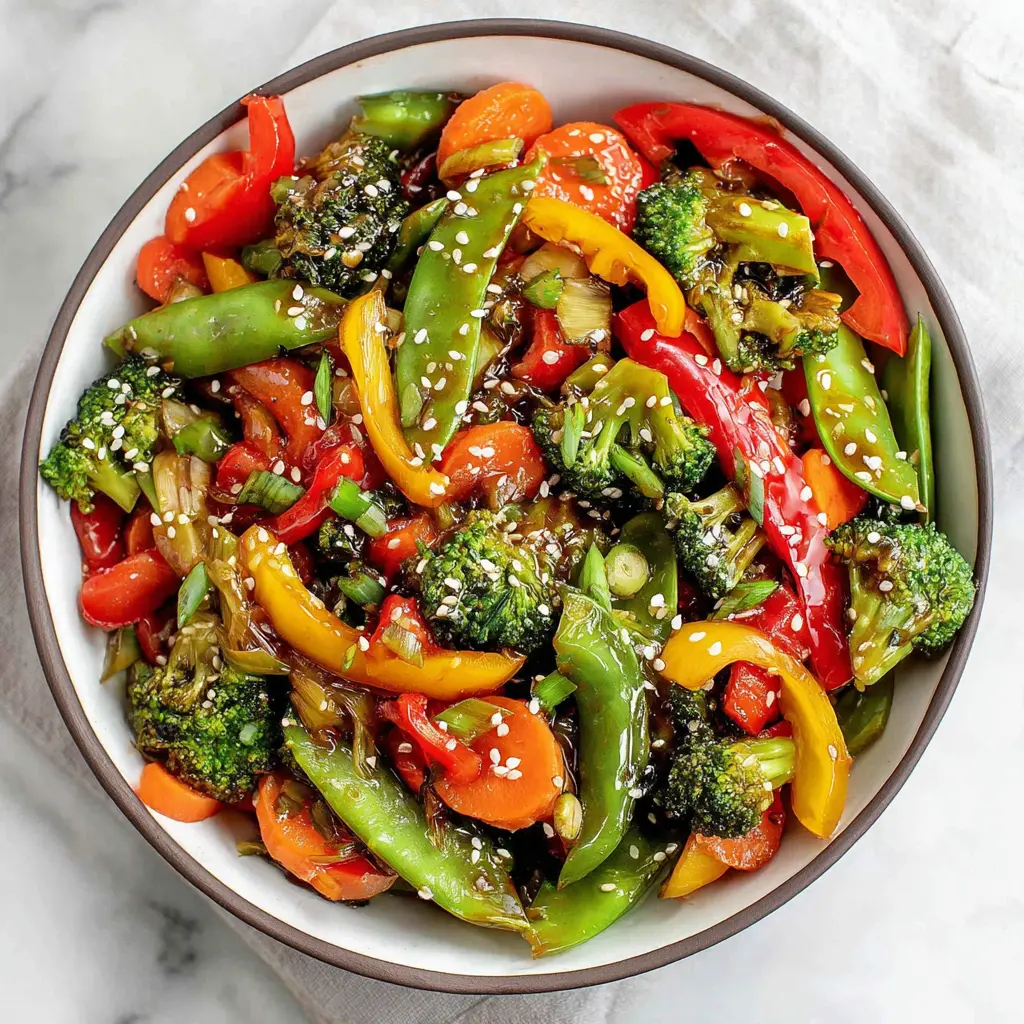
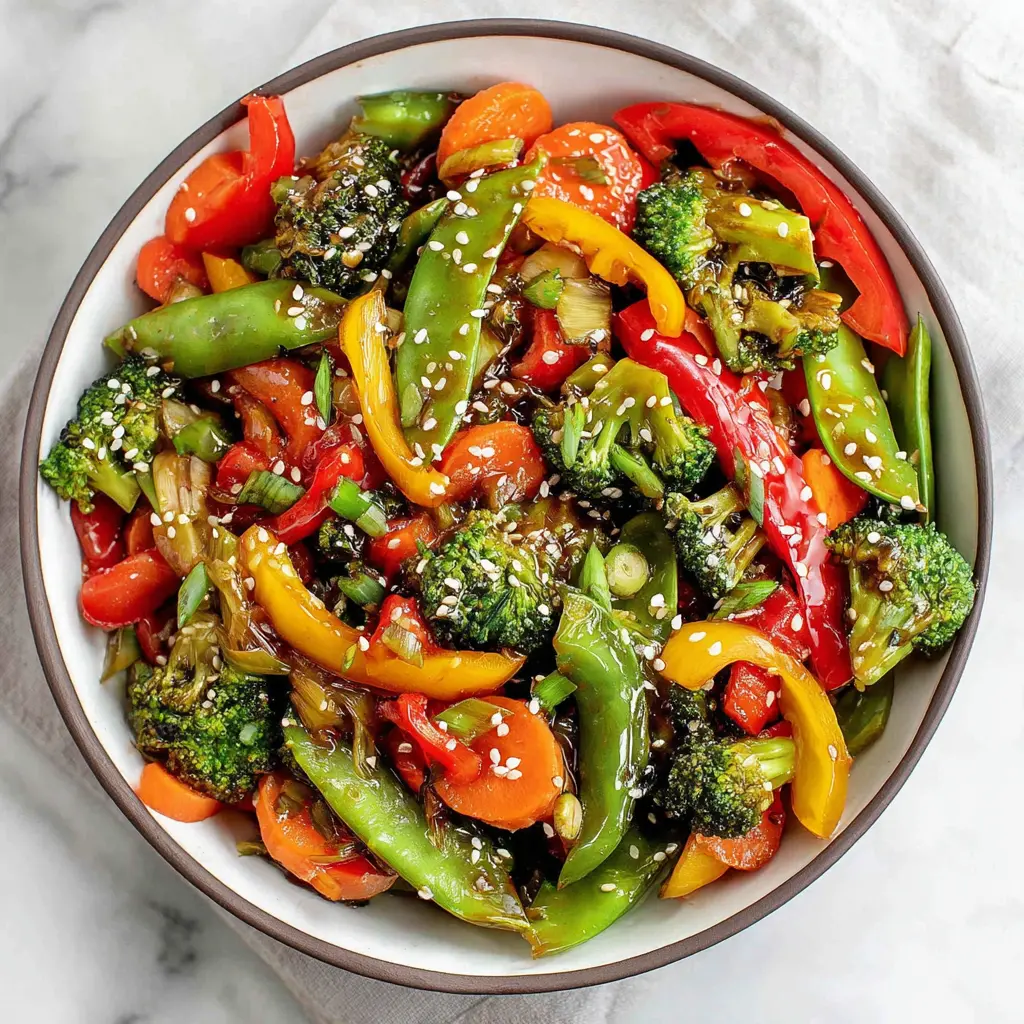
California Vegetable Stir Fry with Sesame Ginger Sauce
Ingredients
Method
- In a small bowl, whisk together the vegetable broth, soy sauce, honey, sesame oil, grated ginger, minced garlic, cornstarch, and red pepper flakes until smooth. Set aside.
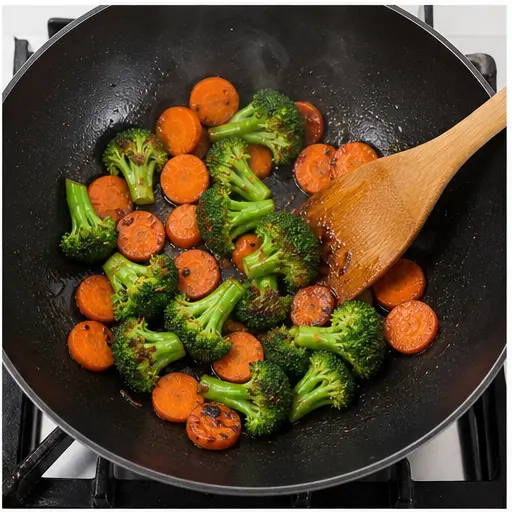
- Heat 1 tablespoon of the oil in a large wok or skillet over medium-high heat. Add the broccoli and carrots and stir-fry, tossing frequently, for 2 minutes. Add the remaining 1 tablespoon of oil, along with the mushrooms and snap peas. Cook, stirring, for another 2 minutes. Then add the red and yellow bell peppers and stir-fry for 1 minute more, until the vegetables are crisp-tender.
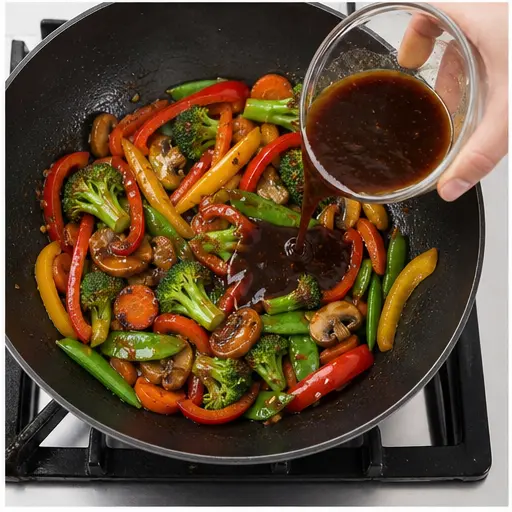
- Give the sauce a quick whisk to recombine, then pour it into the pan with the vegetables. Cook, stirring constantly, until the sauce thickens and coats the vegetables, about 1 to 2 minutes. Stir in the green onions, then remove the pan from the heat.
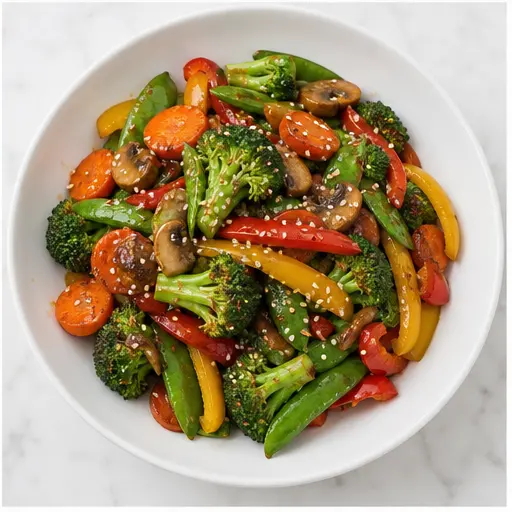
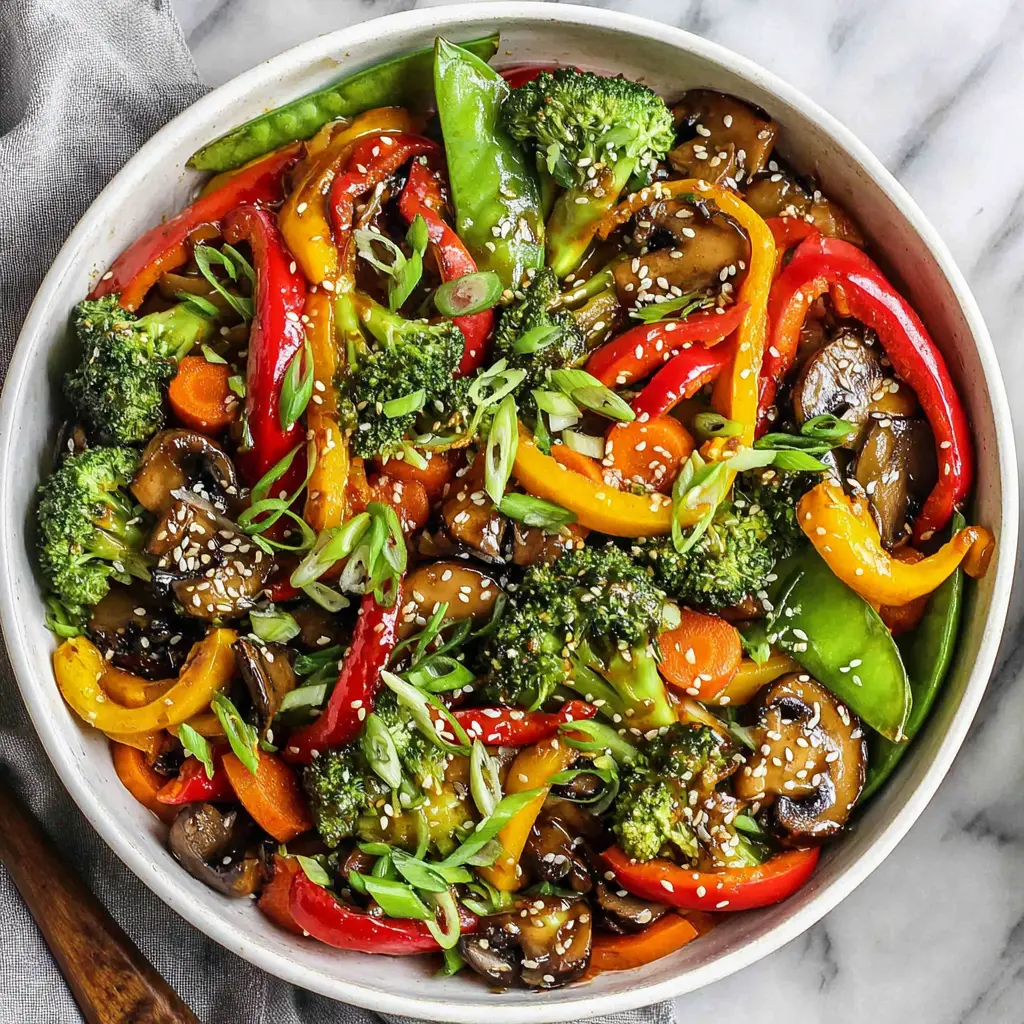
- Serve the stir fry vegetables over cooked rice or quinoa, garnished with sesame seeds and additional sliced green onions if desired.
Nutrition
Notes
Tried this recipe?
Let us know how it was!Why This California Vegetable Stir Fry Works
I used to ruin stir fry every time. Soggy, sad vegetables that nobody wanted to eat. Honestly, it was a problem. I’d end up with a watery mess that tasted more like steamed sadness than the vibrant, crispy dish I was dreaming of.
But this stir fry vegetables recipe? It’s different. It’s the one that finally clicked for me. The secret isn’t some fancy technique or a million ingredients. It’s about respecting the process a little and using a sauce that actually works.
This vegetable stir fry recipe is my go-to for busy weeknights. It’s packed with colorful veggies like broccoli, bell peppers, and snap peas, all coated in a savory sesame ginger sauce. And the best part? It’s on the table in under 30 minutes. You’ll get that restaurant-quality crunch without the takeout price tag.
Ingredients for Stir Fry Vegetables
Let’s talk about what you’ll need. The beauty of this dish is its flexibility, but for the best results, stick with this combo. It’s a winner.
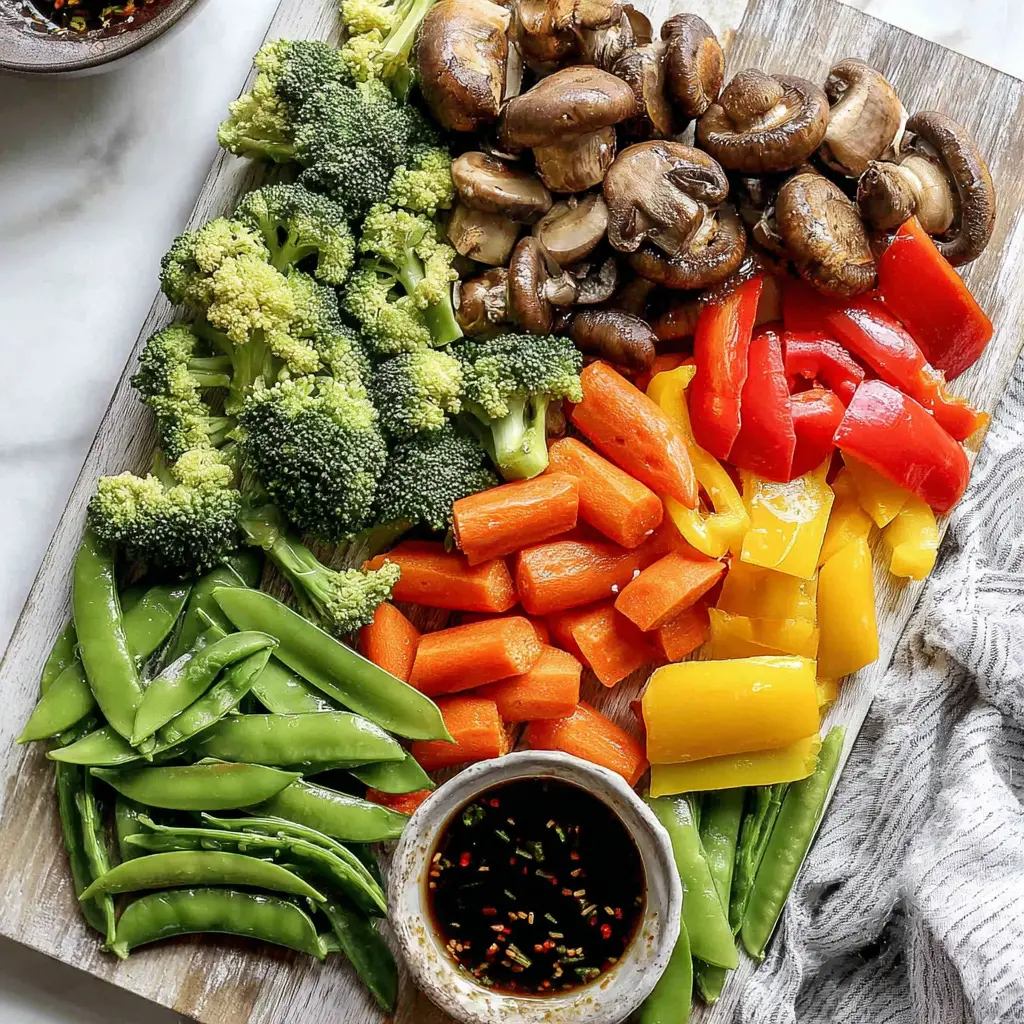
The Sesame Ginger Sauce
This is where the magic happens. It’s a simple mix of savory, sweet, and a little warmth. You’ll whisk it together in one bowl before you even start cooking. Easy, right?
- Low-sodium vegetable broth – Adds depth without making it too salty.
- Low-sodium soy sauce – The salty backbone. You can use tamari for a gluten-free version.
- Honey – A touch of sweetness to balance the savory and bring out the veggies’ natural flavor.
- Toasted sesame oil – This is non-negotiable. It gives that nutty, aromatic flavor that screams stir fry.
- Freshly grated ginger and garlic – The heart of the flavor. Don’t skip these, and definitely use fresh.
- Cornstarch – The secret to a glossy, clingy sauce that coats every piece of veg.
- Crushed red pepper flakes – A tiny kick of heat. Adjust it to your liking.
Best Vegetables for Stir Fry
You want a mix of textures and colors. This combo gives you that perfect crispy vegetables result.
- Broccoli florets – Cut them into bite-size pieces so they cook evenly.
- Carrots – Sliced into rounds. They add a natural sweetness.
- Cremini mushrooms – Sliced. They soak up the sauce beautifully.
- Sugar snap peas – Trimmed. They give that satisfying snap.
- Red and yellow bell peppers – Sliced. They add color and a slight sweetness.
- Green onions – Sliced, with the white and green parts separated. The whites go in during cooking, the greens are for garnish.
Variations and Substitutions
This easy stir fry is super adaptable. Here are some ways to make it your own.
- Protein add-ins: Add cooked chicken, shrimp, beef, or tofu. If you do, consider doubling the sauce so everything gets coated.
- Nut crunch: Toss in a handful of roasted cashews or almonds at the end for extra texture.
- Vegan option: Swap the honey for brown sugar or maple syrup.
- Gluten-free: Use certified gluten-free tamari instead of soy sauce.
- Veggie swaps: Use snow peas, asparagus, zucchini, or bok choy. Just adjust cooking times for softer veggies.
- Spicy kick: Add more red pepper flakes or a drizzle of sriracha.
How to Make Vegetable Stir Fry
Alright, let’s get cooking. The key is to have everything prepped and ready before you turn on the heat. This is not a recipe where you can chop as you go. Trust me on this one.
Stage 1: Prep and Sauce
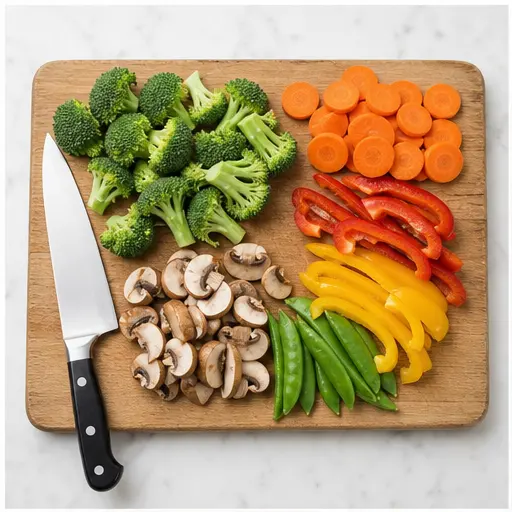
First, make your sauce. In a small bowl, whisk together the vegetable broth, soy sauce, honey, sesame oil, grated ginger, minced garlic, cornstarch, and red pepper flakes. Set it aside. Then, chop all your vegetables into uniform, bite-sized pieces. This ensures even cooking.
Stage 2: Searing the Heartier Veggies
Heat 1 tablespoon of oil in a large wok or skillet over medium-high heat. You want it hot. Add the broccoli and carrots first. They take a little longer. Toss them frequently for about 2 minutes. You’ll hear that beautiful sizzle, and the smell of garlic and ginger will fill your kitchen.
Stage 3: Adding the Remaining Veggies
Add the remaining 1 tablespoon of oil, along with the mushrooms and snap peas. Cook for another 2 minutes, stirring constantly. Then, add the red and yellow bell peppers. Cook for just 1 minute more. The goal is crisp-tender. You want a little bite, not mush.
Stage 4: The Sauce and Finish
Give your sauce a quick whisk to recombine the cornstarch. Pour it into the pan. Cook, stirring constantly, until the sauce thickens and coats the vegetables, about 1 to 2 minutes. It will go from cloudy to glossy right before your eyes. Stir in the white parts of the green onions, then remove from heat.
What to Serve with Stir Fry Vegetables
This dish is a complete meal, but it loves a good sidekick. Here are some ideas.
- Rice: Cooked brown rice, white rice, or jasmine rice are classic.
- Quinoa: A protein-packed, fluffy alternative.
- Noodles: Serve over cooked ramen, udon, or rice noodles for a heartier meal.
- Lettuce wraps: Spoon the stir fry into butter lettuce cups for a low-carb option.
- As a side: It’s fantastic alongside grilled chicken or fish.
Common Mistakes to Avoid
Even now, I occasionally overcrowd the pan and have to rescue it. Here’s how you can avoid that.
- ❌ Overcrowding the pan: Too many veggies at once lowers the temperature and causes steaming. ✅ Cook in batches if your pan is small.
- ❌ Overcooking vegetables: They go from crisp to mush quickly. ✅ Cook in stages based on density and keep the heat high.
- ❌ Not prepping ingredients beforehand: Stir frying is fast. You won’t have time to chop. ✅ Mise en place is your friend.
- ❌ Using low heat: High heat isn’t a suggestion it’s what gives you that char without steaming. ✅ Crank it up.
- ❌ Adding aromatics too early: Garlic and ginger burn quickly. ✅ Add them in the sauce, not at the start of cooking.
Storage and Reheating Tips
Got leftovers? Here’s how to keep them tasty.
- Cool completely: Let the stir fry cool down before storing to prevent condensation.
- Store in an airtight container: It will keep in the fridge for up to 3 days.
- Reheat in a skillet: Add a splash of broth or water and reheat over medium-low heat until warmed through. This helps revive the texture.
- Microwave option: It works, but the veggies will be softer. Heat in 30-second bursts.
- Freezing not recommended: The vegetables will turn mushy upon thawing. It’s best made fresh.
Frequently Asked Questions
Go ahead, grab whatever veggies are in your fridge, and make this yours. You’ve got this. And hey, if you make it, I’d love to hear how it turns out. Share your creations on social media and tag me!
For more healthy and delicious recipes, check out our Pinterest board for endless inspiration.
Source: USDA Nutritional Data

One Response
Made this last night and it was absolutely delicious! The sauce was perfectly balanced—not too salty, with just the right amount of sweetness from the honey. I added some tofu for extra protein and it worked great. Definitely a keeper for busy weeknights!