Quick Sweet Soy Beef Cups
Ingredients
Method
- Prepare the Beef
- Place the steak in the freezer for about 30 minutes—this makes it easier to slice thinly. Using a sharp knife, slice the steak against the grain into very thin strips.
- Marinate
- Transfer the sliced steak to a large bowl. Add the dark soy sauce, gochujang, ginger, brown sugar, mirin, garlic, pepper, grated apple, and sesame oil. Mix well to coat the beef. Cover and refrigerate for 3 to 4 hours to allow the flavors to develop.
- Cook the Beef
- Heat the neutral oil in a large skillet over medium-high heat. Remove the beef from the marinade using a slotted spoon and let any excess liquid drip off. Add the beef to the pan in batches if needed, separating the slices with tongs. Stir-fry for about 5 minutes, or until fully cooked and slightly caramelized.
- Assemble the Wraps
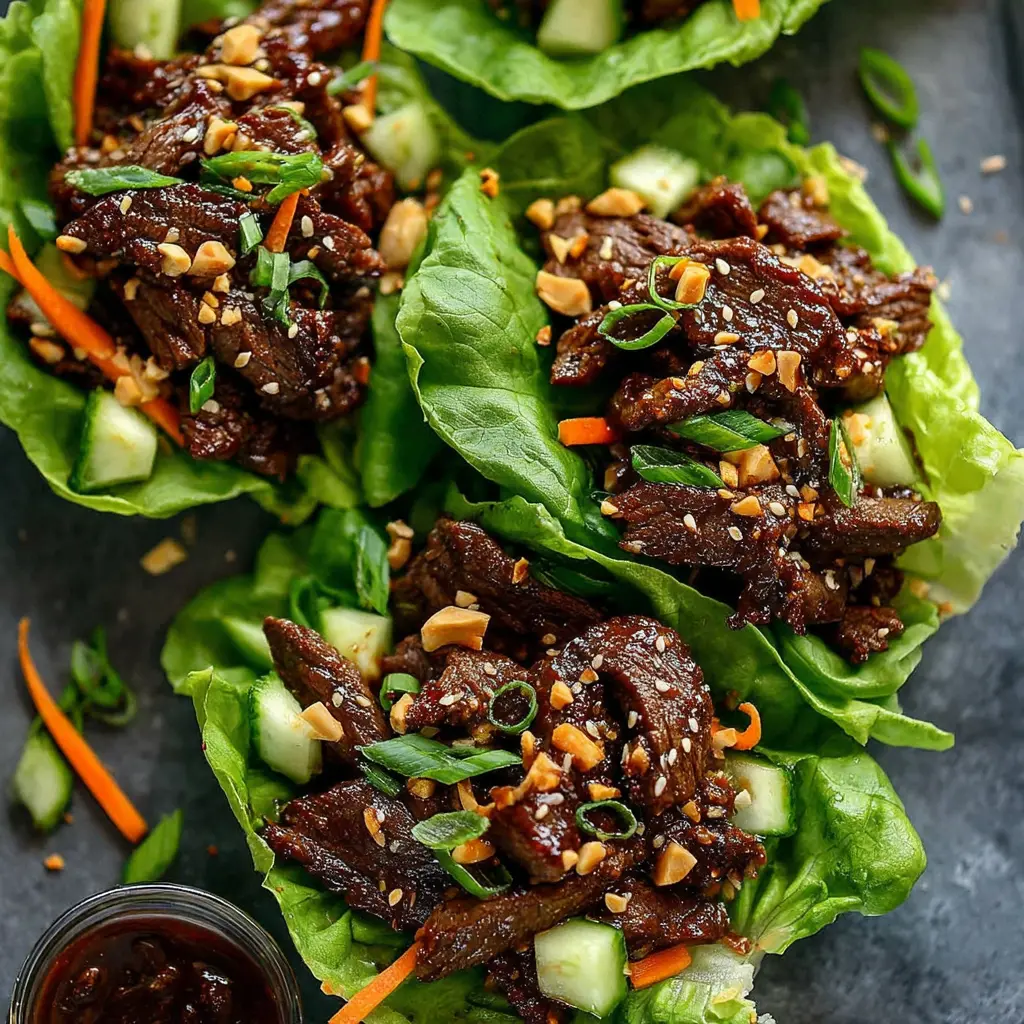
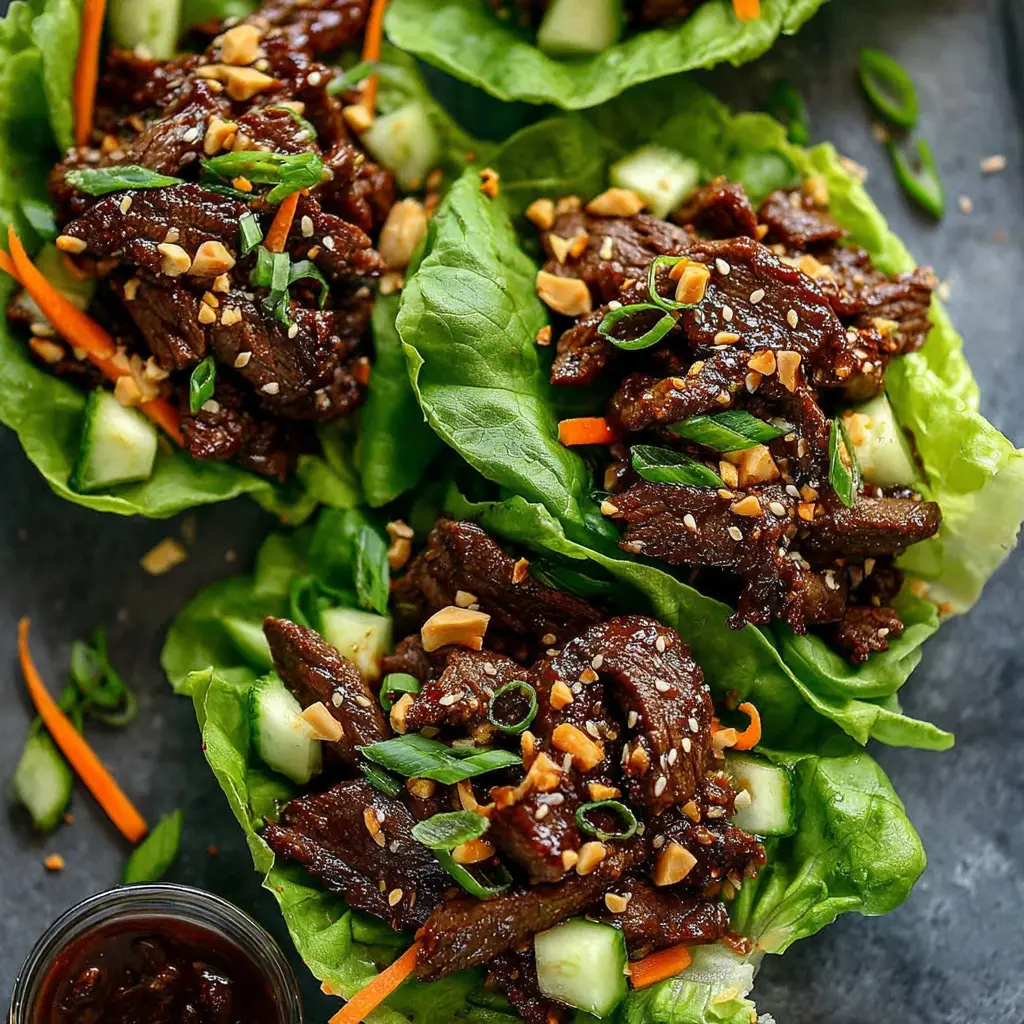
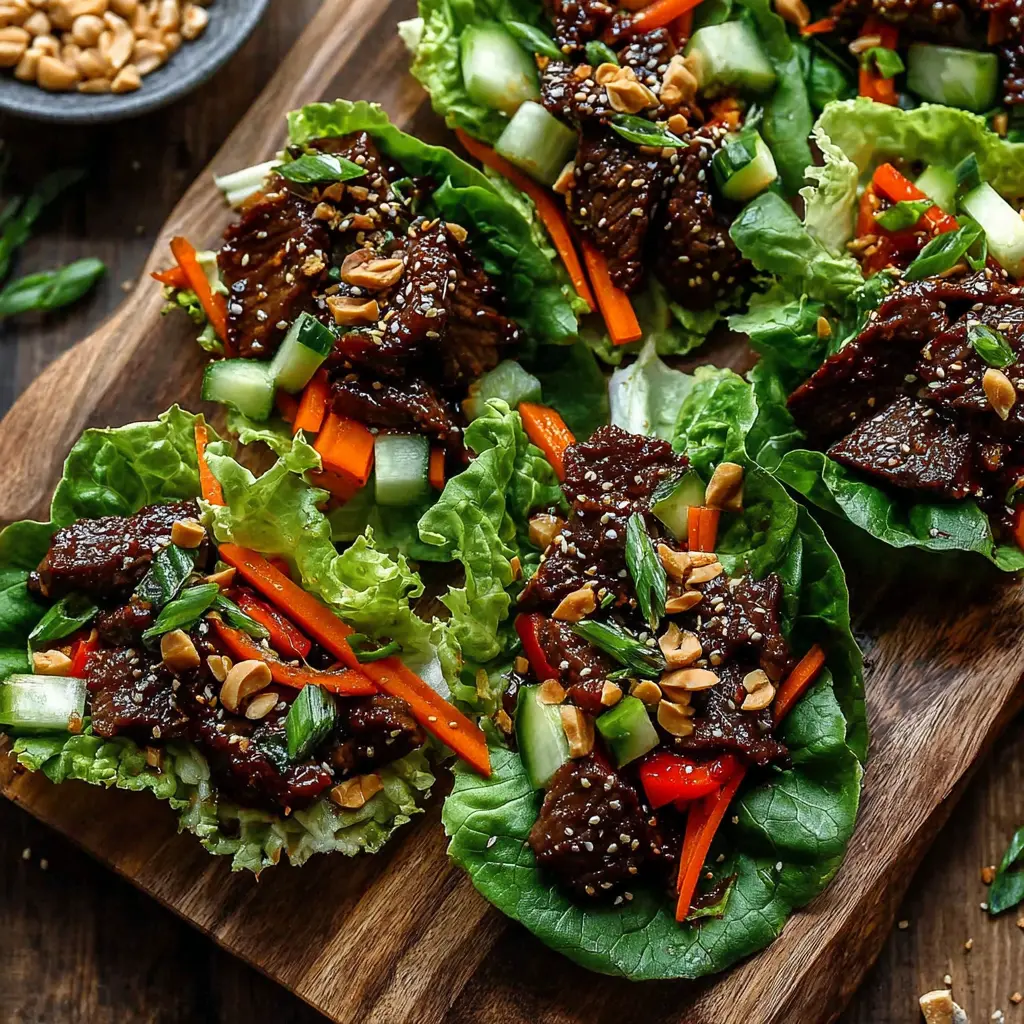
- Arrange the lettuce leaves on a serving platter. Fill each leaf with a spoonful of cooked bulgogi beef, then top with carrot, cucumber, bell pepper, and spring onions. Garnish with sesame seeds and peanuts (if using). Serve immediately.
Notes
Tried this recipe?
Let us know how it was!I Used to Think Bulgogi Was Just for Restaurants
Honestly, I used to think bulgogi was one of those things you only ordered at a fancy Korean BBQ spot. You know the ones. The table has that grill built in, and someone brings out little plates of banchan until you can’t see the table anymore. I loved it. But I figured it was way too complicated for a Tuesday night. Then I made these beef bulgogi lettuce cups at home, and everything changed.
It took me about 30 minutes. And I’m not kidding when I say they were better than some restaurant versions I’ve had. The beef got that perfect caramelized edge. The lettuce was cold and crisp. And the whole thing felt like a celebration, not a chore. I mean, that’s the kind of dinner I live for.
So if you’re tired of the same old chicken and broccoli routine, or you just want something that feels special without spending hours in the kitchen, these beef bulgogi lettuce cups are exactly what you need. They’re sweet, savory, a little bit spicy, and completely satisfying. Plus they’re naturally low carb, which is a nice bonus.
What Is Bulgogi Anyway?
Bulgogi literally translates to “fire meat” in Korean. And that makes sense once you smell it hitting a hot pan. Traditionally it’s thin slices of beef marinated in a mixture of soy sauce, sesame oil, garlic, and sugar, then grilled over an open flame. The sugar caramelizes, the edges get a little charred, and you get this incredible balance of sweet and savory.
But here’s the thing. You don’t need a Korean BBQ grill to make it work at home. A cast iron skillet or a wok does the job beautifully. And the lettuce cups? That’s a modern twist that makes it perfect for entertaining or just a fun weeknight dinner. The cool lettuce wraps around the warm beef, and you get this amazing contrast in every bite.
I love how interactive it is too. Everyone builds their own cups. You can pile on as much or as little as you want. It’s casual and impressive at the same time, which is honestly my favorite kind of cooking.
Ingredients for Beef Bulgogi
Let’s talk about what you’ll need. The ingredient list isn’t long, but each one plays a specific role. And I’ll walk you through the swaps and substitutions as we go.
For the beef: You want sirloin or ribeye steaks. Ribeye is more forgiving because it has more fat marbling, which keeps it tender. Sirloin is leaner but still works great if you slice it thin enough. I usually grab whatever looks best at Ralphs or Costco. Honestly, both work.
For the marinade: You’ll need dark soy sauce, gochujang paste, fresh ginger, light brown sugar, mirin, garlic, freshly ground black pepper, a sweet apple, and toasted sesame oil. Plus a little neutral oil for cooking.
I know gochujang might sound intimidating if you’ve never used it. But it’s widely available now. You can find it at Whole Foods, Trader Joe’s, or any Asian grocery store. It’s a fermented chili paste that adds depth and a gentle heat. Not spicy in an overwhelming way, just warm and complex.
The sweet apple is the secret weapon here. It has an enzyme called calpain that naturally tenderizes the meat. Plus it adds a subtle fruity sweetness that balances the savory soy sauce. If you don’t have an apple, you can use an Asian pear instead. That’s actually more traditional. But a regular apple works perfectly fine. I’ve used Fuji and Gala both with great results.
For assembly: You’ll need romaine or butter lettuce, carrot, cucumber, red bell pepper, spring onions (scallions), sesame seeds, and unsalted peanuts.
The Sauce: Getting the Balance Right
The sauce is really the heart of these beef bulgogi lettuce cups. And it’s surprisingly simple to put together. You just whisk everything in a bowl until the sugar dissolves. That’s it.
But let me explain why each ingredient matters. The dark soy sauce gives you that rich, salty base. The gochujang paste adds the heat and a little umami. The brown sugar is what caramelizes and gives the beef that beautiful glaze. And the toasted sesame oil brings that unmistakable nutty aroma that makes Korean food so recognizable.
The mirin is a sweet rice wine that adds a mild sweetness and helps balance the saltiness of the soy sauce. If you don’t have mirin, you can use a splash of chicken stock mixed with a little rice vinegar. Or even a bit of sake with some extra sugar. I’ve done both, and they work fine. Not exactly the same, but close enough for a weeknight.
One thing I’ve learned the hard way: grate the garlic and ginger instead of mincing them. It incorporates more smoothly into the sauce, and you don’t end up with chunks of raw garlic in your final dish. I use a microplane for this. It takes 30 seconds and makes a real difference.
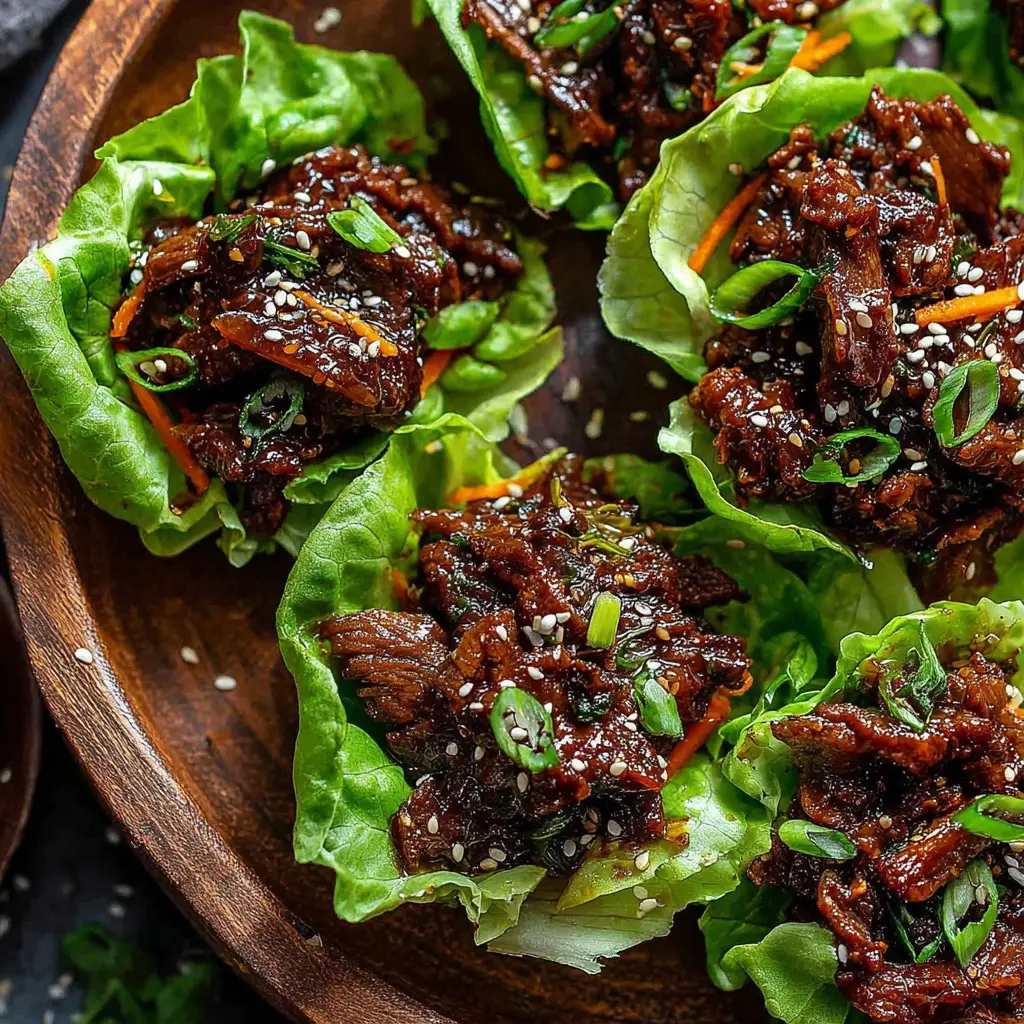
How to Make Beef Bulgogi Lettuce Cups
Alright, let’s get into the actual cooking. The full recipe is in the card above, but I want to walk you through the key moments. The things that make the difference between good and great.
First, the beef prep. This is probably the most important step. You need to slice the beef as thin as you possibly can. Like paper thin. The easiest way to do this is to pop the steak in the freezer for about 20 to 30 minutes before slicing. It firms up just enough that you can get those super thin slices without the meat squishing under your knife.
Cut against the grain. That means you’re slicing perpendicular to the lines of muscle fiber. This shortens the fibers and makes the meat more tender. If you cut with the grain, you’ll end up with chewy strips. Trust me, I learned this one the hard way.
Then the marinade. Whisk all the sauce ingredients together in a bowl. Grate the apple directly into the mixture. Toss the beef slices in the marinade, making sure every piece is coated. Let it sit for at least 15 minutes. You can go up to 8 hours in the fridge if you’re planning ahead. But honestly, even 15 minutes gives you plenty of flavor.
Now the cooking. This is where most people mess up. You need your pan screaming hot. Like, almost smoking hot. Add a little neutral oil, then add the beef in a single layer. Don’t crowd the pan. If you add too much at once, the meat will steam instead of sear, and you’ll lose that caramelization.
Cook for about 2 to 3 minutes per side. You’ll see the edges start to brown and caramelize. The smell at this point is incredible. Sweet and savory and smoky all at once. When it’s done, transfer the beef to a plate and let it rest for a minute.
Assembly time. Wash and dry your lettuce leaves thoroughly. This is crucial. Wet lettuce makes soggy cups, and nobody wants that. I use a salad spinner and then pat dry with paper towels. Butter lettuce works great because the leaves are cup-shaped and tender. Romaine is sturdier and holds up better if you’re piling on lots of toppings.
Lay out a lettuce leaf, add a spoonful of beef, then top with shredded carrot, cucumber slices, red bell pepper strips, and some chopped spring onions. Sprinkle with sesame seeds and crushed peanuts. And that’s it. You’re done.
Best Toppings for Lettuce Cups
One of the best things about these beef bulgogi lettuce cups is how customizable they are. You can really go wild with the toppings. Here are my favorites.
Shredded carrot adds a nice crunch and a little sweetness. I use a julienne peeler or just a regular box grater. Cucumber gives you that cool, refreshing bite. Slice it into thin matchsticks or rounds. Red bell pepper adds color and a mild sweetness. Cut it into thin strips.
Spring onions are non-negotiable for me. They add a fresh, sharp bite that cuts through the richness of the beef. Sesame seeds are a must for that nutty finish. Toast them lightly in a dry pan for extra flavor. And unsalted peanuts add crunch and a little protein boost.
If you want to take it further, you could add kimchi or pickled radish. Those aren’t in the base recipe, but they’re fantastic additions. I sometimes add a spoonful of cooked rice to make the cups more substantial, especially if I’m serving hungry teenagers. But for a low carb meal, skip the rice and load up on the veggies.
What Kind of Lettuce to Use
Let’s talk lettuce because it actually matters more than you might think. I’ve tested this with several types, and here’s what I’ve found.
Butter lettuce is my top choice. The leaves are soft, tender, and naturally cup-shaped. They hold the filling beautifully without tearing. The flavor is mild and slightly sweet, which doesn’t compete with the beef. You can find it at most grocery stores, usually labeled as “living butter lettuce” or “Boston lettuce.” Trader Joe’s has a great one.
Romaine lettuce is a close second. The leaves are sturdier and more crisp. They hold up better if you’re piling on lots of toppings or if you’re making these for a party where they’ll sit out for a bit. The outer leaves are great for wrapping, but the inner leaves are too small. So you’ll get fewer usable cups per head.
Iceberg lettuce works in a pinch. It’s super crisp and holds its shape well. But the flavor is pretty neutral, and the texture can be a little watery. It’s not my first choice, but if that’s what you have, go for it.
The key with any lettuce is to dry it thoroughly. Wet lettuce makes everything soggy. I wash the leaves, spin them in a salad spinner, then lay them on a clean kitchen towel and pat dry. It takes an extra minute, but it makes a huge difference.
Substitutions and Tips
I’ve made these beef bulgogi lettuce cups so many times that I’ve figured out all the little tricks. Here are the ones that matter most.
If you don’t have gochujang paste: You can substitute with a mix of sriracha and a little miso paste. It won’t be exactly the same, but it’ll give you that fermented depth and heat. Or just use extra red pepper flakes. The flavor will be different but still good.
If you don’t have an apple or Asian pear: Use a teaspoon of pineapple juice. The enzyme bromelain in pineapple also tenderizes meat. Just don’t marinate too long, or the meat can get mushy. 30 minutes max.
If you need gluten free: Use tamari or coconut aminos instead of soy sauce. Make sure your gochujang is gluten free too, as some brands contain wheat. Most are fine, but check the label.
If you want more heat: Add extra gochujang paste or some red pepper flakes to the marinade. I sometimes add a teaspoon of gochugaru (Korean chili flakes) for extra color and heat.
If you’re using a different cut of beef: Ribeye is the most forgiving. Sirloin works if you slice it thin enough. Flank steak or skirt steak are also good options. Just make sure to slice against the grain.
Pro tip on the pan: Use a cast iron skillet or a wok. Both retain heat well and give you that nice sear. If you’re using a nonstick pan, don’t heat it too high. Nonstick pans can’t handle the same temperatures as cast iron.
Common Mistakes & Fixes
Mistake: The beef is steaming instead of searing.
Solution: Your pan isn’t hot enough, or you’ve overcrowded it. Heat the pan until it’s almost smoking, and cook the beef in batches. You want a single layer with space between each piece.
Mistake: The lettuce cups are soggy.
Solution: You didn’t dry the lettuce well enough. Wash, spin, and pat dry. Also, don’t assemble the cups until right before serving. Keep the beef and lettuce separate until you’re ready to eat.
Mistake: The marinade is too thin.
Solution: Don’t add extra liquid to the pan. The marinade should cling to the beef. If you need more sauce, make a separate batch and add it at the end.
Mistake: The garlic burns.
Solution: Don’t add the garlic to the pan until just before you add the sauce. If you add it too early, it’ll burn and turn bitter. Grate it instead of mincing so it incorporates more evenly.
Storage and Leftovers
These beef bulgogi lettuce cups are best eaten fresh. But if you have leftovers, here’s how to handle them.
Store the components separately. This is the most important rule. The beef goes in one container, the lettuce in another, and the toppings in a third. If you store them together, the lettuce will get soggy and the beef will lose its texture.
The beef will keep in the fridge for up to 3 days. The lettuce should be eaten within a day or two. It’ll start to wilt after that. The toppings like shredded carrot and cucumber will last about 2 days in the fridge.
To reheat the beef: Use a hot skillet or wok. Add a splash of water or chicken stock to loosen the sauce. Heat over high heat for about a minute, just until warmed through. Don’t microwave it. The microwave will make it rubbery and sad. I learned that one the hard way.
Can you freeze the beef? Yes, you can. The cooked beef freezes well for up to 2 months. Let it cool completely, then transfer to a freezer-safe bag. To thaw, put it in the fridge overnight. Reheat in a hot skillet as described above.
Can you make the marinade ahead? Absolutely. You can make the marinade up to 3 days in advance and store it in the fridge. Just whisk it again before using, as the ingredients may separate.
Frequently Asked Questions
Why You’ll Love These Beef Bulgogi Lettuce Cups
I keep coming back to this recipe because it checks so many boxes. It’s fast enough for a weeknight but impressive enough for company. It’s naturally low carb and gluten free adaptable. And it’s interactive in a way that makes dinner feel like an event. Honestly, what more could you want?
The first time I made these for my family, my husband said, “This tastes like we’re at a restaurant.” And my kids, who are usually picky, devoured them. They loved building their own cups. It became one of those meals we all look forward to.
So when you make these, and I really hope you do, don’t skip the toppings. The crunch of the peanuts, the freshness of the cucumber, the pop of sesame seeds. Every element adds something. And that first bite, where the cool lettuce meets the warm caramelized beef, it’s just perfect.
Go ahead, give yourself the gift of a restaurant-quality meal that’s secretly weeknight easy. You’ve got this. Drop a comment and let me know how your lettuce cups turned out. I love seeing your creations. For more inspiration, check out my Pinterest boards.
Source: Nutritional Information